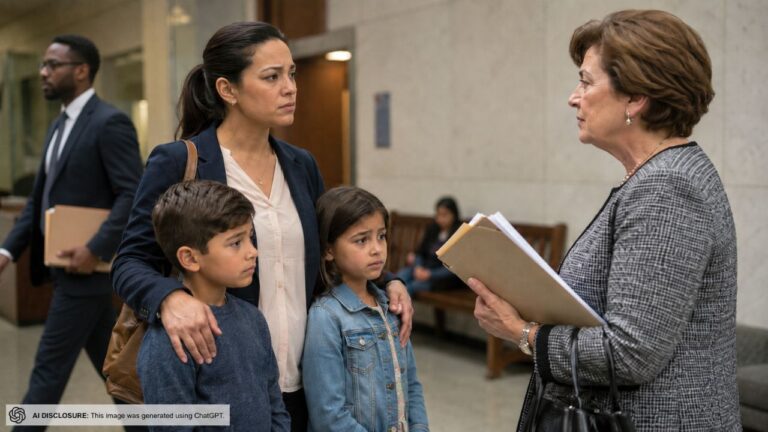
MIL Scheduled Her Own Baby Shower Without Telling the Parents — Then the Mom Canceled Every Plan She Had Made

Photo credit: thrivegirly.com
By the time the pregnant couple heard the words “your shower is next weekend,” their calendar was already full of appointments, family travel, and the one weekend they’d set aside to rest before the final stretch. The message didn’t come from a friend or a sibling. It came from his mother, sent like a reminder instead of a question.
The mom-to-be had been quietly planning a small gathering with a few close friends and her sister hosting, something low-key and scheduled around prenatal visits. She’d already priced out a community room near their apartment, picked a menu that wouldn’t trigger morning sickness, and started a registry that matched their small space. Then she learned her mother-in-law had been planning a completely different event—bigger, farther away, and already in motion—without ever asking the actual parents.
She found out after the invitations were already out
The first hint came when a coworker asked what color theme she’d chosen. The mom-to-be assumed her sister had mentioned it, until the coworker described a formal invitation with the mother-in-law’s name at the bottom and an address the couple didn’t recognize.
Within a few hours, texts started rolling in from relatives: they’d booked babysitters, someone offered to bring a crockpot dish, and an aunt asked whether the dad-to-be preferred sports-themed or woodland-themed gifts. The mother-in-law had apparently told people the parents were “keeping it simple” and she was “handling the shower.”
It wasn’t just a casual get-together. The venue was a private room at a restaurant nearly an hour from the couple’s home, chosen because it was convenient for the mother-in-law’s side of the family. She’d also asked guests to bring gift cards instead of larger items, explaining that the couple would “buy what they need later.”
The parents had already made plans—and deposits
The mom-to-be didn’t want to turn it into a family crisis, so she started with logistics. She texted her mother-in-law asking why no one had checked the date, and explained they already had a shower being planned with her sister. The response was brisk: she’d already reserved the room, already told everyone, and it would be “too embarrassing” to change it now.
The problem was that the couple’s own plans weren’t hypothetical. A deposit had been placed on the community room, and the mom-to-be had ordered a small run of invitations to mail to out-of-town friends who didn’t use social media. She’d also coordinated with her workplace for time off around the shower weekend and a follow-up prenatal appointment.
More than money, it was the feeling of being removed from her own life event. When she pointed out that a heavily pregnant person might not want to travel an hour each way and sit through a long restaurant event, she was told it would be “good for family unity.”
It escalated into a fight over control, not cake
The dad-to-be called his mother directly, hoping he could reset the conversation. He suggested either moving the date, turning it into a casual lunch after the baby arrived, or at least coordinating so the couple didn’t end up with two showers and double the stress.
Instead, the mother-in-law doubled down and framed it as disrespect. She reminded him of everything she’d done for him growing up and said she deserved to celebrate her first grandchild the way she wanted. When he said the shower was for the parents, not the grandparents, the call ended abruptly.
After that, relatives began contacting the couple with questions that sounded like pressure. One family member asked why the mom-to-be was “being difficult.” Another implied the couple should just show up to keep the peace. A cousin mentioned the mother-in-law was upset because she’d already bought decorations and paid for a cake topper with the baby’s name.
That name detail became another flashpoint. The couple hadn’t announced the name publicly, and they’d only told a handful of people. Seeing it used on a party item made the mom-to-be feel exposed and uneasy, like the baby’s identity was being treated as a prop for someone else’s event.
The mom-to-be pulled the plug on every plan she’d made
With the stress spiking and her sleep getting worse, the mom-to-be made a decision that surprised even her sister. She canceled the shower she’d been planning entirely—returned what she could, ate the deposit where she couldn’t, and told her friends she needed to step back.
It wasn’t a gesture of surrender. It was a way to stop the tug-of-war from consuming the last weeks of her pregnancy. If there was going to be a public showdown over dates, venues, and “whose shower this is,” she didn’t want to be the one standing in the middle of a room full of people while relatives watched to see who won.
She then sent a short message to the mother-in-law: they would not attend the restaurant event either, and anyone who wanted to celebrate could visit after the baby arrived, once the parents were home and ready. She also updated her registry settings, limiting who could view it, after noticing items had been purchased in odd patterns that suggested someone was sharing the link widely.
The fallout was immediate. The mother-in-law told relatives the couple had “canceled the baby shower,” leaving out that she had scheduled a separate one without consent. A few guests asked whether they should still bring gifts to the restaurant since the room was reserved. Others asked the couple directly where to mail items, which added another layer of awkwardness.
Commenters zeroed in on boundaries, proof, and future escalation
People following the story fixated less on party etiquette and more on what it signaled for life after the baby. The main concern was that if a grandparent felt comfortable planning a major event without the parents, the same grandparent might feel entitled to hospital decisions, newborn visits, and social media announcements.
Practical advice clustered around documentation and clear communication. Save screenshots of messages, keep everything in writing, and avoid phone calls that turn into he-said-she-said. Several urged the couple to send a single, calm statement to relatives explaining they weren’t attending any shower that wasn’t coordinated with them, and that gifts were optional and not the point.
Others suggested putting medical and childcare boundaries on paper now: who will be at the hospital, who gets updates, and what happens if someone shows up uninvited. A few people recommended password-protecting medical information at the clinic and letting staff know not to share appointment details with anyone but the patient.
There was also a strong push to stop negotiating through extended family. The more relatives got involved, the more the conflict turned into a popularity contest. Keeping communication direct—between the couple and the mother-in-law—was seen as the only way to prevent constant triangulation.
The biggest problem wasn’t one party—it was the next ten decisions
In the days that followed, the couple focused on what they could control: rest, medical appointments, and preparing the apartment. They tightened their visitor plan for after delivery and agreed that any future “surprises” would be treated as automatic no’s.
The mother-in-law still had the restaurant reservation, and a few relatives hinted they might attend anyway to avoid wasting money. The couple didn’t try to police that. They simply refused to be the centerpiece of an event they hadn’t agreed to, and they stopped responding to guilt-based texts.
For the mom-to-be, canceling her own shower stung, especially after putting in time and money. But it also drew a bright line: milestones involving their child would be planned with them, not around them. And with a baby due soon, that line mattered more than decorations, favors, or a perfectly timed cake.