Her Best Friend’s Best Man Turned Out to Be the Ex-Fiancé Who Cheated on Her — Then She Backed Out of Being Maid of Honor
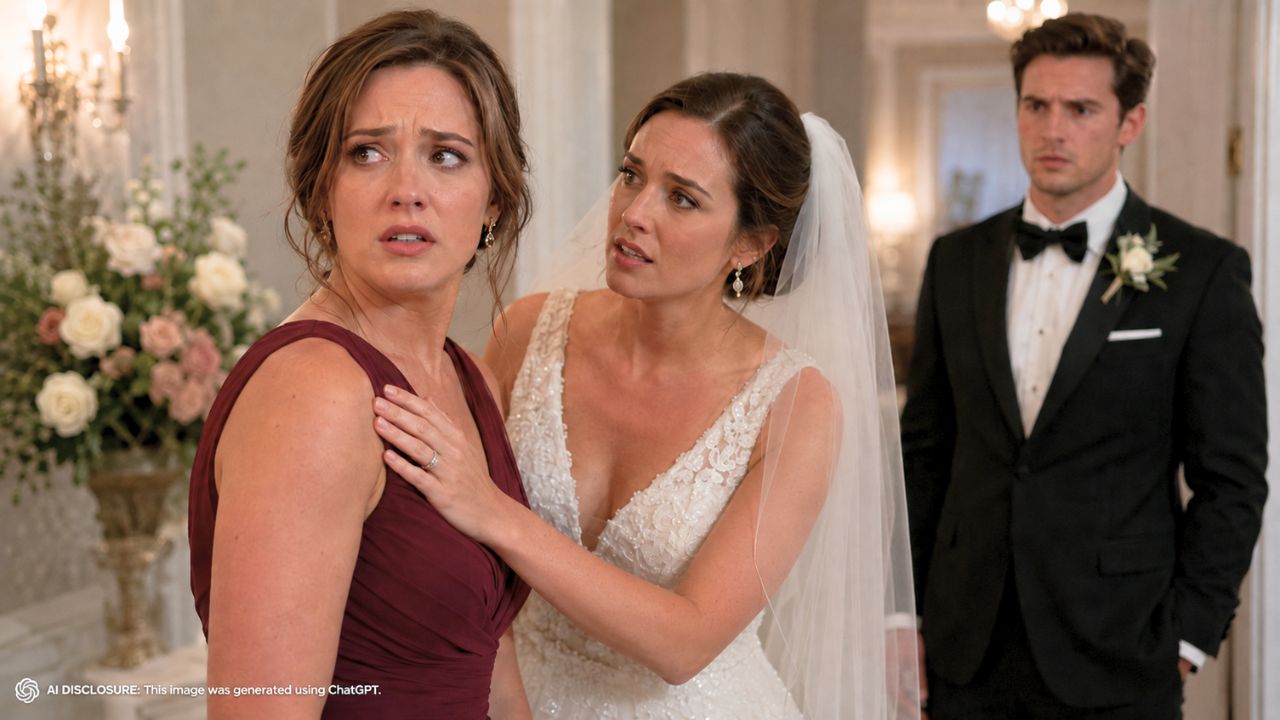
Photo credit: AI-generated image created using ChatGPT.
There’s a special kind of gut-punch that comes from betrayal you didn’t see coming, followed immediately by an invitation to smile for photos like nothing happened. One week you’re planning a wedding and turning down a job so you can move with your fiancé. The next week you’re staring at his phone, realizing the “wrong number” texting him at midnight knows details only an intimate relationship would reveal.
In the original post, a 27-year-old woman explained that she’d been with her fiancé for six years, with their own wedding planned for August. Then she discovered he’d been seeing call girls behind her back. The problem didn’t stop at the breakup and the heartbreak. Her best friend’s wedding was days away, and the groom’s best man was her ex-fiancé—the same man who’d just detonated her life.
She was set to be maid of honor, which meant walking arm in arm with him, standing near him, sharing a spotlight, and pretending the last week hadn’t happened. With the wedding a week out, the bride and groom didn’t want to blow up the ceremony by changing the lineup. The bride asked her to push through and promised to “make it up to her,” while the woman wrestled with whether backing out would make her the villain.
A betrayal that doesn’t stay private
The discovery wasn’t a vague suspicion or a slow unraveling. It was a text from a call girl reaching out to “old clients,” followed by the woman pretending to be her fiancé long enough to get the details. That’s a brutal way to learn you’ve been living in a story that isn’t the one you thought you were in.
She confronted him, and he didn’t deny it. He claimed to be a sex addict, said he’d been in treatment, and promised to change. She described the fallout in plain terms: constant crying, self-doubt, STD tests, fights over the ring, and pressure from his mother to reconsider. It’s the kind of chaos where you can’t tell if you’re more angry or more numb, and neither feeling helps you sleep.
The wedding problem: loyalty versus self-preservation
Then came the impossible social math. Her best friend and the groom were getting married on May 11, and the groom’s closest friend was the man who just betrayed her. The bride didn’t want the wedding to become about the scandal, especially with family and friends gathered and only a few people knowing the full details.
This is where people get sloppy and start acting like there’s a clean “right answer.” There isn’t. If she backed out as maid of honor a week before the ceremony, it would create questions and whispers. If she showed up, she’d be forced into a public performance beside the person she most wanted to avoid.
She even acknowledged the part men often ignore: it wasn’t her place to demand the groom replace his best man at the last minute. The groom knew there had been cheating, but not necessarily the full scope. Dropping every detail right before the wedding could have turned the whole week into damage control, and she didn’t want her friend’s day swallowed by her ex’s disgrace.
He said “sex addict,” and she wondered if cheaters change
Two days later, she returned with a question that shows how fresh wounds mess with your head. She said he seemed genuinely broken, had taken himself off his flying schedule, doubled up counseling, and hadn’t blamed her. She admitted she still loved him, missed him intensely, and could feel sympathy creeping in even while she hated what he’d done.
There’s a real lesson here for any man reading: remorse isn’t the same as repentance. A man can cry, apologize, and even suffer consequences, and still be the same man who chose deception repeatedly. Change is possible, but it’s slow, proven, and costly. And the betrayed person does not owe the betrayer a front-row seat to their healing just because he’s acting contrite this week.
She also faced a second layer of temptation: the urge to medicate the pain with impulsive decisions. She talked about wanting to disappear for the day, dull herself, and burn down the memory of the relationship. That’s not unusual; it’s just what raw grief sounds like before it learns to speak in complete sentences.
What she did, and why it mattered
She decided to go through with being maid of honor. Not because she suddenly felt fine, and not because she believed her ex deserved anything from her. She did it because she and the bride had been close for life, and she didn’t want her friend’s wedding to be remembered as the day the bridal party got reshuffled due to someone else’s sin.
Later, she explained that her story had spread widely enough that many people in her social circle figured out what happened. That forced a “meeting” between the four people most directly involved, and they agreed that skipping the wedding would create more attention than showing up. So they chose the harder option: be present, stay civil, keep the focus on the couple.
That choice came with complicated side effects. She described getting drunk at the bachelorette party, making out with multiple guys, and having her first one-night stand. She didn’t frame it as noble; she framed it as a mix of wanting to feel desirable and wanting “parity.” That’s a painfully human response, and it’s also a warning: when your dignity gets crushed, you’ll be tempted to prove you can still be wanted, even if you’re not being wise.
The strange mercy of a short, shared duty
At the rehearsal, she and her ex were paired together, and she admitted they had fun. Compatibility doesn’t evaporate just because trust died. That’s one of the cruel parts of infidelity: you can still enjoy the person who hurt you, and then hate yourself for enjoying it.
On the wedding day, they walked down the aisle arm in arm, smiling genuinely for their friends. She had drafted a sharp maid-of-honor toast that would’ve praised loyalty and hinted at a late-night call exposing betrayal, but she backed off and gave a generic toast instead. That restraint is underrated. There are times a man deserves public shame, but a wedding reception isn’t the place to light that match if the fire will burn the wrong people.
As the night went on, she noticed her ex isolating and looking miserable. She danced with him partly so people wouldn’t talk, and in a quiet moment he held her face, nearly kissed her, whispered that he was sorry, and then left. She cried afterward, not because she thought she’d made a mistake leaving him, but because it hit her: this was the last shared obligation, the last intersection of their lives. “Over” finally sounded like “over.”
If you’re the guy at the table: what to learn from this
If you’re the man who cheated, don’t hide behind a label and call it a day. If there’s real brokenness, it needs real confession, real accountability, and real time—without pressuring the person you betrayed to play supportive spouse while you “work on yourself.” And if you’re the groom in a similar situation, you don’t get to act like neutrality is leadership. You may not be able to fix every consequence a week out, but you can be honest, protective, and clear about what’s acceptable and what isn’t.
If you’re the friend caught in the middle, loyalty doesn’t mean forcing someone into proximity with their betrayer for the sake of aesthetics. A wedding is important, but it isn’t a god. The best friends are the ones who can say, “I want you there, but I won’t sacrifice you to keep the seating chart intact,” even if the practical solution is imperfect.
She showed up for her friend, and it cost her. She also learned, in real time, that strength sometimes looks like staying composed for four minutes, then falling apart in a hotel kitchen where only safe people can see it. That’s not weakness; that’s a person refusing to let someone else’s unfaithfulness turn her into someone she doesn’t recognize.
There’s no neat bow to tie here. A man broke a trust that should’ve been guarded like a vow, and a woman carried herself through a public role while privately grieving what could’ve been her own wedding. The cleanest takeaway is also the hardest: character matters long before the tux goes on, and the people you hurt will still have to live their lives in rooms you walk into.
Read more from Thrive Girly:
- Mother-in-Law Expected to Sleep Over After Every Visit — Then the Mom Said Overnight Stays Were No Longer an Option
- Relatives Showed Up to the Wedding Without Being Invited — Then the Couple Refused to Find Them Seats
- Grandma Buckled the Baby Into Her Car and Left Without Telling Anyone — Then the Mom Made Sure It Never Happened Again