His Parents Refused to Update Their Vaccines Before Meeting Their Only Grandchild — Then the New Parents Held Firm on the Rule
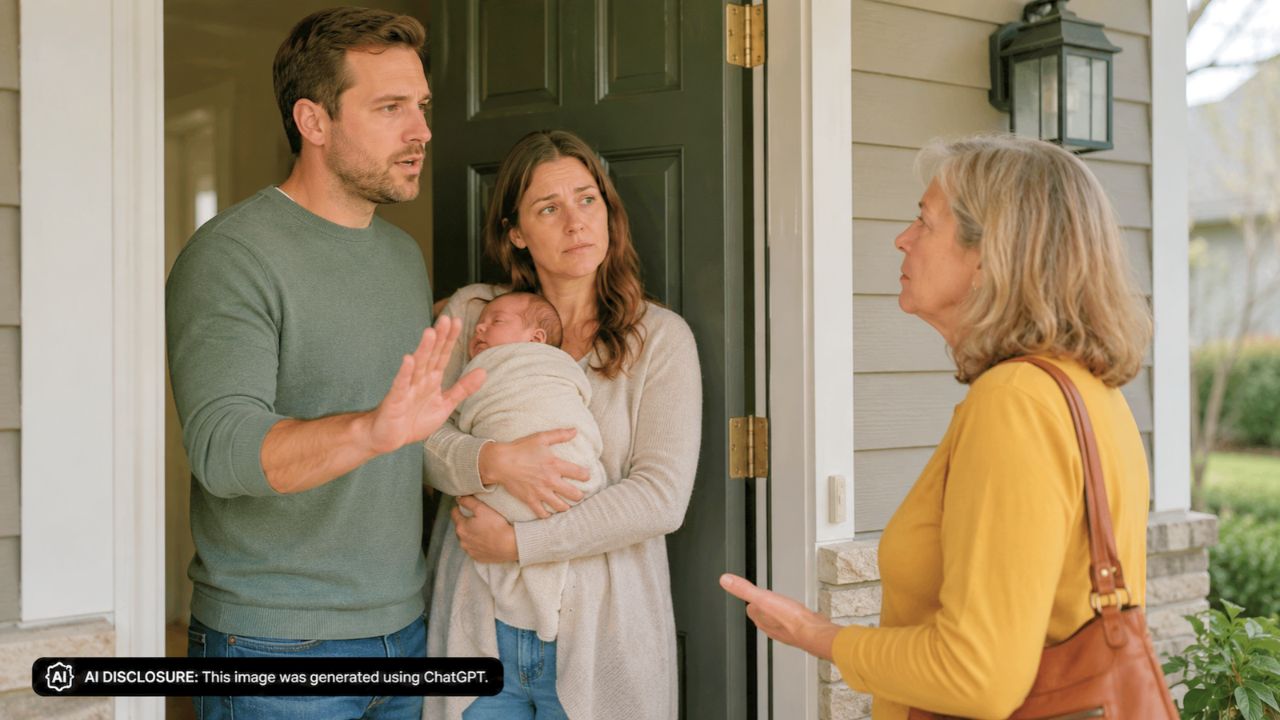
Photo credit: AI-generated image created using ChatGPT. Illustrative only.
There’s a particular kind of strain that shows up right before a first baby arrives. You’re excited, you’re tired, you’re trying to do everything “right,” and you’re realizing—fast—that you can’t control other adults, even the ones who raised you.
That’s the knot sitting at the center of the original post: an expecting father, a physician, and a long road through IVF that produced a single embryo and, thankfully, a healthy pregnancy. With the due date approaching in peak cold and flu season, he and his wife updated their own vaccines and asked close family to do the same—specifically flu and Tdap (pertussis coverage)—for the baby’s first couple months.
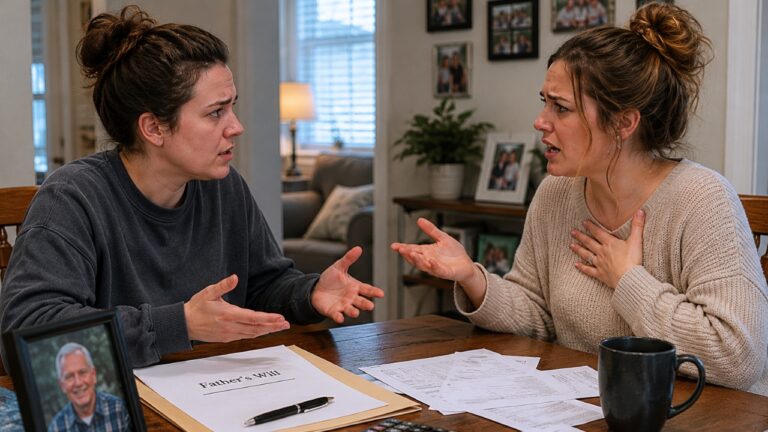
Most people complied without fuss. His parents didn’t. Both of them are also physicians, but they insisted an 8-year-old booster was enough, rejected updated shots, and resisted even his proposed workaround—checking titers with a blood test to confirm immune response levels. The conversation escalated until his mother called him a “paranoid second rate physician,” framed herself as a victim, and hung up after saying a lot of hurtful things.
A newborn doesn’t need everyone’s opinions—he needs protection
If you’ve never had a child, it can be hard to grasp how small the margins are in those first 60–90 days. Newborns aren’t just “little humans” with the same resiliency scaled down. They’re brand new, with developing immune systems, and they depend entirely on the adults around them to make wise choices on their behalf.
This dad wasn’t asking his parents to sign a loyalty oath. He wasn’t even demanding they do anything to their bodies against their will. He set a boundary: no updated vaccines (or proof of adequate protection), no in-person time with the baby until she’s had her vaccination series. That’s not vengeance; that’s stewardship.
The hardest part isn’t the rule—it’s who’s breaking it
A lot of men can hold a line with strangers and fold with family. It’s not because they’re weak; it’s because family knows where the soft spots are. Your parents have a lifetime of history with you, and sometimes they’ll reach for old roles without realizing it: you’re still the kid, they’re still the authority, and you’re not allowed to “correct” them.
What makes this situation sting is that it’s uncharacteristic of his parents, at least in his experience. He expected disagreement, maybe, but not contempt. When a mother calls her son a second-rate physician—especially when he’s trying to protect his own child—that’s not a mere difference of medical opinion. That’s a shot across the bow aimed at his credibility and his manhood.
IVF changes the emotional math, even if the rule stays the same
Anyone who’s walked through infertility or IVF knows it can reshape how you see risk. The father described years of trying, the expense and stress of treatment, and finally ending up with a single embryo. That kind of journey doesn’t make you irrational; it makes you aware of what it costs to get a miracle into your arms.
And that’s the thing: the boundary here would be reasonable even without IVF in the backstory. But the backstory explains why this couple is especially cautious. When you’ve fought for something for years, you don’t gamble with it for the sake of keeping the peace at Sunday dinner.
“I’m covered” can be pride wearing a lab coat
His parents’ claim was simple: they already had boosters years ago, so they’re covered. He countered with a practical option: check titers, and if the immune response is good, fine. That’s not paranoia; that’s a straightforward attempt to respect their concerns while still protecting the baby.
What’s revealing is how quickly the conversation stopped being about medicine and became about offense. The mother’s response wasn’t, “I’m worried about side effects” or “Let’s talk through the guidelines.” It turned into name-calling, accusation, and a hard turn into victimhood—bringing up her status as a cancer survivor and accusing her son of mistreatment. Whatever the medical details, the relational move is familiar: “How dare you set a boundary that inconveniences me.”
It’s possible his mother truly fears an inflammatory response to vaccination, as he noted she sometimes has stronger reactions due to health issues. But fear doesn’t justify contempt. A grown man can honor his mother and still refuse to let her emotions set the safety policy for his home.
Boundaries are different from punishments, and men confuse them all the time
A punishment is meant to make someone pay. A boundary is meant to keep someone safe. The father’s update made that distinction clear: nobody is forced to vaccinate, but access to the newborn has conditions, especially during the most sensitive early window.
That’s fatherhood in a nutshell. You learn quickly that your job isn’t to keep every adult comfortable; it’s to protect your child and support your wife. If a grandparent interprets a safety rule as a personal insult, they’re telling you they want relational access without relational responsibility.
Your first loyalty is to your wife and child, not your parents’ approval
There’s an old temptation for men: to keep mom and dad happy so the household stays calm. It can look like “honor,” but it often ends up as passivity dressed in polite language. Marriage rearranges the order of loyalty. A man doesn’t stop loving his parents, but he does stop letting them outrank his wife.
In this case, the couple is aligned, and that matters. His wife and his mother-in-law (a public health nurse) both thought the request was reasonable. That unity is a gift—don’t squander it by trying to negotiate your wife’s peace away for a temporary truce with your parents. A man can be gentle and still be firm, and his family should feel both.
If your parents won’t bend, keep the door open without lowering the standard
It’s easy to imagine the next steps turning into an ugly standoff: missed visits, icy texts, family members taking sides. But there’s a mature middle path that’s neither appeasement nor escalation. Keep communication plain. Repeat the boundary without re-litigating it every time.
That can sound like: “We’d love for you to meet her. If you choose not to update vaccines or confirm protection through titers, we’ll wait until she’s had her early vaccination series. Until then, we can do photos, video calls, and keep you in the loop.” You’re not slamming the door; you’re setting the hinges.
And if the conversation turns abusive—insults, character attacks, guilt trips—end it. Not with drama, not with a speech, just a calm exit. A man doesn’t need to accept disrespect to prove he’s loving.
A newborn has a way of clarifying what matters and who’s willing to act like family. This father didn’t do anything wrong by asking for updated vaccines or offering a compromise with titers, and he’s not wrong for holding the line after being spoken to harshly. The painful part is learning that some people would rather win a standoff than welcome a grandchild, but a good father doesn’t hand his child’s safety over to someone else’s pride.
Read more from Thrive Girly:
- Mother-in-Law Expected to Sleep Over After Every Visit — Then the Mom Said Overnight Stays Were No Longer an Option
- Relatives Showed Up to the Wedding Without Being Invited — Then the Couple Refused to Find Them Seats
- Grandma Buckled the Baby Into Her Car and Left Without Telling Anyone — Then the Mom Made Sure It Never Happened Again