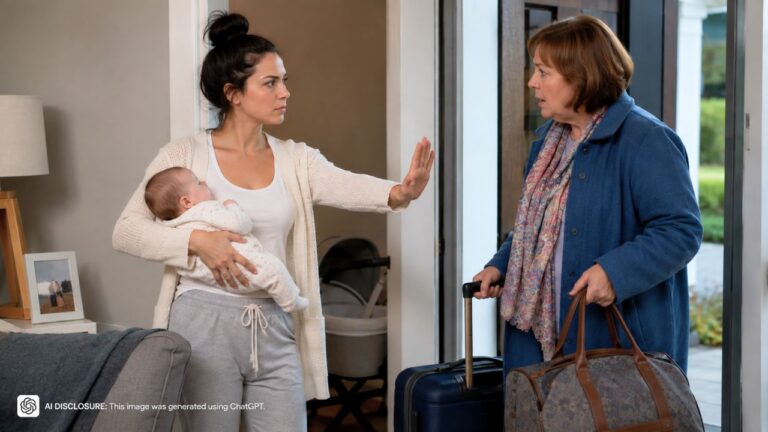
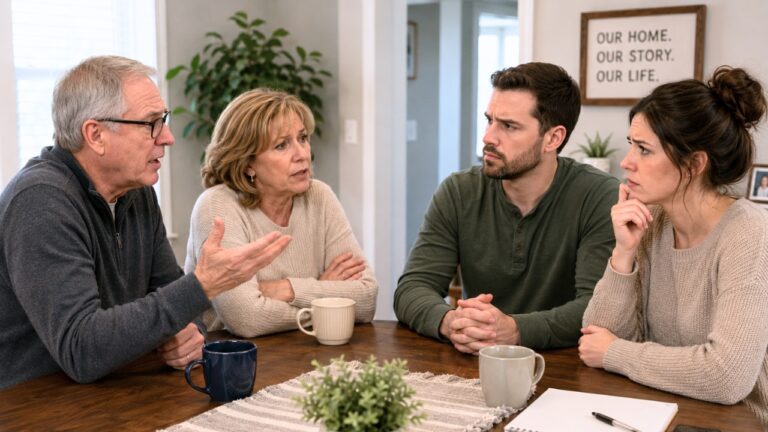
Mom Invited Guests to the Wedding They Specifically Said Not to Invite — Then Denied It Until Shown Proof, So They Stepped Back

Photo credit: AI-generated image created using ChatGPT. Illustrative only.
There’s a particular kind of betrayal that doesn’t look like betrayal at first. It shows up dressed as “help,” “family,” and “I was only trying to make the day special.” Then you find out, mid-reception, that someone made decisions about your wedding that you explicitly told them not to make.
In the original post, a newly married man shares how his mother invited guests to his wedding after being told not to. She didn’t mention it beforehand, and she reportedly brought it up during the wedding breakfast, leaving the couple cornered on their own day. The bigger issue, though, wasn’t just the extra bodies in the room. It was what came next: denial, defensiveness, and a family culture that seemed more concerned with protecting Mom from discomfort than telling the truth.
Now his wife is pregnant, and he’s weighing distance from his parents. Not as revenge, not as a dramatic “cut them off forever” moment, but as a sober choice to protect his marriage and his child from a pattern he no longer trusts. If you’ve ever been in the spot where family expects unlimited access and zero accountability, you can feel the bind.
The wedding invite wasn’t the only problem
Inviting people you were told not to invite is already a boundary issue, and it’s not a small one. Weddings are expensive, emotional, and tightly planned, but beyond that, they’re a public statement: this is our new household, and we decide who stands close. When a parent overrides that decision, it’s not just “oops.” It’s a power move, whether they admit it or not.
What makes this situation heavier is the timing. The groom says his mother didn’t tell them until the middle of the wedding breakfast, which effectively removed their ability to respond without causing a scene. Some folks do that on purpose: drop the news when you’re least able to push back, then act surprised that you’re upset.
Denial plus proof is where trust goes to die
The groom also describes a second boundary issue where his parents denied doing something they’d been asked not to do. Later, when he had evidence, the posture didn’t change. They stayed defensive rather than owning it and offering a real apology.
That combination—denial until proof, then defensiveness even after proof—hits differently than a normal mistake. A mistake says, “I messed up.” This pattern says, “I’ll say whatever protects me, and if you catch me, I’ll still make you the problem for caring.” You don’t build a stable adult relationship on that.
His father backing his mother “even though he wasn’t actually present for part of what happened” is its own problem. A husband should support his wife, sure, but support doesn’t have to mean co-signing dishonesty. When a dad chooses team unity over truth, it teaches everyone in the family that reality is negotiable.
Disrespect toward the other family is a flashing warning light
One detail that should not get lost is what the groom reports about his mother making hurtful comments about his wife’s mother, including remarks connected to her disabilities. Even without hearing the exact words, the line is clear. You can be frustrated with in-laws, you can disagree about traditions, you can even be wary of motives, but mocking or belittling someone’s disability is ugly.
It also poisons the foundation of the marriage. A man’s job is to “leave and cleave,” to build a home where his wife is safe and honored. If his parents are comfortable taking shots at her family—especially in a way that hits a vulnerable area—he’s not being dramatic for taking that seriously. He’s being faithful to the vows he just made.
“Making your own mum apologise” isn’t cruelty
The groom says the wider family seems to have received a version of events where he’s the cruel or heartless one for expecting accountability. His brother’s line—“making your own mum apologise is horrendous”—is telling. In some families, Mom isn’t just respected; she’s untouchable. If she’s hurt, everyone rearranges the furniture. If you’re hurt, you’re told you’re being difficult.
A sincere apology isn’t a humiliation ritual. It’s a repair attempt. It’s an adult saying, “I was wrong, and I’m not going to make you carry the cost of my choices.” If a family treats apology as “disrespect,” what they really mean is: nobody is allowed to challenge the pecking order.
There’s a kind of pseudo-honor that looks spiritual on the outside but is actually just fear. Honor doesn’t mean pretending sin is fine, or that lies don’t matter, or that a mother’s feelings outrank a son’s marriage. Honor can include hard truth, and it often should.
Your marriage and child change the math
Before marriage, a lot of men tolerate family nonsense because it mostly lands on them. They can take the heat, swallow the comments, and keep the peace. Once you’re married, the blast radius expands, and your wife becomes a target or a bystander who pays for other people’s immaturity. Add a pregnancy, and now you’re talking about your child growing up around guilt-tripping, denial, and emotional pressure that gets passed off as “just how we are.”
The groom isn’t asking an abstract question. He’s asking what kind of environment he’s willing to normalize for his home. Grandparent access is not a right that floats above character. It’s a relationship built on trust, and trust requires honesty and basic respect.
It’s also worth saying plainly: a new father doesn’t need extra chaos. Pregnancy is hard enough. Early parenthood is exhausting enough. A family system that turns every boundary into an argument will drain a marriage if you keep feeding it.
Stepping back can be a boundary, not a punishment
He says he’s “done trying to negotiate basic respect” and doesn’t see a point in contact unless his parents fully acknowledge what they’ve done, take responsibility without deflecting, and consistently respect boundaries going forward. That’s not vengeance. That’s conditions for trust.
People sometimes confuse “forgiveness” with “full access.” Forgiveness is a decision not to repay evil with evil, not to live in bitterness, not to become the same kind of hard-hearted person who hurt you. Reconciliation is different. Reconciliation requires truth, repentance, and changed behavior over time.
If someone won’t even admit what happened, there’s nothing solid to rebuild on. You can’t have closeness with a person committed to rewriting reality. Distance, in that case, is not cruelty; it’s stewardship. You’re protecting your wife, your child, and your own sanity from a pattern that has already proven itself.
What accountability could look like (if they’re willing)
Accountability doesn’t need fancy language. It usually sounds like: “You’re right. We did that. We shouldn’t have. We’re sorry. We won’t do it again.” No courtroom defense. No “but you’re too sensitive.” No blaming the other family. No recruiting siblings as flying messengers.
Practically, it can include clear expectations going forward: no inviting anyone to anything without permission, no comments about the other side of the family, no undermining parenting decisions, and no dragging private disputes into the wider family. If they break those expectations, the consequence is simple: less access, less information, fewer visits. Not out of spite, but because trust has to be earned again.
And if they’re not willing? Then stepping back is still a reasonable boundary. Some relationships only work if one person stays small and quiet, and that’s not the calling of a husband and father.
He’s not wrong to expect a parent to apologize for hurting him or his wife. He’s not wrong to protect the peace of his home, especially with a baby on the way. If his parents want closeness, the door isn’t locked from the outside; it’s locked from the inside, and the key is humility.
Read more from Thrive Girly:
- Mother-in-Law Expected to Sleep Over After Every Visit — Then the Mom Said Overnight Stays Were No Longer an Option
- Relatives Showed Up to the Wedding Without Being Invited — Then the Couple Refused to Find Them Seats
- Grandma Buckled the Baby Into Her Car and Left Without Telling Anyone — Then the Mom Made Sure It Never Happened Again