Brother Wouldn’t Split Their Late Father’s Inheritance With the Stepsister He Grew Up With — Then His Sister Handed Over Half of Her Own Cut
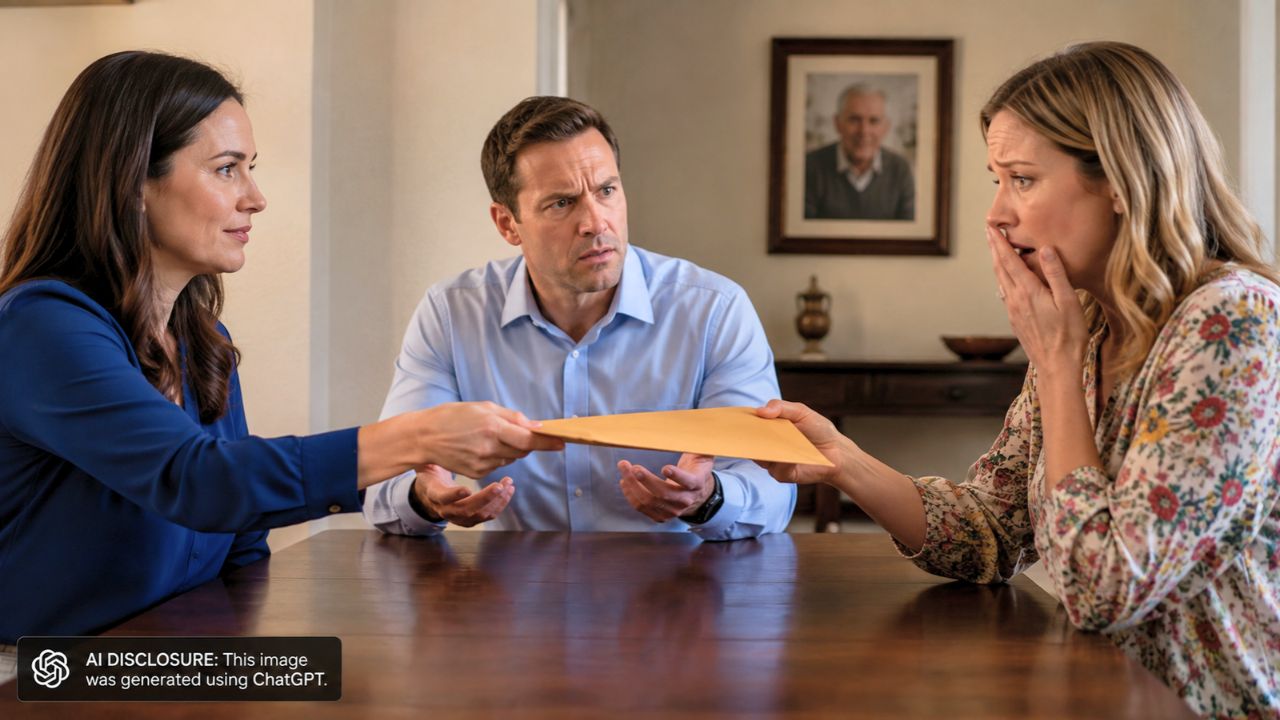
Photo credit: AI-generated image created using ChatGPT. Illustrative only.
Inheritance has a way of turning grown adults into anxious kids again. You’re grieving, you’re tired, and suddenly you’re staring at paperwork that feels like it’s grading your family’s love on a spreadsheet. In one family’s case, a father died and left everything to his two biological children, even though he’d helped raise their stepsister from early childhood.
The sister who shared the story in the original post describes a blended home that sounded, for years, like the good kind. Their dad got serious with their stepmother when the daughter was 11, and the stepsister was 6. The stepmother was treated as “real mum,” and the stepsister felt dad was “real dad,” too. Then dad died, and his will didn’t match the life they thought they lived.
The father’s estate went to the brother and sister alone. The stepsister was left out, and she was hurt. The sister wanted the siblings to voluntarily split the inheritance three ways anyway, especially since some assets were originally from their stepmother, who had reportedly left everything to the father and had intended an equal split if he died before she did. The brother refused, saying he was honoring what dad wanted. That’s when the sister called him greedy and selfish, and the family fractured in real time.
A will can be legal and still be personal
There’s a hard distinction men learn as they get older: “legal” doesn’t automatically mean “right,” and “right” doesn’t always mean “simple.” A will is a legal instrument, but it also communicates something whether the writer meant it to or not. Leaving out a child you raised can read like a verdict on the relationship, even if the reasons were complicated, sloppy, or never fully thought through.
From the stepsister’s side, the pain makes sense. She didn’t lose “mom’s husband.” She lost dad. And then, in the same season, she’s told in black-and-white that dad didn’t see her the way she saw him. That kind of grief doesn’t stay neatly in the emotional lane; it spills into every conversation about money, family history, and belonging.
The brother’s argument sounds principled, but it’s not complete
The brother’s line—“it’s not what dad wanted”—can sound like integrity. Sometimes it is. But it can also be a convenient shield when you don’t want to wrestle with a harder question: “What’s the honorable thing for me to do with what I’ve been given?” There’s a difference between respecting a parent and outsourcing your own moral responsibility to them.
He also pointed out that the stepsister could inherit from “the rest of her family.” Maybe she can, maybe she can’t, and maybe it won’t look anything like what dad left. Either way, that argument tends to land like this: “You’ll be fine, so I don’t have to care.” That’s not stewardship; it’s a justification that keeps you from having to feel the weight of the decision.
The sister’s impulse to share is generous, but the approach matters
The sister’s instinct—to give the stepsister a third even if the will didn’t—is the kind of move that keeps families from turning into enemies. It recognizes an obvious truth: this stepsister wasn’t a distant add-on. She was raised alongside them, loved alongside them, and saw the same man as father. If the household was truly “equal” in day-to-day life, an equal share isn’t some wild idea.
But calling her brother greedy and selfish escalated a negotiation into a feud. Sometimes the facts are on your side, but your delivery still poisons the well. If she wanted him to consider generosity, contempt wasn’t going to produce it. It might feel satisfying for five minutes, and then you’re left with a damaged relationship and a bigger mess to sort through.
The stepmother’s money complicates the moral math
The detail that won’t leave this story alone is that the stepmother (whom the sister calls her real mum) left everything to the father, and the sister believes the father later changed his will to benefit only his biological kids. If that’s accurate, then some portion of what the siblings received may have originated with the stepmother’s estate. And if the stepmother viewed the children equally—biological and step—then cutting her daughter out later feels like a reversal of her intent.
Legally, assets become the spouse’s once inherited, depending on jurisdiction and how things were structured. Morally, it’s messier. If you know money came through a woman who treated all three kids as her own, it’s hard to justify locking her biological daughter outside the gate. A man who wants to live with a clean conscience pays attention to that kind of origin story.
Why dad might have done it, and why it still lands hard
No one in the story knows exactly why the father changed his plan. Maybe there were private tensions. Maybe someone advised him poorly. Maybe he assumed the stepmother’s family would cover the stepsister, or maybe he was thinking like a biological father who felt responsible to “his” kids first. There are possibilities, but none of them erase the impact.
This is one of those moments where a father’s silence becomes a second wound. If he had reasons, he didn’t leave them clearly enough to prevent a blow-up. A good man tries to keep his house in order while he’s alive, because after he’s gone, his kids have to live with the consequences. The brother can say he’s honoring dad, but it’s also fair to say dad left them a fight.
What honorable stewardship could look like here
The sister seems ready to put her money where her values are, even if her brother won’t. That may mean giving up part of her share—quietly, without making it a performance, and without turning it into a lifelong scorecard. If she believes her stepsister is family, she can act like it whether her brother joins or not. It won’t fix everything, but it might prevent the wound from turning into permanent bitterness.
For the brother, the most honorable move might be to slow down and listen before deciding his position is “principle.” If he can’t bring himself to split evenly, he could still acknowledge the relational reality: their father raised her, and leaving her out was deeply painful. A man can hold the line on a decision and still be compassionate, but compassion requires saying the quiet part out loud and accepting that the hurt is real.
And for both siblings, it would be wise to stop treating this like a courtroom argument. This is a family trying to survive grief and disappointment without losing each other. If they can have a sober conversation about what the stepmother would have wanted, what their shared childhood meant, and what kind of people they want to be, they might find a path that isn’t “winner takes all.”
Money reveals character, but it also tests it. The father’s will may have been the spark, but the fire now is about whether these siblings will choose generosity and humility over pride and technicalities. If the sister gives half her cut to the stepsister, she won’t be able to control how everyone interprets it, but she will be able to live with herself. And sometimes that’s the first step toward a family healing instead of hardening.
Read more from Thrive Girly:
- Mother-in-Law Expected to Sleep Over After Every Visit — Then the Mom Said Overnight Stays Were No Longer an Option
- Relatives Showed Up to the Wedding Without Being Invited — Then the Couple Refused to Find Them Seats
- Grandma Buckled the Baby Into Her Car and Left Without Telling Anyone — Then the Mom Made Sure It Never Happened Again