Fiance’s Sister Posted a ‘Get Ready With Me’ Video That Accidentally Revealed the 10-Week Pregnancy First — Then the Bride Pulled Her Wedding Invite

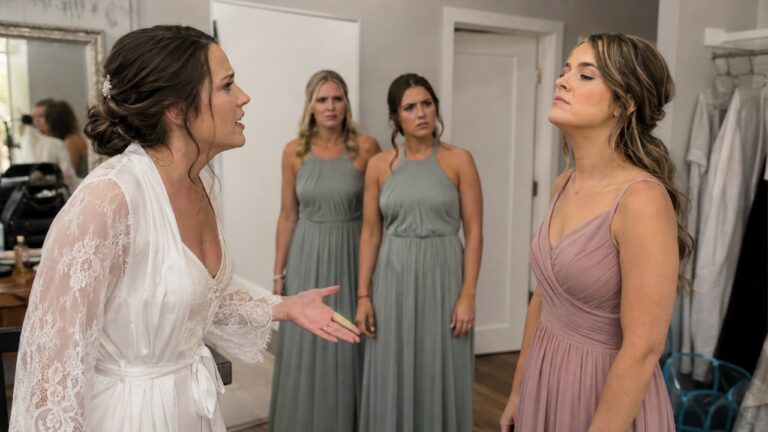
Photo credit: AI-generated image created using ChatGPT. Illustrative only.
There’s a certain kind of excitement that makes people forget they’re holding something fragile. A first pregnancy in the early weeks is exactly that—beautiful, hopeful, and still private for good reasons. When someone else grabs that moment and waves it around for attention, it doesn’t feel like joy. It feels like theft.
That’s the situation a 26-year-old bride-to-be laid out in the original post. She’s 10 weeks pregnant, and she and her fiancé told their immediate families early, but with a clear boundary: nobody else gets to know until after the first trimester. Then her fiancé’s sister posted an Instagram “get ready with me” story from a family dinner and casually referenced “becoming an auntie,” tagging the couple in the process.
The bride found out the way nobody wants to find out—by notification. Within minutes, she had dozens of messages from distant friends and coworkers, congratulating her on news she hadn’t even shared with her own friends yet. She was furious, called the sister and yelled, and then uninvited her from the wedding. Now the future in-laws are angry, saying she’s overreacting and “ruining the family” over what they called a silly social media post, while her fiancé is firmly on her side.
Early pregnancy isn’t just “fun news”
A lot of people treat pregnancy announcements like they’re all the same: a cute reveal, a few tears, then a flood of likes and comments. But ten weeks is early, and many couples wait for a reason. It’s not about being dramatic; it’s about being prudent with something that can change quickly and painfully.
Even if everything goes smoothly, those first weeks are often full of nausea, fatigue, doctor visits, and private worries a couple is still learning to carry together. The couple in this story wasn’t hiding the baby out of shame. They were practicing stewardship—protecting their hearts and their peace until they were ready to share.
The real issue: control and respect
Plenty of families get stuck arguing about whether the sister “meant” to do it. She said it was an accident, that she forgot, and that she was just teasing. Maybe she did forget. Maybe she didn’t. The problem is that the outcome is the same either way: the couple lost control of their own news.
Respect isn’t proven by what you intended; it’s proven by what you safeguard. If someone tells you, “This is private, don’t share,” your job isn’t to see how close you can get to the line while still claiming innocence. Your job is to keep your mouth shut and your phone in your pocket.
Tagging them is what pushes this from careless to reckless. It’s one thing to blurt something out in a moment of stupidity. It’s another thing to film, edit, post, and attach their names to it like it’s part of your content schedule.
Why the bride went nuclear
Uninviting someone from a wedding is a heavy move, and it’s not hard to see why the future in-laws are upset. Weddings are public, family-centered, and expensive, and everybody feels like they have a stake in the guest list. Pulling an invite can feel like declaring war.
But step into the bride’s shoes for a minute. She didn’t just lose a surprise; she got forced into an announcement. She had coworkers and distant friends messaging her before she could even catch her breath. That kind of exposure can feel violating, especially when your body is already going through a lot and you were trying to move carefully.
And yes, she called the sister “screaming.” That’s not ideal, and it rarely fixes anything. Still, people don’t blow up like that because they’re petty; they blow up because a boundary got trampled and they feel powerless. The question isn’t whether screaming is a mature communication tactic. The question is what kind of damage was done that got her there.
“You’re ruining the family” is a classic dodge
It’s amazing how often the person who broke trust gets treated like a victim, while the person reacting gets blamed for “causing drama.” In this case, the in-laws say she’s overreacting and ruining the family over a “silly social media post.” That phrase—silly—does a lot of work. It shrinks the offense so the offender doesn’t have to carry the weight of it.
Families do this because they want the noise to stop. They want the table to feel normal again. So they pressure the person with the most self-control, the most conscience, or the least appetite for conflict to just swallow it and move on.
But peace bought with dishonesty isn’t peace. If the sister learns she can cross a major line and the family will scold the couple for reacting, she’ll cross another line later. Maybe it won’t be about pregnancy next time. Maybe it’ll be something with the marriage, parenting decisions, money, or a private conflict that gets aired out for laughs.
The fiancé’s role matters more than people admit
The most encouraging detail in the source material is simple: the fiancé is on her side. That’s not a small thing. A man about to get married is leaving the “everybody gets a vote” stage of life and stepping into a new primary loyalty—his wife and the family they’re forming.
This is where plenty of men fold. They try to keep everyone happy, talk in circles, and hope the tension burns out on its own. But marriage doesn’t work that way. If a man won’t protect his home from his own relatives, he’s quietly teaching his wife she’s on her own.
Backing her doesn’t mean he has to hate his sister or scorch the earth. It means he treats the boundary as real, treats his future wife’s dignity as non-negotiable, and refuses to let the narrative become “she’s too sensitive.”
Consequences versus reconciliation
The wedding invite is the pressure point because it’s a privilege, not a right. Still, uninviting a close family member can turn one offense into a long-term feud if there isn’t a path back. Consequences should fit the offense, but they should also aim at restoration when possible.
A reasonable path back would start with the sister owning what happened without hiding behind “I forgot” or “I was teasing.” Real apology sounds like responsibility: “I broke your trust, I exposed your news, and I’m sorry.” Then comes repair: deleting the post immediately, telling people it wasn’t her news to share, and accepting whatever boundaries the couple sets going forward.
If she’s willing to do that, the couple could decide whether the uninvite stands or whether it becomes something else—like attending with clear guardrails and zero special treatment. If she’s not willing, the uninvite stops looking harsh and starts looking like basic wisdom.
A word about social media and family life
A lot of grown adults still act like social media is a hobby with no moral weight. But it shapes character. It tempts people to trade discretion for attention, and it rewards impulsiveness with instant feedback.
There’s a simple rule that would save families years of nonsense: if it isn’t your story, it isn’t your post. Not your pregnancy announcement, not your engagement details, not your conflict, not your reconciliation. A family is not a content farm, and a wedding is not a stage for someone else’s personality.
Marriage and parenthood demand maturity, and maturity often looks boring online. It looks like keeping confidences, waiting your turn, and refusing to turn private life into public entertainment.
If this couple can weather this season with clear boundaries and steady unity, they’ll be better prepared for the bigger pressures that come after the wedding. Babies have a way of exposing weak spots in a family system, but they also have a way of clarifying what matters. Protecting your home, your wife, and your peace isn’t “ruining the family.” It’s building one.
Read more from Thrive Girly:
- Mother-in-Law Expected to Sleep Over After Every Visit — Then the Mom Said Overnight Stays Were No Longer an Option
- Relatives Showed Up to the Wedding Without Being Invited — Then the Couple Refused to Find Them Seats
- Grandma Buckled the Baby Into Her Car and Left Without Telling Anyone — Then the Mom Made Sure It Never Happened Again