Husband’s Family Insisted the Baby Be Named After His Father by Tradition — Then the Mom Refused

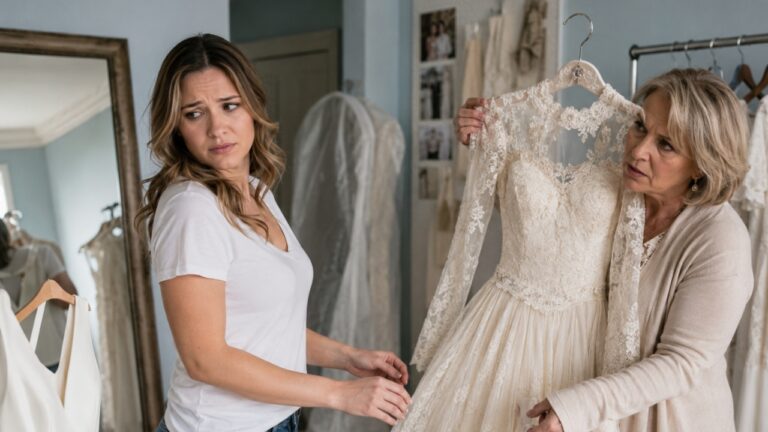
Photo credit: AI-generated image created using ChatGPT. Illustrative only.
A young wife, newly married and nearing the finish line of her first pregnancy, found herself in a familiar kind of family standoff. Not about money or where to spend the holidays, but about something deeply personal: what to name the baby. Her husband’s family, described as very traditional Arab, sat her down and laid out what they called the “rules” for naming a boy—he must be named after the husband’s father, as the family has done for generations.
She doesn’t want to do it. The father-in-law’s name is “very old” and traditional, and she’s not comfortable giving it to her son. She even floated the compromise of using it as a middle name, but the family doesn’t use middle names. The situation is laid out in the original post, along with the extra weight of cultural pressure: the family had warned their son for years about pregnancy before marriage, and she’s carried embarrassment and shame, even while acknowledging they’ve been supportive and generous.
This is where real life gets complicated. A baby name can sound like a small thing to outsiders, but it isn’t small to the parents who will say that name ten thousand times. And in a family system that’s built on tradition, names aren’t just names—they’re loyalty tests.
A name isn’t a trophy for the family system
In a healthy family, a baby’s name is chosen by the baby’s parents. Grandparents can have opinions, hopes, even strong preferences, but they don’t get a vote that overrides the mother and father. The hard part is that a lot of families don’t realize they’ve crossed that line; they call it “tradition,” but it functions like control.
Traditions can be beautiful. They can also become a way to keep younger couples in their place, especially when a young mother already feels like she owes everybody for “accepting” her. If you’re generous to someone and then use that generosity to claim their decisions, that isn’t support anymore. That’s leverage.
The pressure is intensified by how the marriage began
The wife shared that the pregnancy happened before marriage, and that his family had strongly warned him for years about that scenario. Even though the couple is now legally married and she says the marriage wasn’t solely because of the pregnancy, the timing clearly shifted things. That kind of start can leave a woman feeling like she needs to keep proving she’s respectful, grateful, and “worthy” of the family.
That’s a dangerous emotional setup, because it can turn normal boundaries into something that feels like rebellion. A mother can start thinking, “After all they’ve done for me, who am I to say no?” But parenthood doesn’t work if your parenting decisions are built on paying off social debt. A child is not a peace offering.
If a couple doesn’t address that dynamic early, it usually spreads. Today it’s a name. Next it’s circumcision, baptism, schooling, holidays, where you live, who gets to be in the delivery room, and whether the mother is allowed to rest without an audience. Setting the tone now matters, not because you want a fight, but because you want a marriage that’s actually a marriage.
Intercultural marriages can be rich and strong, but they require clarity. “I want to respect your traditions” is a good posture, and this wife has tried to take that posture seriously. Yet there’s a difference between honoring a culture and being drafted into someone else’s script for your own child.
It’s also telling that the family framed this as “rules.” Rules are for a household you live under. A married couple is a new household, and even if they live near extended family or rely on them for help, they’re still responsible before God for their own home. Honoring parents is biblical. So is leaving father and mother and holding fast to your spouse.
The husband’s faith background was mentioned too—he’s Catholic. Without turning this into a denominational debate, it’s fair to say his identity isn’t identical to his extended family’s expectations. His job now is not to keep the clan happy at all costs; it’s to love his wife, lead his home with wisdom, and protect unity. That can still include deep respect for his parents, but it can’t be the same thing as obedience to their demands.
Compromise isn’t always possible, but unity is required
The wife tried the obvious compromise: make the father-in-law’s name the middle name. The family doesn’t use middle names, so they rejected it. That leaves the couple with fewer options, but not zero options. Hyphenated names, alternative spellings, using the name in Arabic form versus an English form, or choosing a name that honors the grandfather without duplicating it exactly are all possible, depending on the family’s flexibility.
Still, there’s a sober point here: sometimes the other side won’t accept any compromise because the point was never the specific solution. The point was compliance. If that’s the situation, then the couple needs to stop negotiating like it’s a business deal and start deciding like parents.
The essential issue isn’t finding a clever naming hack. It’s the husband and wife getting on the same page and presenting a united front. A divided couple becomes an open door for relatives to keep pressing, pleading, shaming, and recruiting allies. A united couple can be calm, firm, and kind without being dragged around emotionally.
The husband needs to carry the hard conversation
If you’re the husband in this scenario, this is your lane. Your wife shouldn’t be the one going toe-to-toe with your relatives, especially while pregnant and already feeling the weight of being “accepted.” A man who leaves his wife to fight his family is quietly training everyone involved to see her as the obstacle instead of seeing the couple as the decision-makers.
That doesn’t mean he has to be harsh. It means he has to be clear. He can say, “We’re grateful for you, and we respect you. We’re also choosing our child’s name as his parents.” If he wants to honor his father, he can say so, and he can also acknowledge the tradition. But he has to draw a line that doesn’t move.
This is also where a husband’s backbone protects his future peace. If he caves now to avoid tension, he’s buying short-term quiet with long-term chaos. His wife will remember that he didn’t stand with her, and his family will learn that pressure works. Neither outcome is good for a new home.
Choose a path you can live with for the next 18 years
The wife said something simple and honest: she imagined choosing a name she loved and felt connected to. That’s not selfish. A mother is going to say her child’s name in prayer, in discipline, in laughter, in fear at the emergency room, and in pride at graduations. If she feels she “gave up” her first major decision as a mother, resentment can take root even if she tries to ignore it.
At the same time, the couple should think practically about the relational cost of whatever they decide. If they reject the tradition outright, there may be pushback. If they accept it grudgingly, there may be bitterness. The aim isn’t to avoid all consequences; it’s to choose consequences you can carry with a clean conscience and a stable marriage.
There’s also the child to consider. A child shouldn’t grow up feeling like his name was a battleground. That’s another reason unity matters. Whether the couple chooses the traditional name, a modified version, or a completely different name, they should be able to tell their son later, “We chose your name with love and with purpose,” not “We chose your name because we were cornered.”
A strong family tradition can be a gift, but it can’t be forced at the expense of the new family being formed. The best outcome here isn’t the in-laws “winning” or the mother “winning.” It’s a husband and wife acting like a team, honoring extended family without handing them the steering wheel, and giving their child a name they can speak with joy instead of regret.
Read more from Thrive Girly:
- Mother-in-Law Expected to Sleep Over After Every Visit — Then the Mom Said Overnight Stays Were No Longer an Option
- Relatives Showed Up to the Wedding Without Being Invited — Then the Couple Refused to Find Them Seats
- Grandma Buckled the Baby Into Her Car and Left Without Telling Anyone — Then the Mom Made Sure It Never Happened Again