Woman Says Her Mother-in-Law’s Wedding Dress Demand Became a Test of Her Future Marriage
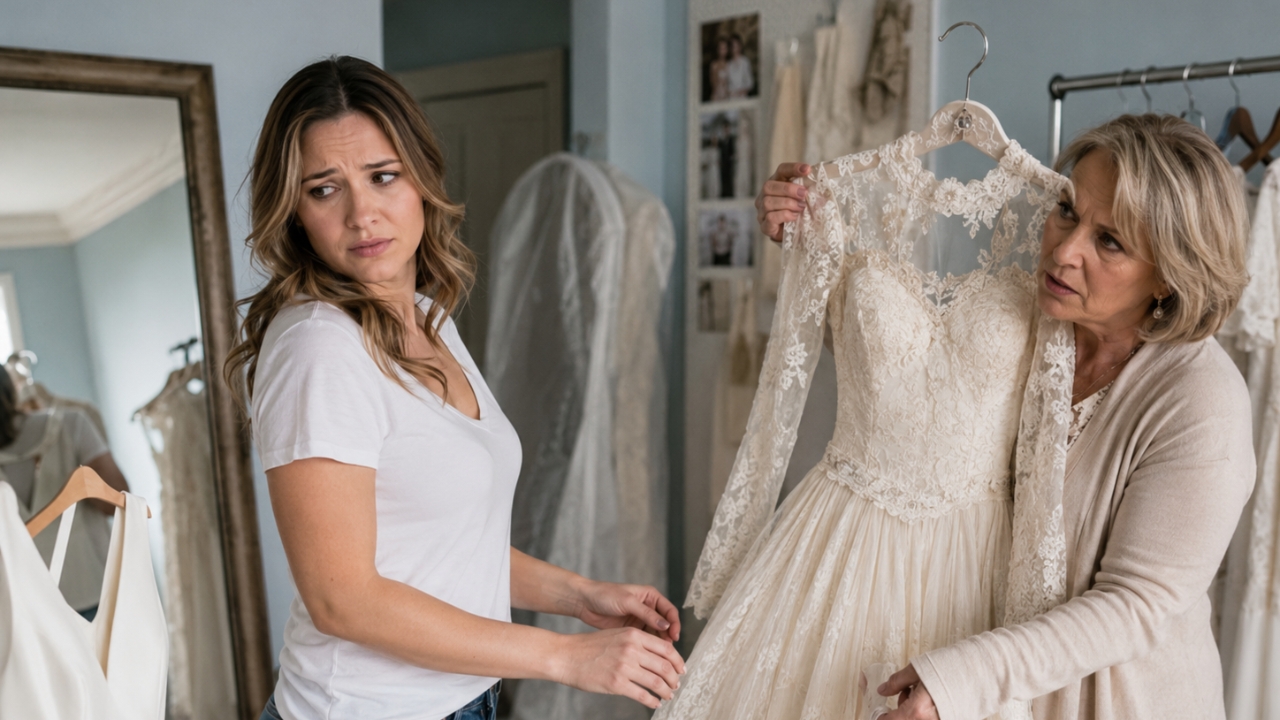
A bride-to-be said her future mother-in-law turned wedding planning into a fight after insisting she wear the older woman’s wedding dress, even though the bride had already pictured choosing a dress of her own.
The woman shared the situation on Reddit, explaining that she was engaged and planning her wedding when her future mother-in-law made a request that sounded sentimental on the surface. She wanted the bride to wear her old wedding dress.
For some families, that kind of request might be sweet. A passed-down dress can carry history, memories, and a feeling of connection between generations. But for the poster, the offer did not feel like a gentle suggestion. It felt like pressure.
She already knew what she wanted for her wedding day. Like many brides, she had imagined finding a dress that felt like her, fit her body, matched her style, and made her feel confident walking down the aisle. Wearing someone else’s old dress, especially one she had not chosen, did not fit that picture.
The problem was that her future mother-in-law did not seem to treat the answer as optional.
According to the poster, when she said she did not want to wear the dress, her future mother-in-law became upset. The older woman framed the refusal as hurtful, as if the bride was rejecting not only the dress but also the family behind it. Suddenly, a wedding outfit became a symbol of whether the bride was willing to honor her fiancé’s family.
The bride did not see it that way.
She was not trying to insult her future mother-in-law. She simply did not want to wear a dress she had not picked for one of the most personal days of her life. Still, the disagreement grew because the future mother-in-law seemed to expect the bride to give in for the sake of tradition, emotion, or family peace.
The woman brought the situation to Reddit in a post titled “AITA for telling my future mother-in-law that I don’t want to wear her old wedding dress on my wedding day?”: https://www.reddit.com/r/AITAH/comments/1k9m467/aita_for_telling_my_future_motherinlaw_that_i/
The conflict was not really about fabric. It was about control.
A wedding dress is one of the few parts of a wedding that belongs very personally to the bride. Other pieces often become group decisions: food, music, guest lists, seating, budgets, timing, and family expectations. But the dress is tied to how the bride wants to feel in her own body on a day where everyone will be looking at her.
That made the future mother-in-law’s insistence feel intrusive. She was not only offering something meaningful. She was asking the bride to give up the experience of choosing for herself.
The pressure also put the fiancé in an important position. If his mother saw the dress as an emotional family gesture, he might have felt caught between the woman he planned to marry and the mother who felt rejected. But for the bride, that was part of the test. Would her fiancé understand that his mother’s feelings did not get to decide what his future wife wore?
Wedding conflicts often reveal family dynamics that already exist under the surface. A person who pushes over a dress may later push over guest lists, holidays, baby names, childcare choices, and where the couple spends their time. That does not mean every wedding argument predicts disaster, but it can show who expects to have the final say.
For the poster, the future mother-in-law’s reaction raised that concern. If saying no to a dress caused this much tension, what would happen the next time she made a choice the older woman disliked?
The bride seemed to understand that the dress may have sentimental meaning. She may have even appreciated the offer in theory. But appreciation is not the same as obligation. A family heirloom can be offered with love, but the recipient still gets to decide whether it belongs in her wedding.
The hardest part was that refusing the dress made her look like the difficult one. The future mother-in-law was able to frame herself as the hurt party, while the bride was left defending why she wanted to wear her own dress to her own wedding.
That is how many family boundaries become complicated. The person making the demand presents it as love, tradition, or unity. The person saying no is then accused of being cold, selfish, or disrespectful. But a boundary can be respectful and firm at the same time.
The bride’s decision was simple: she did not want to wear the dress. The fallout around that decision was what made her question whether she was wrong.
Commenters largely sided with the bride and said she was not wrong for refusing the dress.
Many said a wedding dress is deeply personal, and no bride should be pressured into wearing something she does not want. They pointed out that the future mother-in-law could offer the dress, but once the bride declined, the conversation should have ended.
Several commenters said the mother-in-law’s reaction made the request feel less like a gift and more like a demand. A true gift, they argued, does not come with emotional punishment if the recipient says no.
Others suggested possible compromises if the bride wanted to keep peace without giving up her own dress. She could use a small piece of fabric from the old dress in a bouquet wrap, sew a small section into the lining of her gown, display the dress at a family table, or take a photo with it before the wedding. But commenters were clear that those compromises should only happen if the bride actually wanted them.
A number of people also said the fiancé needed to handle his mother. Since the conflict involved his family, commenters felt he should make it clear that the bride’s dress decision was final and that his mother needed to respect it.
Some warned the bride to pay attention to the pattern. If the future mother-in-law was this forceful about the dress, commenters said, the couple should set boundaries early before the wedding planning became a series of battles.
A few people felt the bride could be gentle in how she declined, acknowledging that the offer meant something while still saying the dress was not what she wanted. But even those commenters generally agreed she did not owe anyone her wedding-day appearance.
The strongest message was that the bride’s body, comfort, and wedding vision mattered. Wearing a dress to avoid upsetting someone else would not be a beautiful family tradition. It would be the bride surrendering a personal choice because someone else refused to accept no.