Sister-in-Law Refused Help While Her Baby Was Starving on Her ‘Breastfeeding Journey’ — Then Her Husband Filed for Divorce and Custody
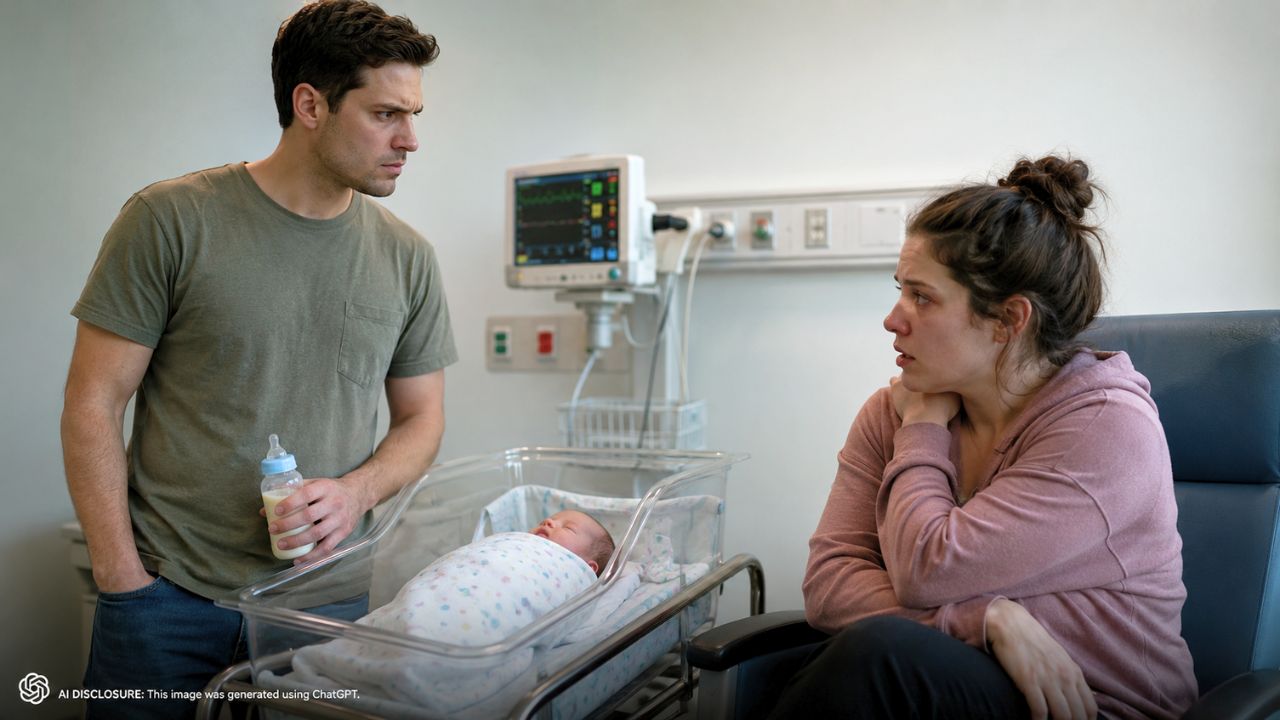
Photo credit: AI-generated image created using ChatGPT.
There’s a particular kind of danger that shows up in new parenthood: the temptation to treat the baby as a stage for the parents’ identity. In a story shared in the original post, that temptation wasn’t just annoying or immature. It turned into a medical emergency for an 11-week-old girl who doctors reportedly said had been starving for a long time.
The family is in Europe, and the baby’s mother, “Julia,” was committed to breastfeeding. The problem was that the baby, “Amanda,” wasn’t gaining weight and at one point was described as dropping to the 0.1 percentile. What should’ve been a straightforward “feed the baby” moment turned into isolation, denial, and eventually a hospital admission that left the husband talking divorce and custody.
Any time a story like this hits the light, it’s messy. There’s postpartum vulnerability, family dynamics, money pressure, pride, and the ugly power of a narrative: “I’m doing it the right way, so don’t question me.” But one detail doesn’t bend, no matter what country you live in or what parenting philosophy you prefer. Babies have to eat.
A baby’s weight isn’t a parenting preference
According to the account, Amanda struggled with weight gain from the beginning, often losing instead of gaining. Julia pursued breastfeeding, but her supply reportedly didn’t increase despite pumping, and a tongue tie was corrected without solving the bigger issue. The baby was being topped up with donor milk through a tube feeding method.
Those details matter because they show this wasn’t a casual situation. Frequent weight checks were happening, and professionals were already involved. When a newborn is falling behind that badly, it stops being about which feeding method is most admirable and becomes a basic question of survival.
Breastfeeding can be a good thing, and plenty of families work through a hard start. But the goal isn’t a medal for persistence. The goal is a thriving child, and sometimes the most mature, motherly move in the room is to pivot fast—because your baby can’t wait for your plan to work.
Isolation and suspicion can turn a household upside down
One of the more disturbing threads in the story is how quickly Julia reportedly cut off family. The narrator says she and her mother were forbidden to visit and were told they would “poison” Julia if they brought food. That’s a serious accusation, and it also functioned as a wall: no help, no witnesses, no hard conversations.
Before the birth, the narrator says she and Julia were close. Afterward, even mild concern—like noticing a baby crying and appearing hungry in a video—was met with outrage and a full cutoff. In families, isolation doesn’t usually fix problems. It usually gives problems room to grow in the dark.
Plenty of new moms want privacy, and not every relative has good boundaries. But when a baby is failing to thrive, shutting everyone out isn’t just “protecting your peace.” It can become part of the danger, especially if it keeps sane voices away from a situation that’s drifting toward crisis.
The weight-check incident that changed everything
The breaking point, as described, happened at a routine weigh-in appointment. Julia asked her husband to bring her coffee while she used a nursing room to change the baby. While he was gone, a nurse reportedly walked in and saw Julia feeding the baby a bottle before the checkup—something the nurse said she was supposed to wait to do until afterward.
That moment matters because it introduced the possibility of manipulation. The husband—who up to that point had seemingly trusted Julia’s decisions—became angry and confused, and then the situation escalated fast. As he took the bottle, the baby vomited “very, very thick milk,” and the nurse discovered the bottle reportedly contained milk mixed with rice cereal.
The doctor was called, and the baby was moved to the hospital for emergency evaluation. The mother, the narrator says, began throwing things and yelling that she would feed her baby “however and whenever she wants.” If the account is accurate, it wasn’t a misunderstanding. It was a collision between adult pride and a child’s frail body.
Starvation findings and a mother’s reported admission
At the hospital, the family says blood tests showed problems involving kidneys, liver, vitamin levels, and iron. Doctors reportedly told them the baby had been starving for a long time and asked why no one in the family reacted sooner. The family explained they’d been cut off and accused of intending harm.
The doctors also ordered a psychiatric evaluation for Julia for postpartum depression. The narrator says it “turned out she was faking it,” and that Julia admitted she had been told by a friend that if she faked PPD, the family would leave her alone so she could have peace during her breastfeeding efforts. That’s a heavy claim, and only the hospital staff would know what was actually said, but the account portrays a mother who felt cornered and chose deception rather than support.
Most people hear “PPD” and think, rightly, about compassion. But compassion doesn’t mean playing along with a story that endangers a baby. If professionals believed the baby was in danger, they had to act, and the post says Julia was given a choice: another evaluation or police involvement. She agreed to evaluation and was reportedly admitted for a week.
The husband’s long work hours and the cost of passivity
The narrator describes the husband working 14 hours a day because money was tight, and because Julia wanted to be a “traditional wife” after the wedding. Whether or not that arrangement was wise, it set the stage for a familiar trap: dad is exhausted, mom is isolated, and both of them are living on a thin edge of stress. In that kind of season, a person can mistake “I’m providing” for “I’m paying attention.”
According to the post, the husband assumed Julia’s choices “must be right” because she was the mother and he was working. Then he saw enough to believe something darker was happening, and he reportedly said she starved the baby on purpose and that he wanted a divorce and full custody. The doctors, the narrator adds, were also angry with him for not noticing sooner.
Men need to hear that without defensiveness. Earning money is real work, and long hours can be necessary, but fatherhood doesn’t outsource discernment. If something feels off—weight dropping, constant crying, tense secrecy—you don’t wait for a disaster to force you into leadership.
“Journey” language can become a cover for control
The narrator’s confrontation with Julia happened before Julia was admitted. She told her sister-in-law that the situation wasn’t about a breastfeeding “journey,” but about a hungry baby’s life. Julia responded with insults, including a cruel remark about the narrator being autistic, and the narrator ended by asking whether she was wrong for speaking up.
Whatever you think of family conflict, it’s hard to argue with the central point: parenting isn’t supposed to be a self-expression project. “Journey” language can be fine when it means perseverance, learning, and humility. It turns poisonous when it means, “No one can question me, and facts don’t matter.”
The baby’s needs don’t negotiate with adult identity. If breastfeeding is working, great. If it’s not, then feeding the baby matters more than winning an argument with your own pride.
What this kind of crisis exposes in a family
This story also shows how quickly a family can fracture under fear. The narrator and her mother were pushed away, the husband was stretched thin, professionals were trying to track a baby’s weight, and the mother seems to have felt threatened by anyone who suggested a bottle. Add in reported deception around weigh-ins, and you have a household running on secrecy instead of trust.
There’s a spiritual layer here, even if nobody names it out loud. Humility isn’t just a virtue for Sunday mornings; it’s what keeps a mother teachable, a father alert, and a marriage honest. Pride doesn’t always look like swagger. Sometimes it looks like doubling down while your baby shrinks.
Custody and divorce are legal matters the courts will sort out, and no online stranger can predict how that will go. But the moral responsibility is clearer: adults don’t get to use children as props, shields, or bargaining chips. A baby is a life to steward, not a storyline to defend.
If there’s any mercy in the mess, it’s that Amanda ended up in a hospital where people took her condition seriously. Families can recover from a lot—hurtful words, bad decisions, even a season of delusion—if they tell the truth and accept help. But that starts with the grown-ups admitting the obvious: a child’s hunger is an emergency, not a debate.
Read more from Thrive Girly:
- Mother-in-Law Expected to Sleep Over After Every Visit — Then the Mom Said Overnight Stays Were No Longer an Option
- Relatives Showed Up to the Wedding Without Being Invited — Then the Couple Refused to Find Them Seats
- Grandma Buckled the Baby Into Her Car and Left Without Telling Anyone — Then the Mom Made Sure It Never Happened Again