Boyfriend’s Mom Kept Letting Herself Into His Apartment With Her Own Key — Then His Girlfriend Refused to Move In Unless It Stopped
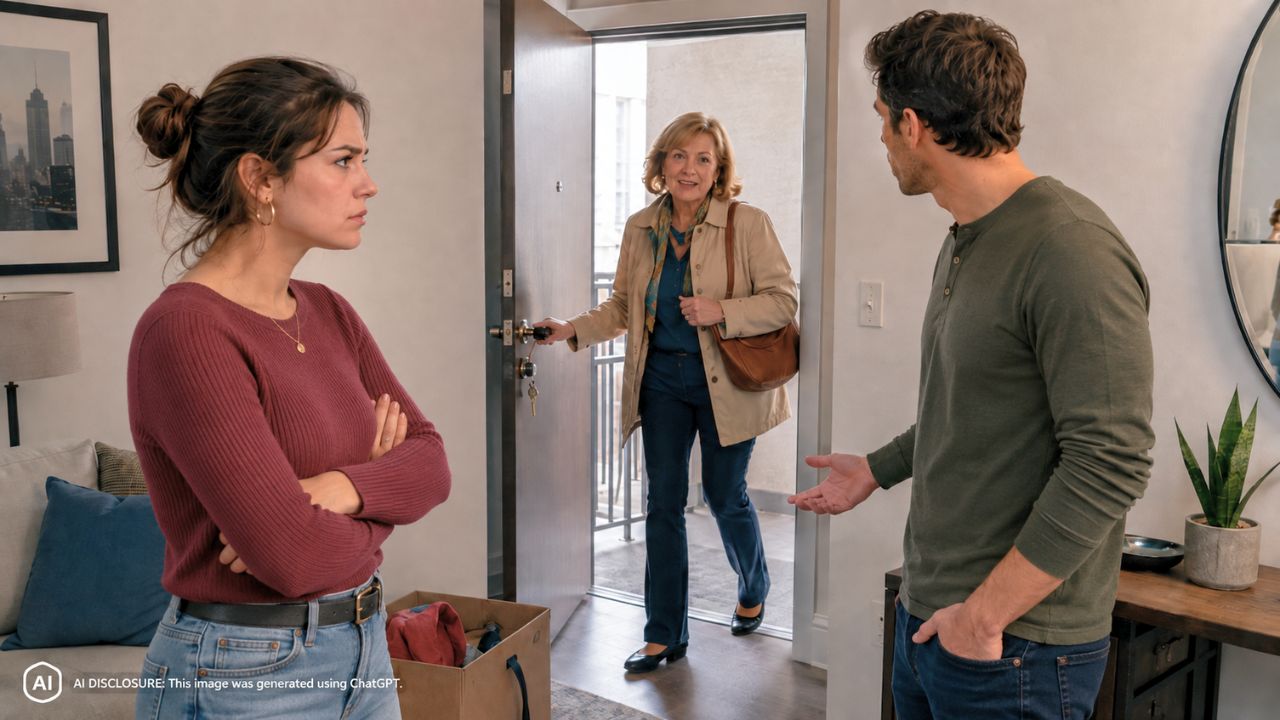
Photo credit: AI-generated image created using ChatGPT.
A lot of relationship problems don’t start with betrayal or big blowups. They start with small habits nobody wants to challenge, and then one day you realize you’ve been living inside somebody else’s comfort zone. Privacy gets treated like a luxury instead of a basic ingredient for adult life.
That’s the tension in the original post, where a 23-year-old woman says she’s been dating her 26-year-old boyfriend for about two years and they’re talking about moving in together. The problem is his mom has a key to his apartment and uses it whenever she feels like it—no text, no call, just the sound of a door opening while you’re trying to live your life.
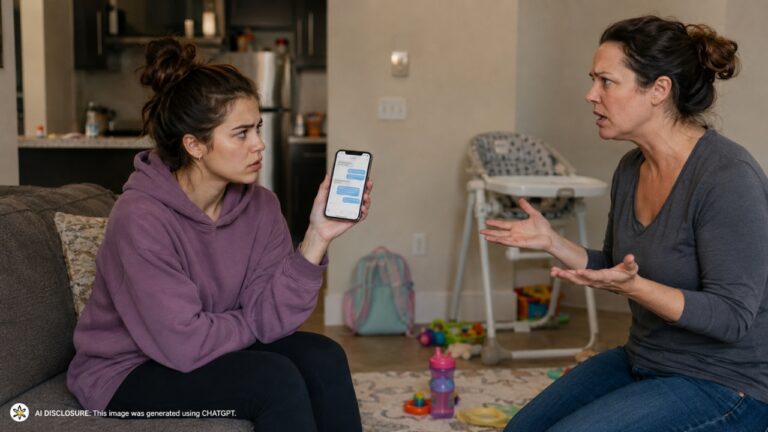
Sometimes she shows up with food. Sometimes it’s just to say hi. The girlfriend tried to bring it up, but her boyfriend brushes it off and avoids the conversation, saying it’s “not worth making her mad.” Then, in the middle of an argument between the couple, the mom walked right in and started talking about her garden like nothing was happening, and the girlfriend finally said she won’t move in unless the key-and-drop-in routine stops.
Unannounced entry isn’t “close family,” it’s a boundary problem
Let’s just call this what it is: letting yourself into another adult’s home unannounced is not normal, even if you’re the one who gave birth to him. “She’s nice” and “she brings food” are not magic words that turn an intrusion into a sweet gesture. It can be well-intended and still be inappropriate.
There’s a difference between family being welcome and family having access. Welcome means you’re invited. Access means you’ve got the run of the place, and everyone else is expected to adapt. If you’re trying to build a shared life with someone, the home can’t feel like a hallway people wander through.
A man who won’t talk about the key is telling you something
The girlfriend said she doesn’t even know why his mom has the keys, and when she asks, he switches subjects. That’s not a small detail. If a man can’t have a calm, grown-up conversation about something this basic, he’s not just avoiding conflict—he’s handing the steering wheel to someone else.
Some men learned early that peace is keeping Mom happy. They don’t necessarily think of it as fear; they think of it as “respect” or “not rocking the boat.” But once you’re an adult, “respect” starts looking a lot like responsibility: you honor your mother, but you also set the tone for your household. If you can’t do both, you’re not leading—you’re managing feelings.
Moving in is not a roommate upgrade; it’s the start of a household
Plenty of couples treat moving in like a convenience move: lower rent, more time together, fewer commutes. But the real shift is that you’re building a home, not just sharing space. A home needs safety, predictability, and the ability to exhale without wondering who’s going to walk in.
If his mom can enter whenever she wants, the girlfriend isn’t just moving in with her boyfriend. She’s moving into a setup where she’s perpetually “visiting” someone else’s place, even if her name is on the lease. That wears on a person. It also changes how you argue, how you reconcile, how you relax, and how you handle intimacy—because privacy is always conditional.
“You’re making me choose” is a dodge, not an argument
When she said she won’t move in unless it stops, he got quiet and told her she was making him choose between her and his mom. That’s a classic misdirection. She didn’t ask him to cut his mother off. She asked him to close the door.
Healthy adulthood includes ranking responsibilities. A man can love his mother and still tell her, “You can’t let yourself in anymore.” If he can’t draw that line, what he’s really saying is: “Your comfort matters less than my mom’s emotions.” And nobody should sign a lease on those terms.
Tears don’t automatically mean you did something wrong
After he brought it up, his mom cried, and now the girlfriend feels like the worst person ever. That reaction is understandable, especially if you’re a decent person who doesn’t enjoy hurting people. But tears aren’t a moral scoreboard. Sometimes people cry because they’re genuinely sad; sometimes they cry because the old arrangement worked for them and they don’t want it to change.
The bigger issue is that the boyfriend seems to interpret his mother’s emotions as an emergency he must solve. If the household rules can’t stand up to a little discomfort, they aren’t rules—they’re suggestions. Adult relationships can’t be built on the premise that one person is never allowed to feel disappointed.
The practical fix is simple; the relational fix takes backbone
On the practical side, this is easy: she returns the key, or the locks get changed, and visits happen by invitation. People who respect you will adjust. People who don’t will call it disrespect. Either way, the confusion ends quickly.
On the relational side, the boyfriend needs to decide what kind of man he wants to be. If he’s serious about a future with this woman, he needs to speak to his mother clearly and kindly, without blaming his girlfriend as the bad guy. “We’re building a life together, and we need privacy. Please call or text before coming over, and we won’t be doing walk-ins anymore.” Not a debate, not a negotiation, not a guilt-driven apology—just a boundary stated like an adult.
And the girlfriend needs to be careful about moving forward on hope alone. It’s fine to give a man room to grow, but growth has to show up in decisions, not intentions. If he won’t act now—before she moves in—she’s getting a preview of what marriage decisions will look like later: avoidance, pressure, and a third party with a vote.
If he can’t protect privacy now, he won’t protect bigger things later
Today it’s a key and an awkward interruption in the middle of an argument. Tomorrow it can be parenting opinions delivered like orders, holidays dictated without discussion, finances second-guessed, or private conflicts becoming family group-chat material. A man who won’t guard the front door often won’t guard the marriage.
Faith has something to say here, even without turning it into a sermon. Honoring your parents is real, and it matters. But adulthood also means leaving childish dependency behind and taking responsibility for your own house. A man who can’t say “no” with respect is not trapped by his mother; he’s trapped by his own fear of discomfort.
The girlfriend isn’t wrong for refusing to move in under these conditions. She’s not demanding luxury; she’s asking for a normal expectation: a home where the people inside control the lock. If the boyfriend wants a future with her, this is one of those moments where he stops being a son who appeases and becomes a man who leads—calmly, firmly, and without making the woman he loves carry the blame.
Read more from Thrive Girly:
- Mother-in-Law Expected to Sleep Over After Every Visit — Then the Mom Said Overnight Stays Were No Longer an Option
- Relatives Showed Up to the Wedding Without Being Invited — Then the Couple Refused to Find Them Seats
- Grandma Buckled the Baby Into Her Car and Left Without Telling Anyone — Then the Mom Made Sure It Never Happened Again