In-Laws Kept Adding Guests to the Wedding List by ‘Tradition’ — Then the Bride Uninvited One Herself
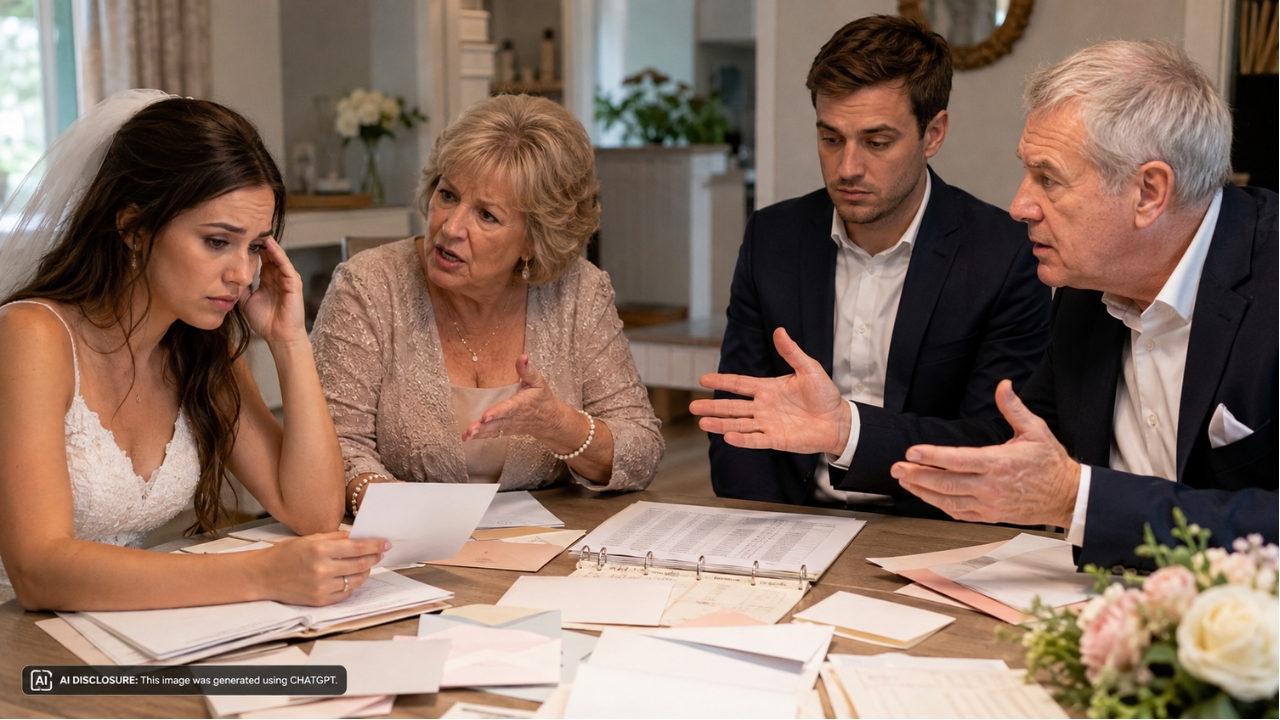
Photo credit: AI-generated image created using ChatGPT.
There’s a particular kind of stress that shows up right before a wedding: not the normal “did we order enough chairs” stress, but the slow realization that other people think your day belongs to them. You can feel it in the polite smiles, the “just one more thing,” and the way “tradition” becomes a battering ram for getting what they want.
In the original post, a bride laid out a situation that will sound familiar to a lot of men: she tried to keep the guest list small and meaningful, but her in-laws kept adding people she didn’t invite. She’d already swallowed a lot to keep the peace, and then she got RSVPs back from four additional guests she says she never agreed to at all. Their stated reason was “helpful”—one of the guests’ daughters speaks the same language as the bride’s mother, who’s traveling from abroad and doesn’t speak English or the local language.
The bride didn’t hate these people. She just didn’t want strangers—or near-strangers—at an intimate event that was already slipping out of her hands. Her father-in-law warned it would be “embarrassing” to uninvite them. Her fiancé, meanwhile, didn’t see it as a big deal, which is its own kind of problem.
A wedding guest list isn’t a community bulletin board
Some families treat weddings like public property. If you’re in their orbit—coworker, distant acquaintance, someone they see once or twice a year—you’re “supposed” to get an invite. They’ll call it hospitality, culture, tradition, or respect. Sometimes it really is part of the fabric of how they do life, and they aren’t trying to be manipulative.
But a wedding isn’t a neighborhood cookout. It’s a covenant ceremony and a family watershed moment, and it’s also a real event with real costs—space, food, seating, and the simple weight of having to greet and host people you barely know. The bride in this situation had already agreed to about 20 people on her in-laws’ “personal guest list,” even though she didn’t want that. The issue wasn’t just “four plates.” It was the pattern: the list keeps growing because someone else feels entitled to the pen.
“Good intentions” can still be an overstep
The language-companion idea sounds thoughtful on paper. The bride’s mother is coming from abroad, she doesn’t speak the common language, and having someone around who can speak with her could keep her from feeling isolated. If you’re a parent, you can understand why an in-law would want to solve that problem.
But there’s a difference between solving a problem and taking control. The bride said her mother would already have plenty of Spanish-speaking people to talk to, so it wasn’t as if she’d be sitting alone all night. More importantly, the in-laws didn’t ask. They just invited people, got affirmative RSVPs, and dropped the news like it was a done deal. Good intentions don’t cancel the need for permission.
The quiet danger: a passive groom and a loud family system
The fiancé in the post “doesn’t care too much” and doesn’t think it’s a big issue if the extra people come. That sounds easygoing, maybe even mature, until you realize what it often means in real life: “I’d rather not deal with the conflict.” Some men confuse peacekeeping with leadership. They think going along is the same as being flexible.
But marriage has a way of revealing what you’ve been avoiding. If a man can’t—or won’t—draw a line with his parents on his wedding day, he’s not just dodging a guest list fight. He’s training his future home to live under somebody else’s thumb. It’s not about being harsh or disrespectful. It’s about taking responsibility for the household he’s building and protecting his wife from being isolated as “the difficult one” who always has to say no.
One detail from the bride stuck out: she said she keeps compromising, and then somehow ends up comforting her father-in-law when he feels guilty about pushing too far. That’s a sign the emotional burden is landing in the wrong place. Adults can feel disappointed without being rescued from their feelings.
Money isn’t the only cost, but it is a real one
The bride mentioned that extra guests do cost more per plate, though in her culture wedding gifts are often money meant to cover one’s attendance. She also said it wasn’t about money—it was about looking at photos later and seeing strangers in the frame on a day that was supposed to be small and intimate.
That’s a fair point. A wedding is a memory-making machine. You’re paying for pictures, video, table settings, and all the little details because you want to remember the people who were there, not wonder who they were. Even if the budget “balances out,” the emotional cost doesn’t. When you feel like a guest at your own wedding, resentment doesn’t disappear just because the catering bill got covered.
Compromise is not surrender, and couples need to know the difference
Reasonable couples compromise. They take input, they honor family, and they recognize that weddings involve more than two people. The bride in the post listed a long set of compromises she’d already made: agreeing to a wedding she didn’t really want (she would’ve preferred to elope), accepting unknown guests, the date, a videographer, and even the table setting. That’s not a person refusing to bend. That’s a person being bent.
A compromise is an agreement you can live with. Surrender is something you do while telling yourself you don’t have a choice. If you keep surrendering, you don’t get a peaceful marriage—you get a quiet buildup of contempt. And contempt never stays in the wedding planning folder. It leaks into holidays, parenting decisions, finances, and how you speak to each other when you’re tired.
She chose peace for the day, but resentment doesn’t stay polite
In the end, the bride decided to “let them come.” She didn’t want to embarrass her father-in-law, and she didn’t want to put the uninvited guests in an awkward position when it wasn’t their fault. She also mentioned her own mother begged her not to uninvite them for the sake of the relationship with the father-in-law.
That decision makes human sense. It’s the kind of call people make when they’re worn down and trying to keep the wheels on the bus until the big day is over. But she also admitted she’s resentful and doesn’t forget easily, and she’s worried she’ll regret either option. That’s the part that should sober everyone up, especially the groom. A wedding is one day; the residue from one day can settle into the marriage for years.
The boundary isn’t “no guests,” it’s “ask us first”
The cleanest boundary here isn’t scorched-earth hostility toward the in-laws or disdain for their traditions. It’s a simple rule: nobody gets invited without the couple’s agreement. If the in-laws want to recommend guests, fine—make a list, present it, and let the couple decide. If the answer is no, the answer is no, and the parents can survive the discomfort of not running the show.
And if parents are contributing financially, the couple needs to be honest about what that money buys. Help is help. Control is control. The bride even said she’d rather pay for everything herself and do it her way. That’s not ingratitude; that’s clarity. A man should respect that kind of clarity, because it’s exactly what will keep future decisions from turning into a tug-of-war between “family expectations” and the home he promised to build.
What sticks with me isn’t the four extra RSVPs. It’s the way “that’s how it is” gets used to flatten a bride’s voice and excuse a groom’s passivity. A marriage can handle difficult relatives and awkward conversations, but it struggles under silent surrender. If a couple can’t own their own guest list, they’re not just planning a wedding—they’re rehearsing a marriage where other people get a vote.
Read more from Thrive Girly:
- Mother-in-Law Expected to Sleep Over After Every Visit — Then the Mom Said Overnight Stays Were No Longer an Option
- Relatives Showed Up to the Wedding Without Being Invited — Then the Couple Refused to Find Them Seats
- Grandma Buckled the Baby Into Her Car and Left Without Telling Anyone — Then the Mom Made Sure It Never Happened Again