Mother-in-Law Said She Had a Right to Be at the Birth — Then the Hospital Was Given a Very Short List
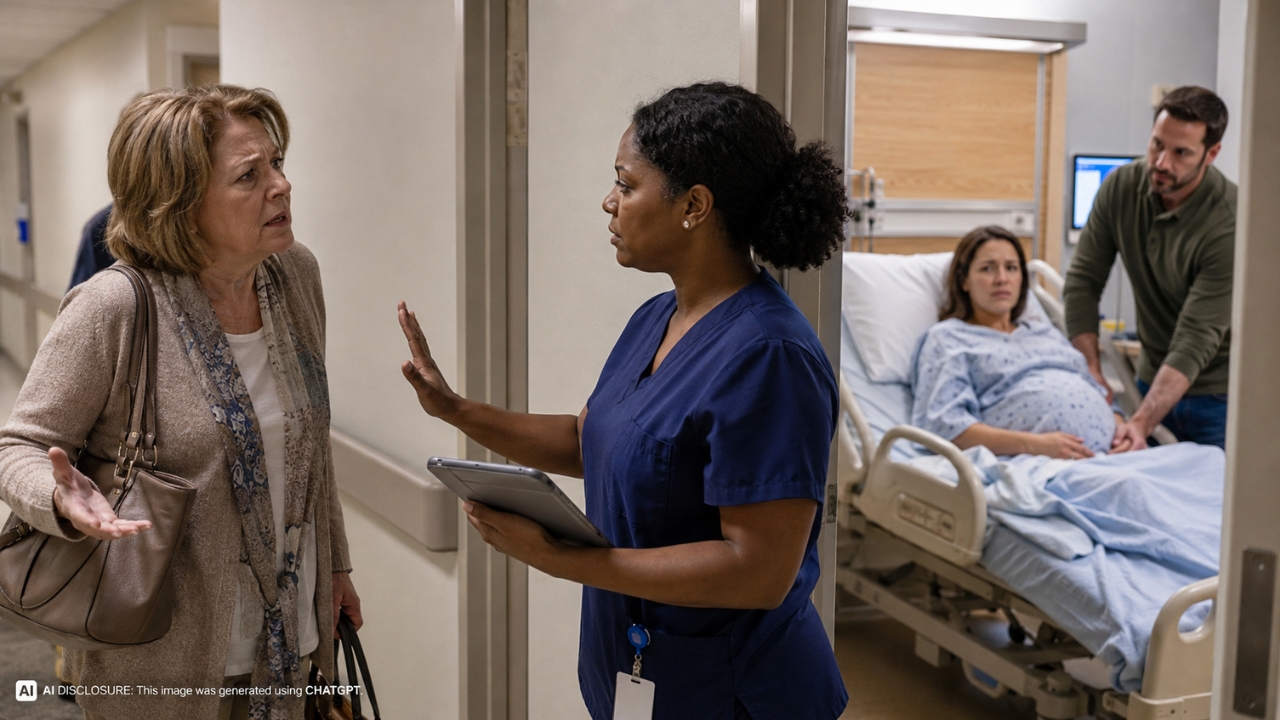
Photo credit: AI-generated image created using CHATGPT. Illustrative only.
At 33 weeks pregnant, she thought the hard part would be the waiting. The nursery planning. The nervous excitement. Instead, the biggest stressor in her final stretch has a name and a set of keys to their front door.
This is her first baby—a little girl she calls a miracle after being told at 19 that she was infertile. She and her husband have been together just over three years, and she says she’s never been happier to be proven wrong by life. But as her due date gets closer, she’s realizing something else: her pregnancy has started to feel like it belongs to someone else, too.
The problem started way before the delivery room
In the beginning, her relationship with her mother-in-law was easy. They got along, things felt normal, and there weren’t any obvious warning signs. That changed once she and her husband moved in together.
Suddenly, his mom was at their house “literally every single night,” staying until around 10 p.m. The couple time she assumed would happen naturally—quiet dinners, nights on the couch, the kind of privacy most newly cohabiting couples take for granted—kept getting swallowed up by a third presence who never seemed to go home.
And it wasn’t just the frequency. It was the way she behaved when she was there. The pregnant woman says her mother-in-law talks to her like she’s “just an incubator,” and sometimes will speak directly to her stomach without acknowledging her at all.
It’s hard to feel like a person when someone treats your body like a group project. Hard to feel respected when you’re standing right there and still somehow not being addressed.
She wanted one thing during labor: her husband’s support
By the time she hit the third trimester, she had a clear picture of what she wanted for the birth: her husband with her, supporting her, focused on her and their baby. No extra pressure. No audience. No one who would make her feel like she had to perform.
She didn’t want her mother-in-law in the delivery room. Not because she was trying to punish anyone, but because the idea of laboring while her most overbearing critic hovered nearby sounded like a nightmare.
And she already knows how it goes when his mom is around. She says her husband is very close with her, and she fears that if his mom is in the room, he’ll spend the whole time tending to her—checking in on her feelings, explaining things to her, calming her down—while his wife is the one actually giving birth.
Birth is already vulnerable. Add in someone who has a history of taking up all the oxygen in a room, and it stops being vulnerable and starts being impossible.
The conversation didn’t go the way she expected
When she brought it up to her husband, she wasn’t trying to start a war. She was trying to set expectations before it became a last-minute fight at the hospital doors.
But instead of hearing her out, he shut it down. He told her she was being “ridiculous and selfish,” and that she needed to “get used to her being around a lot.”
That sentence is doing a lot of heavy lifting. Because it’s not just about the delivery room anymore—it’s about the rest of their lives. It’s a preview of what happens when his mother wants access, and his wife wants space.
He also made it clear he wasn’t willing to “let” her ban his mom from coming. Which is exactly the kind of language that makes this feel even worse: as if the person giving birth doesn’t get final say over who watches her do it.
Friends told her to ignore it—but she couldn’t
On the outside, some people in her life tried to smooth it over. Her friends suggested she should just let her mother-in-law be there and ignore her.
It’s the kind of advice people give when they want peace more than they want fairness. The logic is simple: labor will be intense, you’ll be distracted, it’ll be fine. But that ignores what she already knows about this dynamic.
This mother-in-law doesn’t fade into the wallpaper. She’s already dominating evenings and inserting herself into the couple’s home life. She’s already making the pregnant woman feel dehumanized. Pretending she can simply “ignore” a person like that—during the most physically demanding event of her life—feels unrealistic.
Plus, ignoring someone in a delivery room isn’t the same as ignoring them at a backyard barbecue. She’d be in pain. Exposed. Possibly scared. The stakes are higher, and the emotional memory lasts longer.
So she asked the question a lot of expecting parents quietly wrestle with but don’t always say out loud: was she wrong for refusing to have her mother-in-law there?
Her full account is in the original post, where she laid out just how constant and intrusive the behavior has been since moving in with her husband.
When “close” starts looking like crowded
What makes this situation feel so claustrophobic is that it isn’t one isolated request. It’s a pattern that has been building for months, maybe longer: his mom appears nightly, stays late, and behaves like she’s entitled to be part of every moment.
And because her husband is “adamant” about his mother being in the delivery room, it puts his wife in a painful position. If she stands her ground, she risks being labeled the villain during an already emotional time. If she gives in, she risks feeling powerless during the birth of her first child.
It’s also hard to ignore the quiet threat in his response: this isn’t negotiable, and you should adjust. That’s a scary message to receive from the person you’re supposed to be building a family with.
Because the delivery room isn’t really about spectatorship. It’s about who you trust when you’re at your most vulnerable. For her, the answer is supposed to be her husband. But the way he’s acting makes her wonder whether she’ll truly have him in that room at all.
The hospital list became the line in the sand
Even without every detail spelled out, the practical reality is simple: hospitals don’t run on family debates. They run on names, permissions, and who the patient allows through the door.
For this mom-to-be, the idea of a “very short list” isn’t about being dramatic. It’s about keeping the room calm and making sure the people present are there for her—not for their own experience, not for bragging rights, and not to satisfy someone else’s expectations.
And while her husband may be treating this like a family decision, the emotional weight is landing squarely on her body. She’s the one facing labor. She’s the one who has to feel safe. If she doesn’t, everything gets harder.
Right now, the story doesn’t end with a tidy resolution. It ends where a lot of family power struggles begin: one person asking to be treated like the main character in someone else’s moment, and the person actually living it realizing she may have to enforce her own rules—because no one else is eager to do it for her.