Mother-in-Law Asked for Her Own Key to the Apartment — Then the Girlfriend Flatly Refused
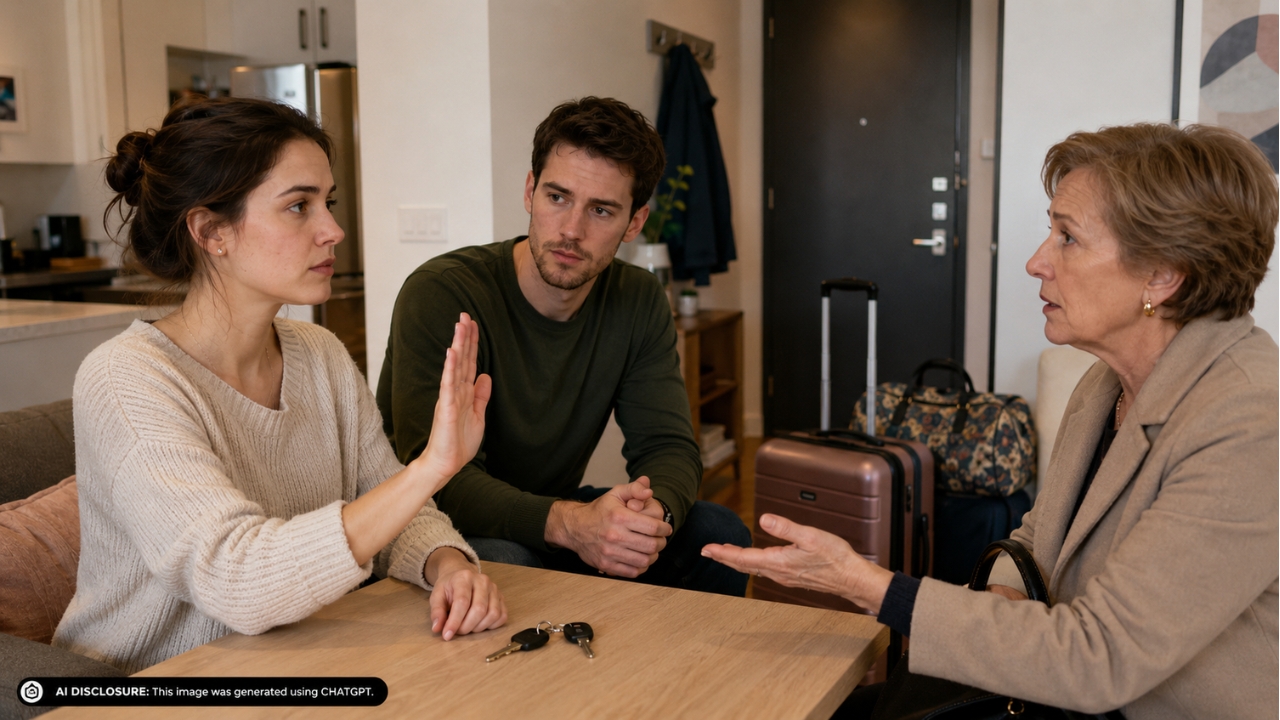
Photo credit: AI-generated image created using ChatGPT.
There’s a special kind of tension that shows up when family wants access to your home. Not a visit. Not a dinner invite. Access. A key is a small piece of metal, but it carries a lot of meaning.
In the original post, a 25-year-old woman explains that she and her 28-year-old partner have been living together for a few months. His parents are coming to town soon, but they aren’t planning to spend much time with the couple—they’ll mostly be out with friends and only need the apartment to sleep. The mother-in-law asked for a copy of the keys so she and her husband could come and go without “bothering” anyone, and the girlfriend said no.
On paper, the request sounds practical. In real life, it turned into pressure, guilt, and a little bit of emotional arm-twisting about how the couple would be “forcing” them to stay up late or leave them “wandering the streets.” The couple’s situation is also simple: they only have two sets of keys, they’re renting, and making copies isn’t a workable option where they live.
A key isn’t just convenience—it’s authority
A lot of people try to frame this as hospitality versus stinginess. But a house key isn’t the same as offering a bed for the night. A key means, “I can enter your space when I decide it’s appropriate.” That’s a level of access that married couples don’t always give their closest friends, let alone parents who are already arriving with assumptions.
Even in healthy families, a key can quietly shift the balance of who’s “in charge” of the home. The couple may be young and newly living together, but it’s still their apartment. If you can’t hold the line on something as basic as physical access, you’re going to struggle with the bigger boundaries later.
The practical problem is real: two key sets and two working adults
This isn’t one of those situations where the girlfriend is refusing out of spite while sitting on five spare keys. They have two sets, and those two sets are already in use by the people who live there. If they hand one over, they’re basically choosing which partner gets to function normally and which one becomes dependent on the other to get in the front door.
They also have normal adult schedules: work, separate plans, and one planned romantic dinner. If the parents are mostly out enjoying the city, the couple can’t guarantee they’ll always be home at the right moment to play doorman. Ironically, the mother-in-law’s plan to “not be a bother” creates a bigger logistical mess for the actual residents.
“We’ll have to wander the streets” is guilt, not a plan
When someone says, “If you don’t do this, you’re forcing me to suffer,” pay attention. That’s not problem-solving; that’s pressure. Adults visiting a city have options—adjust the schedule, come home earlier, coordinate pickup, or yes, book a hotel if they want complete independence.
The girlfriend isn’t locking them out for fun. She’s saying, “We don’t have the keys to give.” And yet the response is insistence and a dramatic worst-case scenario. That’s usually a sign the real issue isn’t the key—it’s control, or at least the expectation of being accommodated without friction.
The boyfriend already said no, and that matters
One detail in the post is easy to miss but important: the boyfriend told his mother no before his partner did. Then the mother asked the girlfriend anyway. That’s not an accident. It’s a classic move—if you can’t get the answer you want from your son, you try to get it from his partner, hoping she’ll fold to keep the peace.
In a serious relationship, especially one moving toward marriage, the couple has to be a united front. Not in a cold or disrespectful way, but in a clear “we decided” way. If a parent can split the couple and turn them into separate negotiators, the relationship will live under constant low-grade strain.
Renting and key copies: the limits are the limits
Some readers will think, “Just make a copy.” The girlfriend addressed that directly: they’re renting, and making copies isn’t an option for them. Even if she tried to do it anyway, their current keys are already copies, and in her country a “copy of a copy” can be unreliable. A flaky key is the worst of both worlds: it still hands over access, and it still creates lockout problems.
There’s also a stewardship angle here that doesn’t need a sermon. If you don’t have permission to duplicate keys, you don’t play games with the lease because someone wants convenience for a few nights. Adults handle constraints without demanding that others break rules to accommodate them.
Hospitality doesn’t mean surrendering your home
A decent man wants to honor his parents and care for family. A decent woman wants to be welcoming and not turn every visit into a turf war. But hospitality has boundaries, and boundaries are part of maturity. Letting someone sleep in your home is generous; handing them the power to come and go unannounced is something else.
If the parents were staying for weeks, if there were an emergency, if the couple had plenty of keys, maybe it’s a different conversation. But this visit is framed as, “We’ll be out with friends, we’ll just use your place to sleep.” That’s not wrong, but it’s also not a situation that requires permanent-style access.
What a clean solution looks like
The simplest answer is the one they already gave: “We can’t give you a key because we only have two sets.” Then you offer realistic options without over-explaining. Agree on a return time each night, keep phones on, or have the parents plan their evening so they’re back when at least one resident is home.
If the parents want full independence, the honest solution is a hotel or rental. That’s not punishment; it’s alignment. You can’t demand the freedom of a hotel while insisting on the price tag of someone else’s couch.
One more thing: if the mother-in-law keeps pushing, the boyfriend needs to handle it. It’s his mother, and he already said no, so he should repeat it calmly and end the negotiation. The girlfriend shouldn’t be put in the position of being the “gatekeeper” while everyone pretends this is just about convenience.
The girlfriend’s refusal isn’t cruel or petty—it’s responsible. A home needs clear lines, especially early on, and especially with family members who don’t hear “no” the first time. If the parents want a smooth visit, they can act like guests instead of claiming homeowner privileges, and everyone can get some sleep without turning a front-door key into a power struggle.
Read more from Thrive Girly:
- Mother-in-Law Expected to Sleep Over After Every Visit — Then the Mom Said Overnight Stays Were No Longer an Option
- Relatives Showed Up to the Wedding Without Being Invited — Then the Couple Refused to Find Them Seats
- Grandma Buckled the Baby Into Her Car and Left Without Telling Anyone — Then the Mom Made Sure It Never Happened Again