Her Stepmother Demanded a Spot in Her Wedding Dress Shopping Trip — Then the Bride Set Her Straight
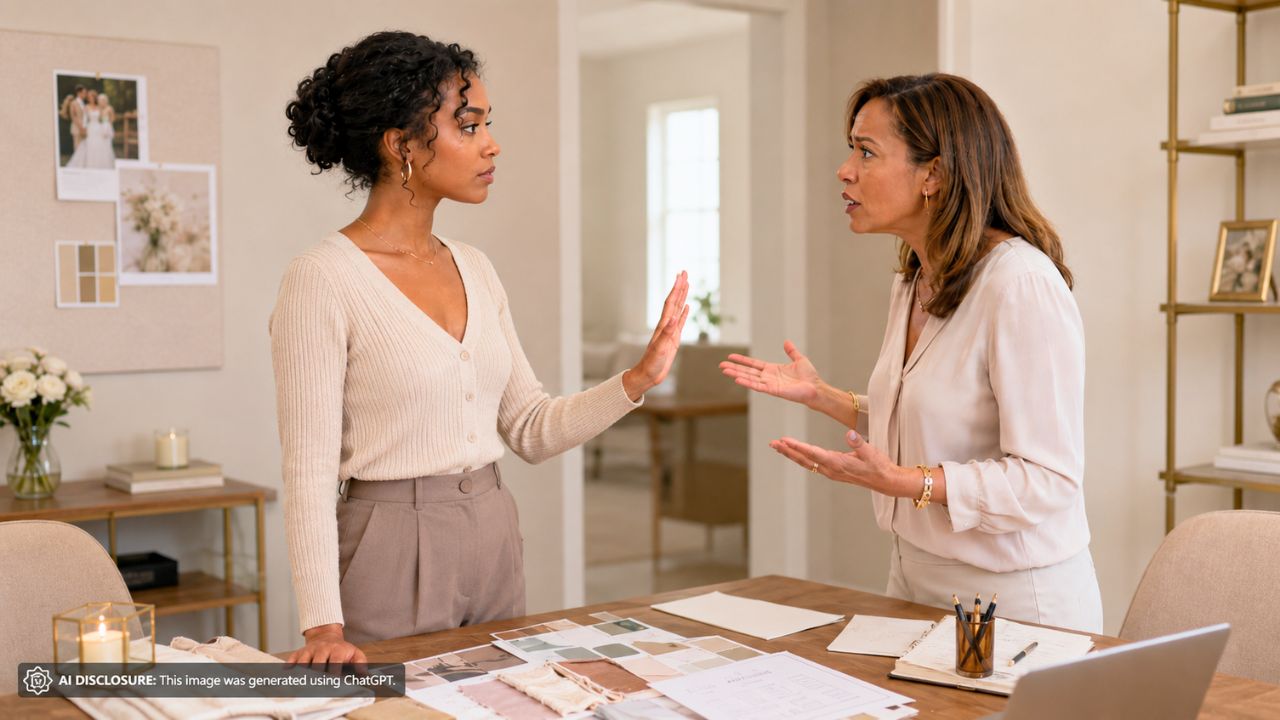
Photo credit: AI-generated image created using ChatGPT. Illustrative only.
There’s a particular kind of family pressure that shows up around weddings. It isn’t always loud, and it isn’t always mean. Sometimes it comes dressed up as sentiment, nostalgia, and “I just wanted to be included,” which makes it harder to name, and harder to refuse.
In the original post, a bride went wedding dress shopping with two best friends and both grandmothers, found her dress, and moved on. Then her stepmother saw a photo from the bridal shop and confronted her: why wasn’t she invited, especially since she has no daughters and her other daughters-in-law didn’t include her either?
The bride didn’t pretend it was a scheduling issue. She said she doesn’t see her stepmother as her mom, never has, and wasn’t planning to include her in wedding planning beyond the basics that come with being her father’s wife: an invitation, shared seating with her husband, and photos as a couple.
Dress shopping isn’t a public event, it’s a personal one
Some moments in a wedding season are logistical: seating charts, catering numbers, transportation. Dress shopping isn’t that. For a lot of women, it’s tied up with memory, grief, and identity—especially when a mother is gone.
Inviting two grandmothers makes perfect sense in that light. So does inviting best friends who know you well and aren’t trying to make the moment about themselves. The bride picked the circle she trusted, and that’s a reasonable way to handle something intimate.
The stepmother wasn’t asking for inclusion, she was asking for a title
The stepmother’s argument wasn’t simply, “I’d love to celebrate with you.” It was, “I became your mom when you were 10,” and “this was my only chance,” as if the bride existed to fill a role she didn’t get to have.
That’s the part that lands wrong. If you’re trying to build a relationship, you don’t start by declaring the relationship into existence and demanding the privileges that come with it. You earn closeness over time, and you accept that some doors open slowly—or don’t open at all.
It’s also telling that she framed this as her “only chance” because she has no daughters and her third son is gay. The bride isn’t a consolation prize for the life someone else imagined. That’s not how family works, and it’s not how love works.
Grief draws hard boundaries, and people should respect them
The bride’s mom died, and she’s protective of the word “mom.” That isn’t petty; it’s human. Losing a parent leaves a permanent absence, and plenty of people spend years guarding that space because it’s sacred and painful at the same time.
Some stepparents walk into that reality with humility. They don’t demand replacement status, and they don’t treat a child’s grief like an obstacle to overcome. They show up consistently, do the work, and let the child name the relationship in their own time.
This stepmother appears to have done the opposite: she “obsessed” over having a mother-daughter bond and pushed for the label. That kind of pressure often backfires. The more someone tries to force intimacy, the more the other person protects themselves with distance.
“I wasn’t invited either” isn’t a good reason to press harder
One of the stepmother’s complaints was that her daughters-in-law didn’t invite her dress shopping, either—one even went alone despite the stepmother being close by and free. That may be disappointing for her, but it’s also a pattern worth paying attention to.
If multiple women in the same family keep you out of the room for the same kind of milestone, it might not be because they’re all inconsiderate. It might be because you bring a certain energy into the room—control, commentary, neediness, or a habit of making the moment about you.
Even if that’s not the case, it still doesn’t create an obligation. Someone else’s choices don’t entitle you to a “do-over” with the next bride. A wedding isn’t a therapy assignment where the family finally heals your unmet expectations.
The bride’s boundaries were clear, but she’ll need to enforce them calmly
Right now, the bride has made a clear distinction: the stepmother is included as her father’s spouse, not as “mother of the bride.” That’s honest, and it’s better than doing the fake-smile routine while quietly resenting her all season.
The harder part is what happens next, because people who feel entitled to a role often keep pressing. If the stepmother is upset about dress shopping, she may also push for involvement in hair and makeup, bridal showers, getting-ready photos, a special corsage, a speech, or a seat of honor.
Calm enforcement matters. Not a blow-up, not a long debate, not re-litigating childhood. Something simple: “I understand you’re disappointed, but this isn’t something I’m changing. I’m keeping wedding planning small and personal.” Then repeat as needed.
Dad’s silence is part of the problem
The bride mentioned she isn’t as close with her dad anymore and doesn’t see them often. That distance tends to grow when a parent lets a new spouse fight battles that should’ve been handled with quiet leadership years ago.
If a husband sees his wife treating his daughter like a prop for her own emotional needs, he should address it. Not by humiliating his wife, and not by demanding his daughter “just include her,” but by guiding his household toward reality: you can’t force a parent-child bond, and you don’t use guilt to get your way.
In a healthy family, dad would be the one saying, “This is her moment, and we’re not going to pressure her. We’ll show up with joy and gratitude for the invitation we have.” When that doesn’t happen, the bride ends up having to do the boundary work herself.
There’s a decent way for the stepmother to respond, if she chooses it
If the stepmother wants a better relationship long-term, the play here isn’t to argue her way into wedding events. It’s to acknowledge what’s true: she’s not the bride’s mother, and she can still care about her without trying to occupy that spot.
A humble response would sound more like, “I’m sorry I pushed. I’m happy for you, and I’m grateful to be included at the wedding.” That kind of posture doesn’t guarantee closeness, but it creates space for it. It also honors the bride’s grief instead of competing with it.
And if she genuinely wants to feel useful, there are ways to offer help without demanding access: “If you need anything day-of—errands, water, picking something up—let me know.” Helpful is welcome. Entitled is exhausting.
Weddings have a way of exposing what’s been simmering for years. This bride didn’t “set her straight” with a dramatic scene; she did it the grown-up way by refusing to hand out a role that didn’t fit. If the family wants peace, the best path is simple: respect the boundary, show up with good manners, and let the relationship be what it is instead of what someone wishes it were.
Read more from Thrive Girly:
- Mother-in-Law Expected to Sleep Over After Every Visit — Then the Mom Said Overnight Stays Were No Longer an Option
- Relatives Showed Up to the Wedding Without Being Invited — Then the Couple Refused to Find Them Seats
- Grandma Buckled the Baby Into Her Car and Left Without Telling Anyone — Then the Mom Made Sure It Never Happened Again