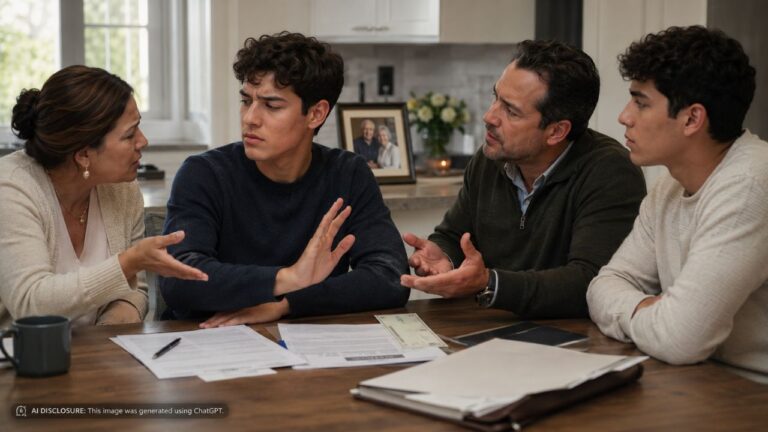
She Set a Limit on How Often She’d Babysit — Then Every Family Member Had an Opinion About It

Photo credit: AI-generated image created using ChatGPT. Illustrative only.
For years, being the “fun aunty” wasn’t a title this 26-year-old had to negotiate. It was just something she did—showing up for school events and sports games, buying birthday and Christmas gifts, and taking all seven of her nieces and nephews out for little adventures when she babysat.
But one change in the babysitting setup turned into a family-wide blowup, with every sibling suddenly weighing in on what she “owed” the kids. The details came from the original post, where she laid out exactly how a simple limit became a full-on argument.
She’d already been showing up in a big way
In her family, she’s the youngest by a lot—her siblings are 42, 47, and 50. While she’s 26 and just out of grad school, her siblings all had their kids later, which means she’s the aunty to a whole crowd at once.
She described herself as consistent and involved. She goes to the kids’ activities, she makes sure their birthdays and holidays are covered, and she babysits when she can—usually about once every two months.
And when she babysits, it isn’t the “sit on the couch while they sleep” kind of gig every time. Her siblings typically leave money so she can take the kids to do something fun like movies or theme parks. She also pointed out something important: she doesn’t use that cash on herself. She pays her own way and uses the money for the kids, because seven children adds up fast.
The babysitting arrangement worked… until it didn’t
The system was simple: she gives her time and energy, the parents cover the costs of outings, and everyone wins. The kids get memories, the parents get a break, and she gets to be the aunty who actually knows what’s going on in their lives.
Then one sister decided she wouldn’t be paying for activities anymore. There wasn’t some dramatic reason like a job loss or a sudden emergency—just a firm “no” on funding the outings. To make things messier, the aunt heard through her brother that her brother-in-law claimed the sister didn’t want the kids to like their aunty “more than her.” That part wasn’t said directly to the aunty, and she admitted it could have been her brother-in-law stirring things up.
Still, the end result was the same: her sister wanted the same level of babysitting and the same “fun aunty” vibe, but without contributing a dime toward it.
Her limit was simple: no paid outings, no daytime chaos
She didn’t demand her sister cough up money or accuse her of being jealous. She just got practical. If there’s no budget for activities, she’s willing to babysit at night when the kids are asleep.
But daytime babysitting—watching kids run around the house for hours with nothing to break up the energy—is, in her words, her “kind of hell.” And honestly, anyone who’s ever tried to entertain multiple kids in a house for an afternoon without plans knows exactly what she means.
Her sister didn’t take that well. Instead, she expected her younger sister—the one fresh out of grad school—to cover the cost herself. Not just snacks and little things, but the kind of outings the other kids were used to when their parents left money behind.
That’s when the aunty stopped trying to compromise and went more direct: if her sister was insisting on this setup, she simply wouldn’t babysit for her at all.
Then it became a family debate, not a private disagreement
What might have stayed a disagreement between two sisters quickly pulled in everyone else. Her brother agreed with her. To him, it sounded fair: you can’t demand someone provide the entertainment and pay for it too.
But another sister pushed back hard—and her argument wasn’t really about money. It was about the kids. She said the aunty “can’t do that to the kids,” meaning she shouldn’t refuse babysitting for that sister if it means those kids miss out.
Instead, the other sister offered two options, neither of which felt good for the aunty: stop doing fun activities with all the kids so nobody feels singled out, or pay for her sister’s three kids herself.
That’s the moment the disagreement stopped being about one mom refusing to leave activity money and turned into something bigger: whether the aunty’s relationship with the kids had to be managed to keep the adults comfortable.
Someone even offered to pay—and it still wasn’t enough
Once things got heated, another person stepped in with a solution that could’ve ended the whole thing fast. Her brother’s wife offered to pay so the kids could still do activities when their aunt babysat.
But the sister refused to accept the money from her, too.
That detail made everything feel less like a simple budgeting issue and more like a control issue. Because if the real concern was “we don’t have the money” or “we’re cutting costs,” someone else offering to cover it would have solved the problem immediately.
Instead, it became a standoff: the sister didn’t want to pay, didn’t want anyone else to pay, but still wanted her kids to get the same experience. And she wanted the aunty to be the one who absorbed the cost—financially and emotionally.
The family was left picking sides over what the kids should expect
By the time the aunty asked if she was wrong, it wasn’t just about babysitting anymore. The question underneath everything was: is being the fun aunty now an obligation she’s required to maintain, even if it strains her finances and sanity?
Her brother seemed to see it as an adult-to-adult issue: if one parent changes the deal, the aunt can change what she’s willing to offer. The other sister framed it as the kids being punished, as if the aunty refusing to babysit under those terms was automatically cruel.
Meanwhile, the aunty was stuck in a situation where any option came with a consequence. If she kept babysitting without outings, she’d be trapped in the kind of day she dreads. If she paid for activities, she’d be funding someone else’s parenting choice while she’s just starting out in her own career. If she refused to babysit for that sister, she’d be painted as the one creating a divide.
In the end, the family didn’t land on a neat compromise. The aunty had already drawn her line—nighttime babysitting only if there’s no activity money—and her sister didn’t want that version of help. So the disagreement hung there, with the adults still debating fairness while the aunty tried to hold onto the one thing she was clear about: she can love the kids and show up for them without being responsible for bankrolling the whole experience.
Read more from Thrive Girly:
- Mother-in-Law Expected to Sleep Over After Every Visit — Then the Mom Said Overnight Stays Were No Longer an Option
- Relatives Showed Up to the Wedding Without Being Invited — Then the Couple Refused to Find Them Seats
- Grandma Buckled the Baby Into Her Car and Left Without Telling Anyone — Then the Mom Made Sure It Never Happened Again