MIL Once Ignored Every Childcare Rule and Nearly Got Their Son Hurt — Then Her Husband Invited Her to Stay Three Months Anyway
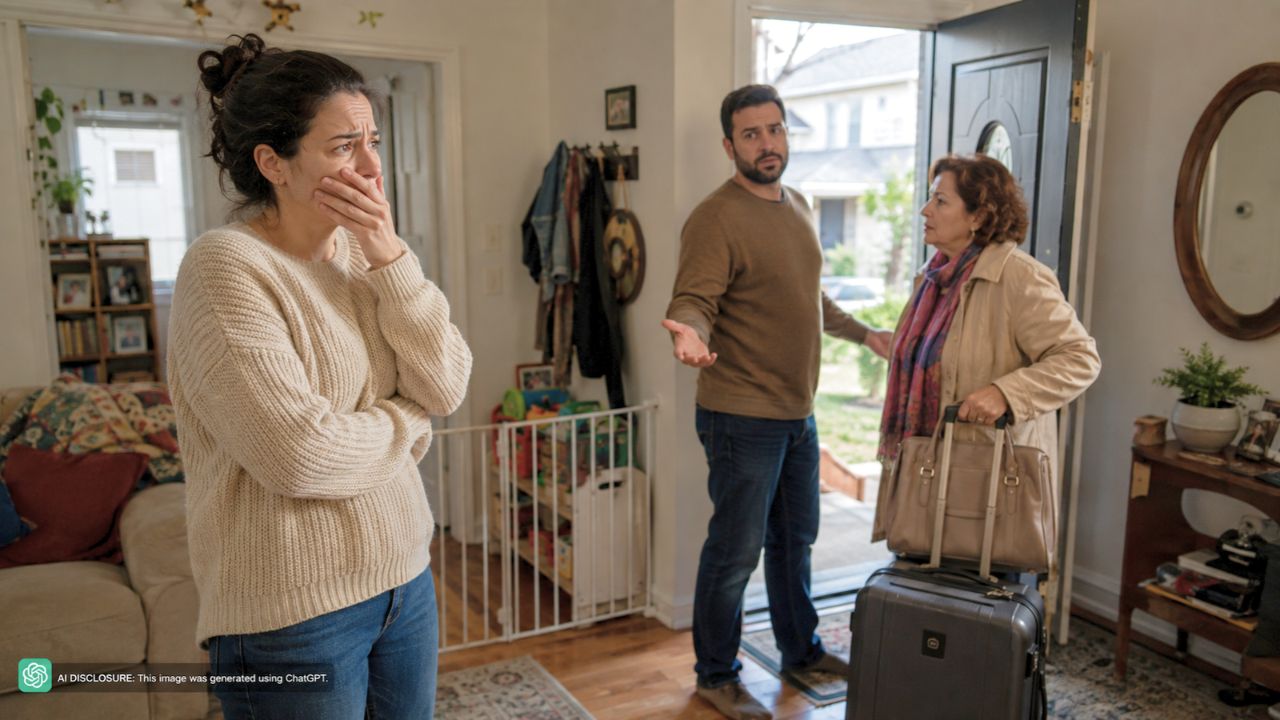
Photo credit: AI-generated image created using ChatGPT. Illustrative only.
There are a few ways a man can make his home feel unsafe without ever raising his voice. One of them is making a major family decision alone, then announcing it like the weather report. That’s the situation described in the original post: a husband invited his mother to stay in the family home, possibly for months, without talking it through with his wife first.
The wife isn’t writing from a place of petty dislike or a mild personality clash. She’s carrying history, including a past incident where her mother-in-law ignored basic childcare instructions during an overnight stay and their son nearly got hurt—close calls involving stairs and a room with power tools. Add in a full house, three kids (one a toddler), and a husband who works long hours and is rarely home, and you’ve got a recipe for resentment that doesn’t need much heat to start burning.
And what makes it worse is the way it happened. He arranged it quietly, avoided the conversation for weeks, then brought it up with ten days’ notice, with no clear timeline and no real plan for where his mother would even sleep. That’s not leadership. That’s avoidance wearing a thin disguise.
A home isn’t a hostel, and a marriage isn’t a one-man executive team
A family home is shared space, and shared space requires shared decisions. Inviting anyone to live under your roof—especially for an open-ended stay—has to be a “two yeses” situation. If it isn’t, you’re not managing a household together; you’re running parallel lives and calling it unity.
Some men were raised to believe “honor your mother” means “do whatever she wants.” That’s not honor; that’s fear dressed up as duty. A husband’s first stewardship is his wife and children, and part of that stewardship is protecting the peace of the home and the dignity of his spouse. If he needs to help his mother, he still does it as a married man, not as a single son taking unilateral action.
The childcare history changes the stakes
This isn’t about whether the mother-in-law is socially awkward or hard to chat with over tea. The wife described a prior incident that would make any parent’s stomach turn: instructions ignored, a child nearly falling down stairs, and a dangerous environment no one realized was in play. Even if it happened years ago, it establishes a pattern the wife can’t just “get over” because it would be more convenient for everyone else.
When someone has demonstrated they won’t follow parental boundaries, trust doesn’t return by default. It returns through humility, consistency, and respect for the parents’ rules. If the husband wants his mother in the home for months, he should be the first one to acknowledge that history and address it plainly, not act like his wife is being dramatic for remembering.
Men sometimes think peace is achieved by smoothing things over and keeping uncomfortable truths unspoken. In reality, peace is built by telling the truth early, setting guardrails, and refusing to gamble with your children’s safety just to avoid an awkward conversation with your mom.
The real problem: he invited a guest, but he won’t be the host
The most honest line in the story is also the most common: the husband works extremely long hours and is rarely home before bedtime, while his wife is doing most of the parenting and household rhythm alone. That doesn’t automatically make him a bad husband; plenty of families grind through demanding seasons. But it does mean he cannot add a long-term houseguest and assume it won’t land squarely on his wife’s shoulders.
If she’s home with a toddler, running baby groups, parks, school routines, meals, and the rest, then a guest isn’t just “someone sleeping on the sofa.” A guest is another adult to feed, clean up after, navigate around, and accommodate. If the mother-in-law has no friends nearby and tends to stay in her room, that can turn the home into a tense, quiet pressure-cooker where the wife feels watched in her own space while also carrying the weight of hospitality.
Here’s the hard truth: if you invite your mother to stay for months but you’re not there, you didn’t invite her into your home. You invited her into your wife’s daily life. If you didn’t ask, you already know you were wrong.
Silence, half-truths, and “protective” loyalty are a bad combination
The wife says her husband is fiercely protective of his mother and that attempts to discuss concerns lead to arguments and silent treatment. That combination—defensiveness plus withdrawal—doesn’t just avoid conflict; it punishes the other person for trying to address it. Over time, it trains a spouse to stop bringing things up, which is how marriages drift into polite distance.
Then there’s the claim that he knew for weeks but implied he only found out recently. Whether that’s a full lie or a selective version of the truth, it hits the same nerve: “You can’t trust what I tell you because I’m managing you.” A husband doesn’t get to demand trust while also operating like a politician. If you’re making decisions behind your wife’s back because you expect her to disagree, that’s not problem-solving; that’s control.
Protecting your mother should never mean sacrificing integrity with your wife. Honor doesn’t require deception. It requires courage, boundaries, and a spine strong enough to disappoint someone you love when their request isn’t wise.
If she can rent a room, she should rent a room
The wife points out something plain and practical: the mother-in-law has rented rooms before and has funds to rent somewhere now. The husband doesn’t want her to spend that money, presumably so she can save. That might sound generous until you see who’s actually paying. If the “savings” come in the form of burdening your wife, crowding your kids, and straining your marriage, then it’s not generosity; it’s misplaced stewardship.
There’s also the logistics. This is a four-bedroom house fully occupied by the couple and their three kids. No spare space. “She’ll probably sleep on the sofa” isn’t a plan for a three-month stay; it’s a vague hope that everyone will just adjust. Anyone who’s lived with a crowded house knows the sofa becomes the center of the home, and that means the whole family tiptoes around the guest’s sleep schedule, privacy, and routine.
If the mother-in-law truly needs help, there are still better ways: a short stay with clear dates while she secures a rental, or the husband personally funding accommodations if he feels responsible. But “open-ended and on the couch” is the kind of decision that sounds kind in theory and becomes cruel in practice.
What a wise compromise could actually look like
The wife said something important: if her husband had talked to her first, she might have been open to a short, fixed visit. That’s not a closed door; that’s a boundary with a hinge. A reasonable path forward starts with the husband owning how he handled this, without excuses and without blaming his wife’s feelings.
From there, it needs clarity. A specific length of stay, written down if necessary, with a clear plan for sleeping arrangements that doesn’t disrupt the kids’ routine. It also needs defined expectations: the mother-in-law isn’t there to be entertained all day by a busy mother of three, and she isn’t there to override parenting decisions. If the husband is the one insisting on this visit, then he needs to carry real responsibility—meals, transportation plans, scheduling, and being present, not just nodding at the idea after a fourteen-hour workday.
And if he can’t be present, then he needs to rethink the invitation. A man can’t outsource the cost of his choices to his wife and call it family loyalty.
Is she wrong for not wanting to share her home?
No. Wanting a say in who lives in your house—and for how long—isn’t selfish; it’s basic order. If anything, the wife sounds like she’s tried to be civil for years while managing a complicated relationship and protecting her kids. Her anxiety isn’t mysterious. It’s the predictable result of being told, in effect, “This is happening, deal with it.”
The husband’s job now is to repair trust with his wife and deal honestly with his mother. That doesn’t require cruelty or coldness. It requires maturity: “Mom, we love you, but we need a plan that works for the whole family, and my wife and I decide that together.”
A man’s home should feel like refuge to his wife, not a place where surprise guests and old conflicts get dropped in her lap. If he wants to honor his mother, he can do it without dishonoring his marriage. But he has to be willing to have the hard conversations he’s been avoiding.
Read more from Thrive Girly:
- Mother-in-Law Expected to Sleep Over After Every Visit — Then the Mom Said Overnight Stays Were No Longer an Option
- Relatives Showed Up to the Wedding Without Being Invited — Then the Couple Refused to Find Them Seats
- Grandma Buckled the Baby Into Her Car and Left Without Telling Anyone — Then the Mom Made Sure It Never Happened Again