MIL Hijacked the Wedding Venue and Forged Signatures on the Contracts — Then She Handed Them an $8,000 Invoice and They Refused to Pay
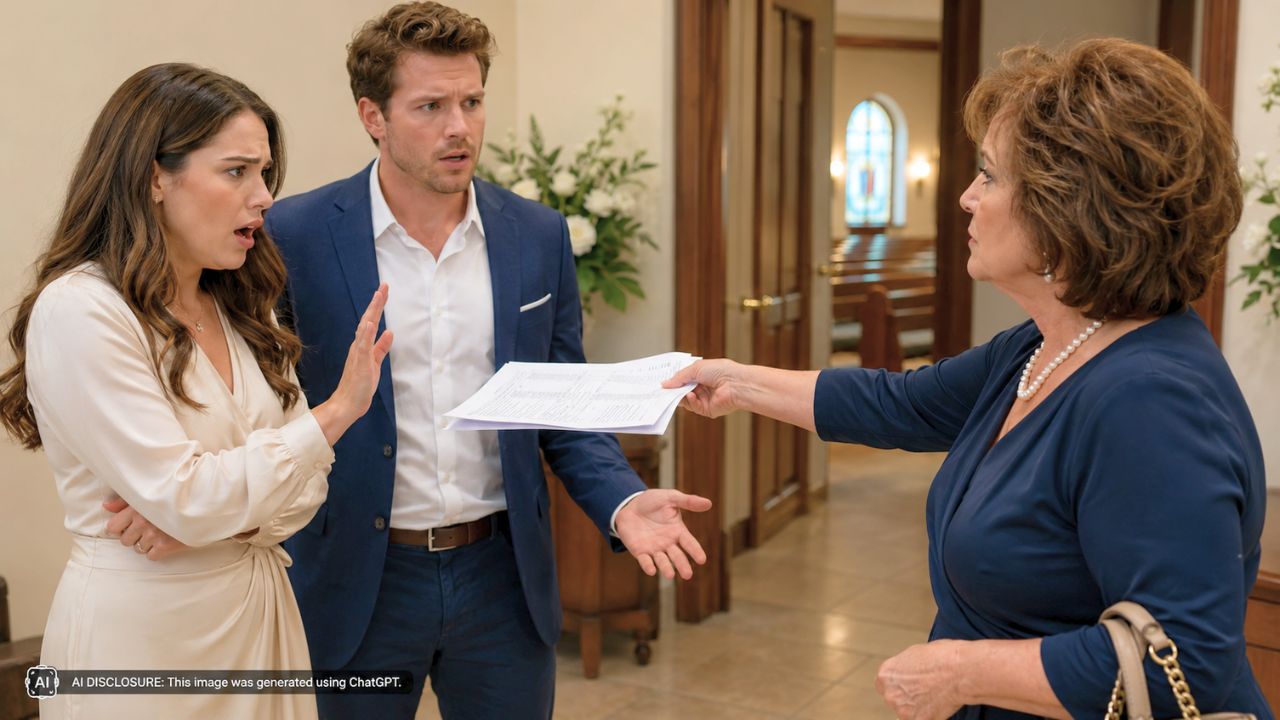
Photo credit: AI-generated image created using ChatGPT. Illustrative only.
There are few moments in a man’s life where he’s supposed to be able to relax and simply receive the day as a gift. Your wedding is one of them. So when a mother-in-law corners a bride at the dessert table and hands her an $8,000 invoice with a 48-hour deadline, that isn’t “family drama.” That’s a hostile takeover.
The story, shared in the original post, reads like a cautionary tale for any couple that’s ever let an overbearing relative “help” because it seemed easier than fighting. The couple planned and paid for a small botanical garden wedding for about 60 guests. Three days before the ceremony, the groom’s mother called with a “tiny problem,” insisted the venue had double-booked, and announced she’d moved everything to her church. She said it was all handled.
It was handled, all right. It was handled into a bigger guest list, a full dinner, a live band, an open bar, and a pile of contracts that the couple says they never signed. Then came the invoice—itemized, printed, and delivered like a bill collector making rounds during the cake cutting.
A “tiny problem” three days before the wedding is rarely tiny
If you’ve lived long enough, you learn to hear certain phrases for what they are. “Don’t worry about it” often means you should worry about it. “It’s all taken care of” can mean you’re about to be handed a mess you didn’t make. And “tiny problem” three days before the wedding usually means somebody wants control.
In this case, the mother-in-law claimed the botanical garden had double-booked and the couple needed to relocate immediately. She was crying, she said she’d found a solution, and she framed her takeover as stress relief. The groom, wanting peace and assuming good intentions, reportedly urged his bride to let his mom “have this one thing.” That sentence has ended more than a few good evenings, and it can do worse than that.
What showed up at the church wasn’t a “solution,” it was a different wedding
The couple arrived and found 107 guests—far beyond the 62 they invited. Along with the crowd came the awkward greetings from strangers, extended family they hadn’t included, and acquaintances from the mother-in-law’s life. No couple should have to spend their wedding day doing mental math about who’s there, who invited them, and why.
Then came the upgrades: a sit-down dinner instead of light appetizers, centerpieces they hadn’t ordered, a live band they didn’t hire, and an open bar they didn’t arrange. The bride confronted her mother-in-law and was told the original plan was “embarrassing,” and that the mother-in-law had improved it. That word—embarrassing—tells you what this was really about. Not the couple. Not the marriage. Image.
The invoice wasn’t a misunderstanding. It was a demand
Plenty of families help with weddings. Some parents quietly cover the rehearsal dinner. Some relatives pay for flowers or a photographer. But people who give gifts don’t issue invoices mid-reception and threaten legal action if payment isn’t received within 48 hours.
The bill was itemized: $1,200 for church rental, $4,300 for catering, $1,800 for the band, $700 for flowers and decorations, and $1,000 for bar service. Total: $9,000, reduced by $1,000 as her “contribution,” leaving $8,000 due. The mother-in-law reportedly claimed her “gift” was handling logistics and “saving” the wedding, and that because the couple “benefited,” they should pay for it.
This is the part where a lot of decent men freeze up. Public setting. Family present. Everybody watching. You’re supposed to keep it calm. You don’t want to make a scene. And that’s exactly why she did it at the reception. Pressure works best when people feel trapped.
Forged signatures change the whole conversation
It’s one thing to be pushy. It’s another to put someone else’s name on a contract. The couple says the mother-in-law told them she had vendor contracts “in your names,” and warned that if they didn’t pay, it could go to collections and harm their credit. That isn’t merely guilt-tripping; that’s an attempt to bind them to obligations they didn’t agree to.
When confronted publicly, she reportedly claimed she “signed on our behalf with permission,” which the couple denies. The groom’s father said he knew she was “helping coordinate some details,” but didn’t know she changed the venue or ran up major costs. After the couple contacted vendors, two confirmed she used the couple’s names but signed the contracts herself, and they were working to void the agreements. One vendor said she was “overly insistent” about using the couple’s names, which—if accurate—fits the pattern of someone trying to force legitimacy onto something illegitimate.
The couple says they spent their wedding night filing police reports for identity fraud, and an officer told them that if she signed in their names without consent, it was serious and they had grounds to press charges. Nobody dreams of that on their wedding day, but the decision makes more sense when you consider the alternative: letting someone establish a precedent that she can obligate you financially whenever she feels like it.
“Keep the peace” is often code for “let the pushiest person win”
After it blew up, the groom’s family reportedly flooded them with calls and messages. Some said the couple was being dramatic. Some urged them to pay just to keep the peace. The mother-in-law, meanwhile, posted online portraying herself as a helper accused of crimes, and privately sent guilt-laced messages, including talk of stress and health fears.
This is where a man has to get very clear-eyed. Peace at any price isn’t peace; it’s surrender. If you pay a bill that was created through manipulation and alleged forgery, you aren’t buying harmony. You’re purchasing future control at a premium.
There’s also a quieter issue: the groom’s role. He did confront his mother, and he backed his wife in refusing to pay. But earlier, he encouraged his bride to ignore her instincts and “let her have this one thing.” That’s not uncommon. A lot of men have spent their whole lives managing their mother’s moods, and it can follow them into marriage if they don’t address it directly.
A wedding is one day. A marriage is a jurisdiction
Marriage creates a new primary loyalty. That doesn’t mean dishonoring parents, cutting family off over minor conflicts, or treating elders with contempt. It does mean a husband can’t outsource his household’s decisions to his mother, especially not under the banner of “help.”
The mother-in-law’s comment that the original plan was “embarrassing” is revealing because it’s not about stewardship or generosity; it’s about status. A modest wedding can be beautiful. A larger wedding can be beautiful, too. The ugliness shows up when someone uses money, appearances, and social pressure to dominate a couple’s start.
If you’re the husband in a situation like this, you don’t fix it by being louder than your wife or smoother than your mother. You fix it by being clear: we didn’t authorize this, we aren’t paying for it, and any business done in our names without consent stops now. You can do that without screaming, but you can’t do it while hoping everyone will just calm down.
Practical boundaries that would’ve helped—and still can
It’s easy to read a story like this and say, “I would never let it get that far.” Maybe. But pressure hits different when it’s family and the clock is ticking. A few practical lines matter here, especially for engaged couples trying to avoid the same trap.
First, verify bad news yourself. If someone claims your venue “double-booked,” you call the venue directly, immediately, and you don’t accept a third-party explanation as final. Second, lock down vendors. Many vendors will add passwords, written authorization requirements, and a single point of contact if you ask. Third, keep your names off anything you didn’t initiate. If a relative wants to “gift” something, it should be in their name, with their signature, and billed to them. A gift doesn’t need your credit attached to it.
Even after the fact, the couple’s decision to contact vendors quickly was wise. If contracts were misrepresented, vendors generally want to know, because they don’t want to be pulled into a fraud dispute either. Documentation, written communication, and calm persistence will matter more than a heated family argument.
Some families will call this ungrateful. A grown man should learn to live with that word when it’s used as a weapon. Gratitude is for kindness. Compliance is what controlling people demand.
Read more from Thrive Girly:
- Mother-in-Law Expected to Sleep Over After Every Visit — Then the Mom Said Overnight Stays Were No Longer an Option
- Relatives Showed Up to the Wedding Without Being Invited — Then the Couple Refused to Find Them Seats
- Grandma Buckled the Baby Into Her Car and Left Without Telling Anyone — Then the Mom Made Sure It Never Happened Again