Her Sister Skipped Her Wedding When Her Dog Died Two Days Before — Then She Refused to Be Her Maid of Honor in Return
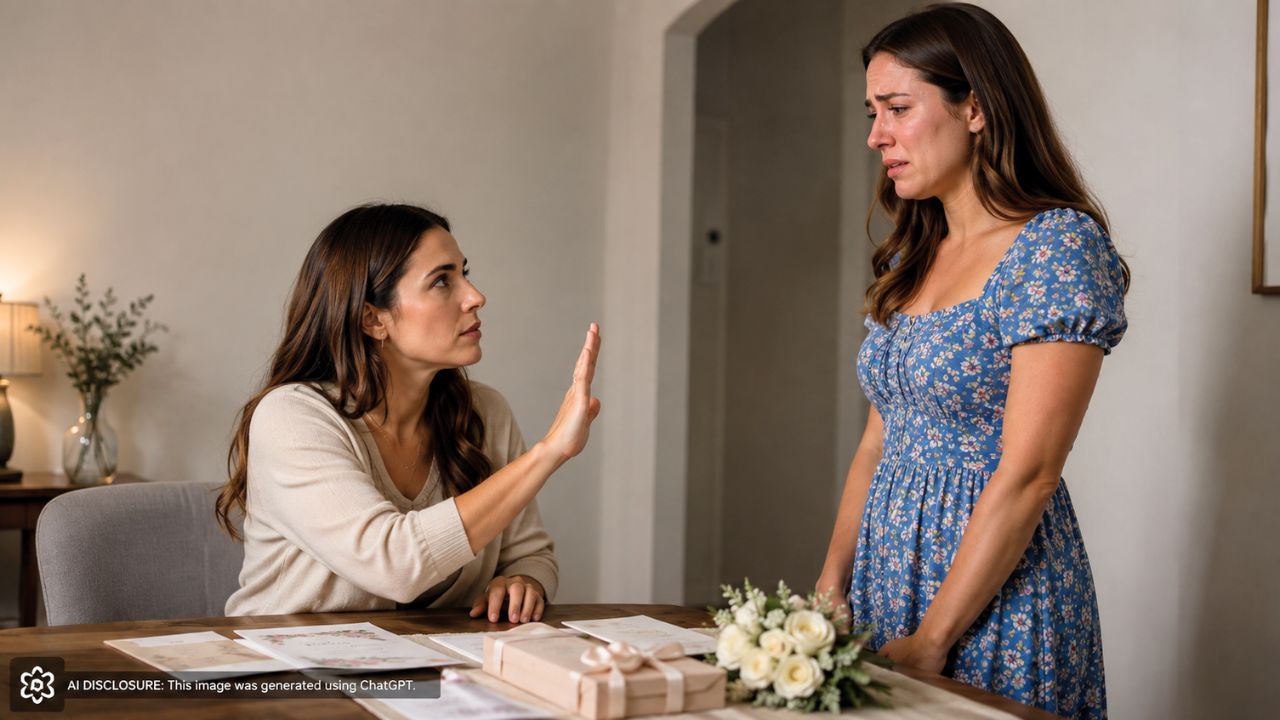
Photo credit: AI-generated image created using ChatGPT.
There are a few moments in adult life that feel like they should be protected by an unwritten code. Your wedding day is one of them. Not because it’s a princess fantasy, but because it’s a public vow, a family milestone, and a memory people carry for decades.
In the original post, a 28-year-old woman says her older sister was supposed to be her maid of honor, but skipped the wedding two days after her 14-year-old dog died unexpectedly. Months later, that sister got engaged and asked the woman to return the favor—maid of honor—only to be told no. Now the parents are pushing for peace, and the sisters are stuck in the kind of standoff that can poison a family for years.
It’s a situation that makes most of us wince because both sides have something real in their hands. One has grief. The other has a once-in-a-lifetime event that went forward without the person who mattered most in the bridal party. The question isn’t whether anyone’s feelings are valid. The question is what you do with them.
A dog isn’t “just a dog,” but a wedding isn’t “just a party” either
Anyone who’s loved an animal for 14 years knows that kind of loss can knock the air out of you. A dog isn’t a disposable accessory; it’s routine, companionship, and comfort. For some people it’s the closest thing they’ve had to daily, steady love, and losing that can feel like losing a member of the household.
But a wedding—especially a small one with close family and friends—isn’t a casual hangout you can catch next time. The bride didn’t ask her sister to host a game night while she was grieving. She asked her to stand beside her for a ceremony that marks the beginning of a marriage. That’s not about performance; it’s about presence.
This is where grown-up life gets sharp. Two things can be true at once: the sister’s grief can be intense, and the choice to not attend can still be a serious failure of responsibility.
The part that stings: there was no compromise
What makes this harder is that the bride says she tried to meet her sister halfway. She offered ways to make it manageable—come, be present, and leave early if it got overwhelming. The sister refused and didn’t show.
Sometimes people hear “I can’t” and treat it like a final, unquestionable verdict. But “I can’t” often includes “I don’t want to endure discomfort,” or “I don’t know how to show up while I’m hurting,” or “I’ve decided my pain gives me a pass.” Grief explains a lot, but it doesn’t automatically excuse everything.
There’s also a relational reality here: when you miss someone’s wedding, you’re not just absent from an event. You’re absent from a moment of honor. A maid of honor role isn’t a title; it’s a pledge that says, “You matter enough that I will stand with you even when it’s inconvenient.”
What “being the bigger person” usually means in families
Parents pressuring one sibling to smooth it over is as old as family dinners. Usually the more conscientious child gets the “be mature” speech because everyone knows that child is likely to comply. It keeps the peace in the short term, but it also teaches a quiet lesson: the person who makes the mess won’t be asked to clean it.
“Be the bigger person” can be wisdom when it means refusing to escalate. It can also be cowardice wearing a nice shirt when it means ignoring the wound and acting like trust doesn’t matter. Families can be experts at confusing forgiveness with pretending.
If the sister never owned the impact of her choice, the parents’ pressure lands like this: “Please absorb the hurt so we don’t have to deal with her reaction.” That’s not reconciliation. That’s redistribution of pain.
Is refusing to be maid of honor revenge, or is it honesty?
The bride told her sister she still felt hurt and couldn’t pretend everything was fine. That’s not the language of revenge; it’s the language of unresolved trust. Being a maid of honor is a front-row role in someone’s most important season, and it requires closeness, logistics, and emotional investment.
If you can’t do that with a clean heart, stepping back can be the more respectful choice. Plenty of people accept roles while resentful, and then they punish the other person through coldness, passive-aggressive planning, or half-effort. That’s uglier than an upfront “I can’t.”
At the same time, it’s worth checking motivation. If the “no” is mainly, “Now you’ll feel what I felt,” that’s payback, and payback hardens you. If the “no” is, “I’m not ready to step into that kind of closeness again,” that’s a boundary based on reality.
The sister’s grief doesn’t settle the account, but it should shape the conversation
The sister called the bride “cold and petty” and said the dog was like her child. That tells you how she frames the loss and how she wants it framed by everyone else. Whether you agree with the comparison or not, dismissing it won’t help. You can respect her grief without endorsing her choice.
A clean conversation might sound more like: “I believe you were devastated, and I’m sorry you went through that. I also need you to understand what it did to me that you didn’t come. I needed you, and you weren’t there.” That doesn’t insult her dog or minimize her pain. It simply puts the truth on the table.
One of the most adult skills is learning to hold two realities without using one to erase the other. The sister’s grief explains why she struggled; it doesn’t automatically rebuild the trust that was damaged.
What repair could look like before anyone talks about dresses and speeches
If these two women want a relationship that lasts, the maid of honor question is secondary to the repair question. Repair usually requires ownership, not just emotion. “I was devastated” is emotion. “I understand I left you alone on your wedding day, and I’m sorry” is ownership.
It also requires some practical clarity. If the bride is open to being involved in the wedding at all, there’s room for options: attending as a guest, being a bridesmaid rather than maid of honor, helping with specific tasks that don’t require the same intimacy. Those alternatives aren’t punishments; they’re honest placements based on the current level of closeness.
And if the sister wants her back in that top role, she may need to do something many emotional people hate doing: sit in discomfort without making it about her. Not “How can you do this to me?” but “I get why you’re hurt. What do you need from me to rebuild?”
A faith-shaped note: forgiveness isn’t the same as promotion
In Christian terms, forgiveness is real and necessary, but it’s not a magic wand that turns a fractured relationship into instant closeness. Forgiveness releases the debt; trust is rebuilt over time with repentance and consistency. You can forgive someone and still decide they’re not the right person for a role that requires steadiness.
There’s also a warning here for all of us: grief can tempt us into self-focus. Suffering narrows your world, and sometimes you need help widening it again so you can show up for others. Love, in the biblical sense, isn’t measured by intensity of feeling but by faithful presence.
If the sister wants to be treated like family, she has to act like family. If the bride wants to keep family, she’ll need to speak truth without spite. Both are hard, and both matter.
The cleanest path forward probably isn’t a forced “yes” to please the parents or a scorched-earth “no” meant to make a point. It’s an honest talk where the sister acknowledges the wound, the bride names what she can and can’t offer right now, and everyone stops pretending a wedding role is just a title. It’s a symbol of trust, and trust doesn’t come back because people demand it; it comes back because people earn it.
Read more from Thrive Girly:
- Mother-in-Law Expected to Sleep Over After Every Visit — Then the Mom Said Overnight Stays Were No Longer an Option
- Relatives Showed Up to the Wedding Without Being Invited — Then the Couple Refused to Find Them Seats
- Grandma Buckled the Baby Into Her Car and Left Without Telling Anyone — Then the Mom Made Sure It Never Happened Again