Her Sister Owed Her $2,000 in Wedding Costs and Accused Her of Ruining the Vibe by Asking — Then She Refused to Keep Planning the Bridal Shower Until She Was Paid

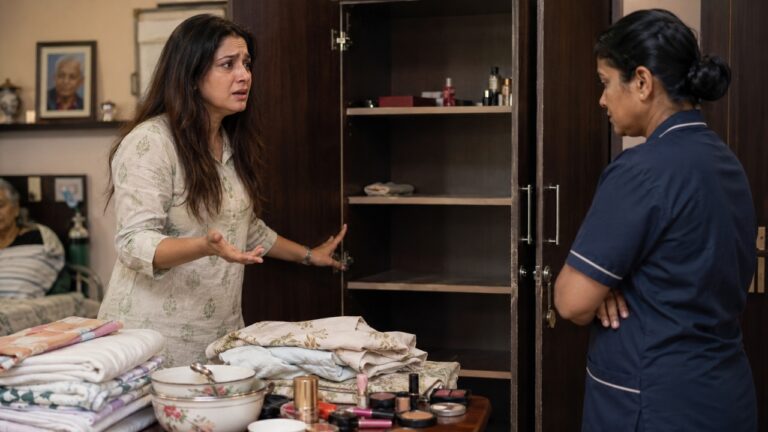
Photo credit: AI-generated image created using ChatGPT.
Weddings have a way of turning regular family friction into something louder, shinier, and more expensive. You can be doing your best to show up for someone you love, and still find yourself quietly hemorrhaging money you didn’t plan to spend. Then, when you finally bring it up, you get told you’re “killing the vibe,” as if basic math is the real problem.
That’s the bind one woman described in the original post. She agreed to be maid of honor for her sister, then started covering wedding-related costs upfront—bachelorette trip expenses, her dress, alterations, shoes—on the repeated promise of “I’ll pay you back after payday.” Months later, she says she’s out $2,000, and every attempt to discuss repayment gets framed as “ruining the wedding vibe.”
Eventually she drew a line: she still wants to be there, but she can’t keep doing maid of honor duties—like planning the bridal shower and taking on more upcoming expenses—until she’s repaid at least some of what she’s already fronted. Her sister responded by telling family she’s being punished during her “wedding year,” and even threatened to demote her to “just a bridesmaid.” Some relatives argued she should’ve waited until after the wedding to bring up the money.
How $2,000 quietly becomes “normal” in wedding land
Most people don’t wake up and decide to bankroll somebody else’s wedding. It happens the way a lot of bad financial situations happen: a small “spot me” turns into a pattern, the pattern turns into an expectation, and the expectation gets defended like it’s a right. Add deadlines, family emotion, and wedding pressure, and it gets even easier to stop thinking clearly.
From what she described, she wasn’t buying luxuries for herself. These were wedding-adjacent costs tied to her role, and she covered them upfront because she was trying to be helpful and keep things moving. The problem is that “helpful” becomes “responsible” the moment the other person starts assuming you’ll always float the bill.
$2,000 is not pocket change for most adults. Even if someone can technically afford it, it’s still money that could have been used for rent, savings, debt, car repairs, or a dozen boring responsibilities that don’t come with matching robes and a photo shoot. Treating that number like it’s just part of the vibe is a pretty strong signal that priorities are drifting.
The “you’re ruining the vibe” line is a dodge
When someone says you’re ruining the vibe by talking about money, what they often mean is: “I don’t want consequences to touch my feelings.” It’s a way of reframing a legitimate concern as a character flaw. Instead of “I owe you and I need to make this right,” it becomes “You’re negative and stressful.”
Weddings do require some grace. You’re dealing with nerves, family expectations, and a thousand decisions. But grace isn’t the same thing as pretending debts don’t exist. A mature adult can be excited about a wedding and still honor a promise.
There’s also something telling about the timing. She didn’t threaten to skip the wedding, and she didn’t say she was done with her sister. She simply said she couldn’t continue taking on more duties and expenses until she saw at least partial repayment. That’s not sabotage; that’s stewardship.
Maid of honor doesn’t mean wedding financier
The role of maid of honor is support, not sponsorship. Planning, organizing, encouraging, being present—those are fair expectations. Being treated like an interest-free credit card is not. If someone wants you to spend thousands, the least they can do is be clear upfront and grateful, not evasive and offended.
Some families have an unspoken rule that you “just do it” for the bride because it’s her season. But seasons don’t cancel responsibility. If the couple can’t afford the wedding they’re trying to have, the adult answer is to scale it down, not quietly pass the bill to whoever is conscientious enough to pay it.
Money arguments feel crass because we attach emotion to them, but that doesn’t make them unspiritual or unloving. In fact, it’s often the opposite. Paying what you owe is one of the simplest forms of integrity, and integrity is foundational for marriage. If a person can’t handle a straightforward debt to their own sister, that’s worth paying attention to.
Family pressure often rewards the wrong behavior
Her sister didn’t just disagree; she went to the family and framed it as punishment during her wedding year. That’s a classic move: recruit an audience so the other person feels outnumbered and ashamed. It also shifts the conversation from “Did I repay what I promised?” to “Why can’t you just be supportive?”
Some relatives apparently suggested she should’ve waited until after the wedding to bring it up. On paper, that sounds polite. In real life, it often means: “Eat the cost now, and hope the person who avoided paying you before will magically become responsible later.” After the wedding, there’s a honeymoon, new expenses, and the psychological relief of being done. If repayment wasn’t happening during the buildup, it’s not guaranteed afterward.
Families sometimes confuse peacekeeping with righteousness. Keeping the waters calm isn’t the same as doing what’s fair. If the only way to keep everyone happy is for one person to be quietly exploited, that’s not peace—it’s just a better-decorated mess.
Demotion threats and emotional leverage
The sister’s threat to “demote” her to “just a bridesmaid” is more revealing than it might seem. It turns a relationship into a hierarchy: comply and you get status; resist and you get dropped. That kind of leverage doesn’t belong in a family, and it definitely doesn’t belong in a wedding party.
If the maid of honor role is being used as a tool to get money and labor, it stops being an honor. It becomes a transaction with emotional penalties. And once you’re in that world, the requests rarely get smaller. There’s always another “small” cost around the corner.
A wedding can bring out the best in people, but it can also expose entitlement that’s been simmering for years. The hard part is acknowledging what you’re seeing without letting it turn you cold. Boundaries aren’t the same as bitterness; they’re a way of staying clearheaded enough to love someone without enabling them.
A practical way to handle it without burning the bridge
If you’re the one owed money in a situation like this, the cleanest path is simple and specific. Put the amount in writing, list what it covers if needed, and propose a repayment plan that starts now—before any new events get planned. “I need $X by this date, and then $Y each payday until it’s settled” is boring, but boring is good when money is involved.
It also helps to stop paying for anything new. Not as revenge—just as a reset. If the bride wants a bridal shower venue deposit or another trip expense, she can pay it directly, ask someone else, or adjust the plan. Adults adjust plans all the time; the world doesn’t end.
If the family gets involved, keep your side calm and consistent. You don’t need to campaign or trash the bride. You can simply say you’re happy to support the wedding, but you can’t keep fronting expenses and being told you’re wrong for asking for repayment. A boundary stated without theatrics has a way of revealing who’s being reasonable.
Weddings are supposed to be about covenant, character, and the beginning of a life together. They’re not supposed to be a season where one person’s joy is funded by another person’s silence. Asking to be repaid $2,000 isn’t ruining anything; it’s refusing to pretend that love means letting integrity slide.
Read more from Thrive Girly:
- Mother-in-Law Expected to Sleep Over After Every Visit — Then the Mom Said Overnight Stays Were No Longer an Option
- Relatives Showed Up to the Wedding Without Being Invited — Then the Couple Refused to Find Them Seats
- Grandma Buckled the Baby Into Her Car and Left Without Telling Anyone — Then the Mom Made Sure It Never Happened Again