Her Sister-in-Law Demanded Her Autistic Niece Break the Adults-Only Reception Rule — Then the Bride Held Her Ground
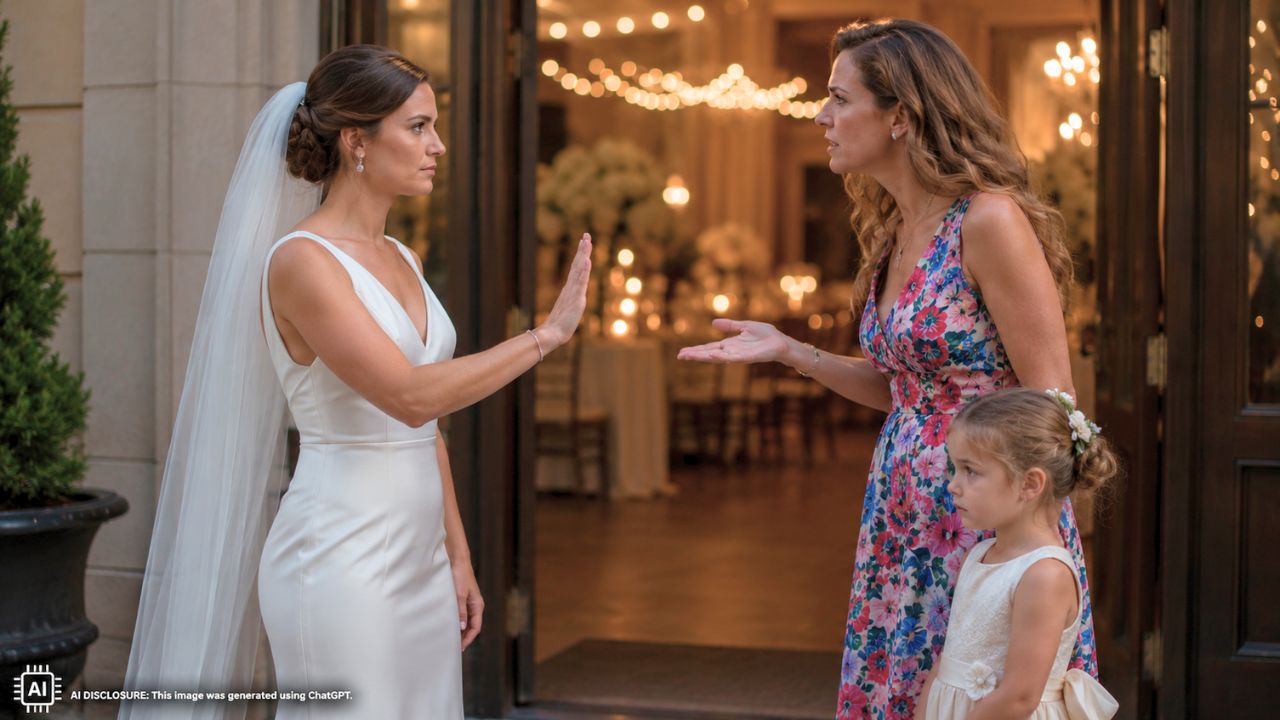
Photo credit: AI-generated image created using ChatGPT.
Every family has that person who treats a wedding like a public utility. Not a celebration with boundaries, not a day that belongs to a bride and groom, but a community event that should bend to whoever shouts the loudest. This story is a pretty clean example of what happens when someone confuses “being included” with “being in charge.”
In the original post, a 28-year-old bride-to-be explained that she and her fiancé planned a July 2021 wedding with an adults-only reception. The couple’s 4-year-old autistic niece and 2-year-old nephew would still be involved in the ceremony as flower girl and participant, and they’d be included in photos, but the reception would be childfree.
That’s where the trouble started. The fiancé’s sister (the niece’s mother) insisted her daughter would be at the reception anyway and pushed back hard against the sitter idea. The bride said she’d already accommodated the ceremony around her niece’s needs, but the sister-in-law wanted the reception changed too—and when she didn’t get her way, she escalated the conflict straight into the bride’s workplace.
A clear rule, communicated early
The couple didn’t spring this on anyone at the last minute. They sent save-the-dates and made the policy plain on the invitations: they love everyone’s kids, but the reception would be adults only. That’s a normal setup, and it’s usually about giving parents a night off and letting the party run without the predictable kid-centered constraints.
They also weren’t excluding the children from the whole day. The niece and nephew were planned to be part of the ceremony and photos. That detail matters because it shows the couple wasn’t trying to hide the kids or act ashamed of them; they were drawing a line around the reception specifically.
Accommodation isn’t the same as surrender
The bride is a special education teacher and described her niece as ASD level 2, with a long list of triggers: certain music, food textures, lights, clothing textures, and even other people’s clothing textures. She also said her “dream dress” for the reception could set off her niece if she wore it around her. Those are real considerations, and families who live with them day-to-day know how quickly a “simple party” becomes a minefield.
So the bride adjusted the ceremony significantly. She even planned to walk down the aisle to a song from Tangled to accommodate her niece. That’s not a minor tweak; it’s a meaningful choice about the tone of the moment. But she didn’t want to re-engineer the reception around the same needs—especially when the whole point of the reception was adult conversation, adult music, and adult freedom.
There’s a difference between being kind and being commandeered. A wedding can be hospitable without being held hostage by the most demanding relative in the room.
Why the reception line made sense
The bride wasn’t vague about what the reception would include: adult music (not just kids’ songs), alcohol, and the normal sensory chaos of a party—dresses, fabrics, lighting, noise, and people moving around. She even mentioned the food, including chicken parm, because for her niece, texture and routine are part of the challenge. None of that is “bad,” but it can be a tough environment for a child with specific sensitivities.
And here’s the thing some people refuse to accept: sometimes the most loving choice is not bringing a child into an environment that’s likely to overwhelm them. That’s not rejection. That’s stewardship—of the child’s wellbeing, of the parents’ attention, and of the event everyone else was invited to enjoy.
The couple even offered a workable solution. The sister-in-law already planned to use a sitter for the 2-year-old nephew, and the bride had a friend willing to watch the niece instead of attending the reception. This wasn’t abandonment. It was planning.
The moment it stopped being about the child
Plenty of families argue about weddings. But this situation crossed a line when the sister-in-law reportedly went to the bride’s job and claimed she was unfit to work due to her “lack of care” outside of work. Then, according to the bride, three of the sister-in-law’s friends also called the school with similar complaints, triggering an investigation at her private-school employer.
That kind of move isn’t advocacy; it’s retaliation. It weaponizes a person’s livelihood to force compliance in a family disagreement. You don’t have to be a legal expert to know the moral difference between “I’m upset” and “I’m going to try to get you in trouble at your job.”
It also exposes the real aim. If this were only about the niece’s needs, the sitter plan would be on the table. Trying to sabotage someone’s career is about control, payback, and pride.
Good boundaries aren’t cruelty, they’re leadership
The fiancé and the groom’s mother backed the bride. They reportedly told the sister she was out of line, and they didn’t think it was fair to demand the entire family accommodate the niece “24/7.” They also wanted one night of adult fun without worrying about a meltdown triggered by the bride’s dress, the music, or the food.
That’s a hard statement, but it’s not automatically an unloving one. Families can support a child with special needs while still admitting they’re tired, they want some normalcy, and they need a break. There’s no virtue in pretending everyone has infinite capacity.
The fiancé also set a deadline for his sister to “come clean” about the workplace accusations or risk no contact, and his mother supported that stance. That’s not petty. If someone is willing to threaten your home, your marriage, and your job to win an argument, you’re dealing with more than a disagreement about childcare.
The bride’s fear: “If I won’t do this, am I a fraud?”
The part that sticks with a lot of guys reading this is the bride’s self-doubt. She asked if she was the problem because of how it was affecting her job, and she worried that if she wouldn’t accommodate her niece for one day, why was she working with kids who are “worse off.” That’s an honest spiral: you start with a boundary, then you get punished for it, and suddenly you’re questioning your character.
But her job and her wedding aren’t the same category. Being a professional caregiver in a classroom with structure, support, and clear expectations is different from hosting a loud, late reception built around adult celebration. Refusing to redesign a reception doesn’t mean she lacks compassion. It means she understands context.
And frankly, this is why boundaries matter. Without them, the loudest person defines your life, and you end up apologizing for decisions that were reasonable all along.
What a steady response looks like now
There are two tracks here: the family track and the employment track. On the family side, the couple has already done the most important thing—standing together and letting the groom handle his side. A man who won’t protect his future wife from his family’s pressure is inviting misery into his marriage. In this case, he appears to be doing his job.
On the work side, if a school investigates a claim like this, the best approach is calm, documented clarity. The bride can cooperate, keep records of what happened, and let administrators see the difference between a professional complaint and a family member trying to punish her. It’s not fun, but it’s survivable, especially if she stays measured.
And for the wedding itself, the simplest path is the one they already chose: ceremony accommodations they can joyfully offer, followed by an adults-only reception with childcare arranged. The niece gets to be included in the meaningful parts of the day without being set up to fail later that night.
Weddings have a way of revealing who respects you and who only respects you when you comply. The bride didn’t pick this fight, but she is being forced to decide whether her marriage starts with clear leadership or anxious people-pleasing. Holding the line here isn’t just about a reception; it’s about refusing to let intimidation become a family tradition.
Read more from Thrive Girly:
- Mother-in-Law Expected to Sleep Over After Every Visit — Then the Mom Said Overnight Stays Were No Longer an Option
- Relatives Showed Up to the Wedding Without Being Invited — Then the Couple Refused to Find Them Seats
- Grandma Buckled the Baby Into Her Car and Left Without Telling Anyone — Then the Mom Made Sure It Never Happened Again