Her Mom Took the Baby for a Walk Without Telling Anyone in the House — Then She Said No More Unsupervised Time With Grandma
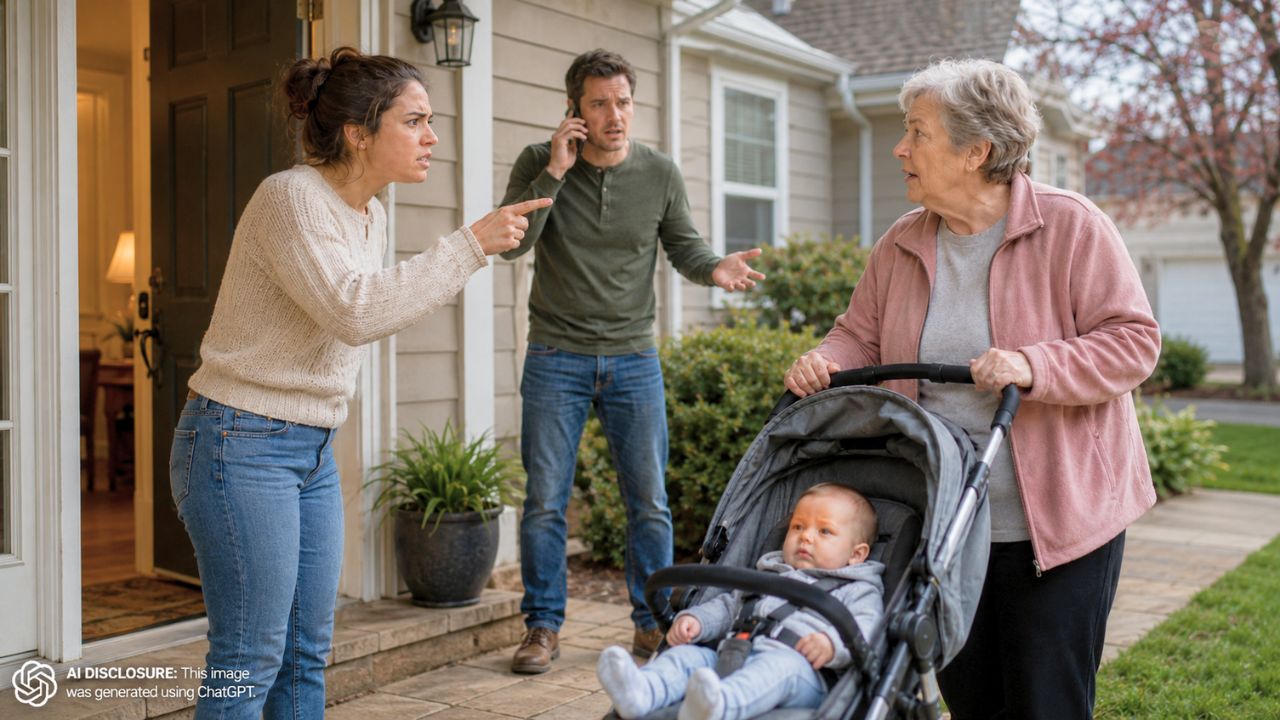
Photo credit: AI-generated image created using ChatGPT.
There are a few sounds that settle a home: a baby babbling upstairs, a familiar laugh from a grandparent, the little squeak of a toy getting dragged across the floor. So when the house suddenly goes quiet, a dad’s mind doesn’t gently wonder. It sprints.
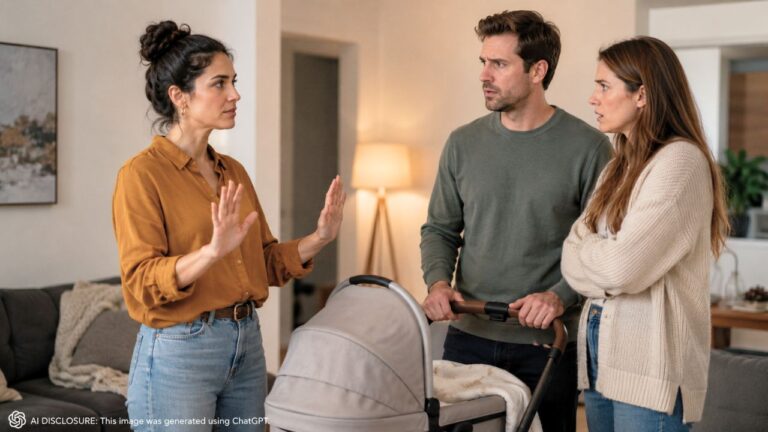
That’s the moment a father described in the original post. He and his wife were visiting his mother for a few weeks, letting grandma enjoy time with their 10-month-old daughter after a long stretch of Covid-related distance. Grandma was upstairs playing with the baby while the parents were downstairs on a phone call, and then the noise stopped.
What followed wasn’t a minor misunderstanding. The parents searched the living room, the backyard, the bedrooms, the bathrooms, even the garage. They noticed the front door wide open and the stroller still out front, which only added confusion. After they started walking the neighborhood calling out and knocking on neighbors’ doors, grandma finally appeared about half an hour later, saying she had “just went to visit the neighbours up the road.”
The panic isn’t dramatic, it’s parental
Some people hear “half an hour” and shrug like it’s a coffee run. A parent hears “half an hour” and feels their throat tighten, because a lot can happen in five minutes, let alone thirty. A missing baby isn’t a “give it time” situation; it’s a drop-everything situation.
Part of fatherhood is learning that your nervous system doesn’t care about intentions. Your brain doesn’t run a quick character check on Grandma and decide everyone can relax. It flashes worst-case scenarios because your job is protection, and a child that young can’t tell anyone her name, her parents’ phone number, or where she belongs.
Grandparent privileges don’t outrank parental responsibility
Grandma’s response matters here. She didn’t say, “I’m so sorry—I didn’t think.” She told them they were attacking her and that it was her right as a grandmother to go for a walk with her granddaughter if she wanted to.
That “right” language is where families get into trouble. Being a grandparent is an honor, not a title that comes with authority over the child’s parents. The parents carry the responsibility, and responsibility is what grants decision-making. If something had happened, nobody would be looking for a “grandma right.” They’d be looking for mom and dad, because mom and dad are accountable.
It’s also worth saying plainly: you don’t get to take someone else’s baby out of the house without telling them. That sentence doesn’t need a long footnote. Even if you’re loving, even if you’re competent, even if you’ve raised children before, you still communicate.
The open door and the missing context made it worse
The details in the story explain why the fear escalated so quickly. The front door was wide open, which is unsettling on its own. The stroller was still out front, which suggested they didn’t go for a walk, and the house had already been searched. There was no note, no quick heads-up, no “we’ll be back in 10.”
Even if grandma only went “a couple blocks away,” the parents had no way to know that. From their perspective, their baby vanished. And when a baby vanishes, you don’t stay calm to prove you’re a reasonable adult; you act fast because that’s what love does under pressure.
This is also the kind of situation that reveals a gap in assumptions. Grandma assumed she was close by and therefore it didn’t count as “gone.” The parents assumed that if their child left the house, they’d be told. Those assumptions don’t meet in the middle unless somebody chooses humility.
“We were just doing grandma things” isn’t a safety plan
Some of the family reportedly sided with the parents, while others called to say they were horrible for getting mad because she was doing “grandma things.” That phrase can be sweet in the right context. It can also be a way to dismiss basic boundaries like they’re insults.
“Grandma things” should include the boring stuff: clear communication, locked doors, charged phones, and respect for the home you’re in. It should include the awareness that parents are operating with a different kind of weight on their shoulders. There’s a reason new parents can seem intense; they’re learning how fragile everything is.
There’s also a difference between “mad” and “cruel.” The father in the story described getting upset and telling his mother she needed to tell them before leaving with the baby. That’s not abusive. That’s a boundary being set after a legitimate scare.
How a husband leads here: unity first, then clarity
One strong detail is that the parents acted together. He went to get his wife as soon as he realized he couldn’t find the baby, and they searched together. In stressful family situations, a man can be tempted to manage his wife’s reaction to keep things smooth with his mother, but that’s a fast way to poison a marriage.
Your first job is your household. That doesn’t mean disrespecting your mother or treating her like the enemy. It means making it clear—calmly, firmly—that you and your wife are the decision-makers for your child and you’ll present a united front even if it disappoints extended family.
It’s also wise to keep the conversation anchored to the specific behavior. Not “you’re reckless” or “you can’t be trusted,” but “you left the house with our baby and didn’t tell us, and we can’t have that happen again.” A lot of conflicts escalate because people argue character instead of actions.
What “no unsupervised time” can look like without making it ugly
The headline angle lands where many parents end up: no more unsupervised time with grandma, at least for now. That isn’t revenge; it’s a consequence tied to trust. Trust can be rebuilt, but it rebuilds on changed behavior, not on guilt trips.
Practically, the next step is simple: clear rules before anyone watches the baby. If the child leaves the house, the parents get told. If someone is going to a neighbor’s home, the parents get told. Doors get closed and locked behind you. And if the caregiver feels offended by that, it’s a sign they’re more concerned with status than stewardship.
A fair compromise might be supervised time until grandma can acknowledge the mistake and agree to the standard. Not a long lecture, not a family trial—just an adult admission: “I should’ve told you. I won’t do that again.” The stubborn refusal to say those words is usually the real issue.
Family pressure is real, but it shouldn’t run your home
It’s hard when other relatives start calling, especially if they frame it like you’re dishonoring your mother. But families sometimes confuse honor with compliance. Honoring a parent can include telling them the truth, setting limits, and refusing to pretend a serious mistake was nothing.
If extended family wants to weigh in, the cleanest answer is also the shortest: “We love her, and we’re grateful she loves our daughter. But we need to know where our baby is at all times. This boundary isn’t up for debate.” You don’t have to convince everyone. You just have to lead your house well.
The best case is that grandma cools off, realizes she scared everyone, and chooses humility. If that happens, relationships can mend quickly. If it doesn’t, the parents still have clarity: their child’s safety and their marriage’s unity aren’t bargaining chips for keeping the peace.
A baby can’t advocate for herself, and that’s the whole point. Adults who love her have to do it, even when it’s awkward, even when feelings get bruised, and even when someone pulls the “I’m family” card. Love isn’t proved by how little conflict you cause; it’s proved by how faithfully you protect what you’ve been entrusted with.
Read more from Thrive Girly:
- Mother-in-Law Expected to Sleep Over After Every Visit — Then the Mom Said Overnight Stays Were No Longer an Option
- Relatives Showed Up to the Wedding Without Being Invited — Then the Couple Refused to Find Them Seats
- Grandma Buckled the Baby Into Her Car and Left Without Telling Anyone — Then the Mom Made Sure It Never Happened Again