Her Mom and Aunt Kept Showing Up Unannounced After She Moved — Then She Set a New Rule in the Group Chat
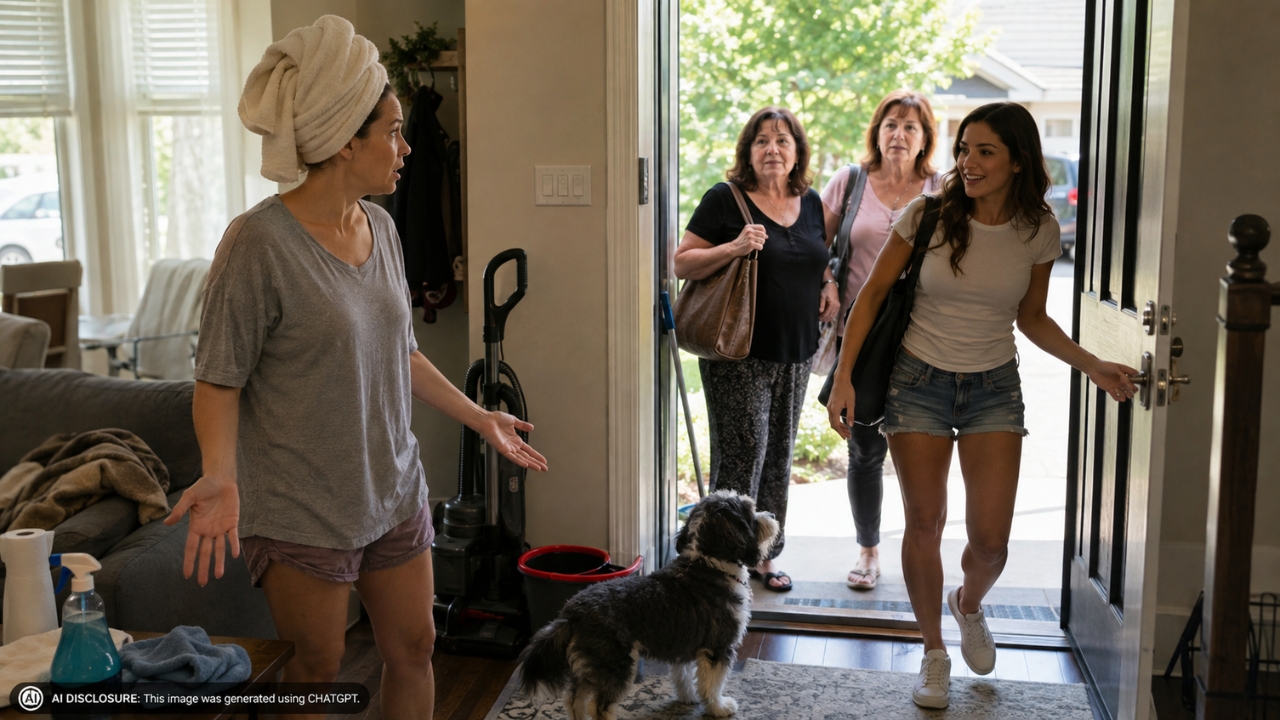
Photo credit: AI-generated image created using ChatGPT.
A new house has a way of turning people into amateurs about boundaries. Folks who would’ve texted first at your old place suddenly feel comfortable announcing themselves from the driveway like it’s a family cabin with an open-door policy. And if you’re the one inside, half-dressed and halfway through cleaning, you’re the one expected to smile and play host.
That’s the situation a married woman laid out in the original post. Four months after moving, her mom, sister, aunt, and others began treating the new home like a quick pit stop. The visits weren’t scheduled, weren’t especially needed, and often weren’t even real “visits”—more like ten-minute pop-ins that still required her to drop what she was doing, manage the dog, and present herself like she’d been expecting company.
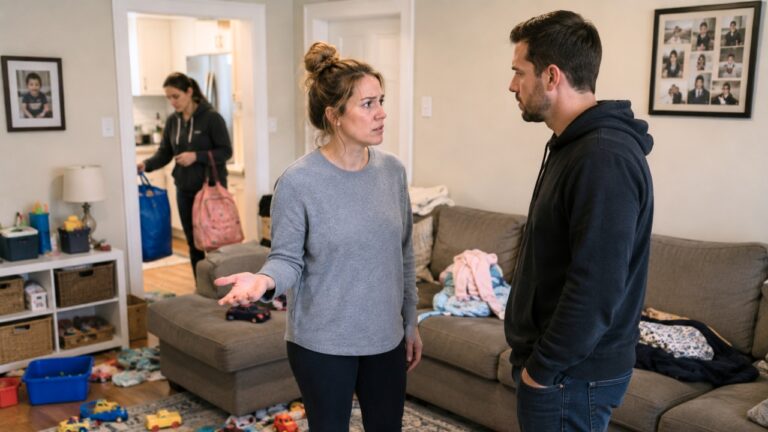
The breaking point came on a Sunday after a morning of deep cleaning. She finally sat down in old shorts with a hair mask in, only for her mom, aunt, and cousin to show up together. Her aunt shrugged it off—“we’re family, who cares”—while the cousin walked in like she belonged there, and they stayed close to an hour. Afterward, she put a new rule in the family group chat: ask before coming over, and “I’m outside” doesn’t count as notice.
The difference between “close” and “careless”
Most families mean well at the start. Bringing groceries, stopping by because you were nearby, checking out the new place—those are normal, even sweet, especially after a move. But there’s a line between being close and being careless with someone else’s home and time.
“I’m outside” isn’t a request; it’s a soft demand. It puts the homeowner in the position of either opening the door or being cast as the one who’s “acting funny.” That’s not warmth, it’s pressure, and it quietly trains everyone to treat your schedule like it’s optional.
It’s not the visit, it’s the cost
The frustrating part in her story wasn’t that her family wanted to see her. It was that they treated her house like a convenience store: pop in, look around, open the fridge, ask for coffee, head out. Ten minutes for them becomes a full reset for her.
There’s the practical cost: putting the dog away because he loses his mind, stopping chores, stepping away from work, and cleaning up the mental clutter of being interrupted. Then there’s the personal cost: feeling like you can’t relax in your own home, because someone might show up the moment you finally sit down. A house stops feeling like shelter when you’re always on alert.
The “we’re family” excuse can turn controlling fast
Her aunt’s response—“we’re family, who cares”—sounds harmless until you hear what it’s really saying. It’s not “we love you,” it’s “your comfort doesn’t matter here.” Family should be the place where you’re most respected, not the place where your preferences get rolled over.
There’s also a subtle entitlement that can creep in when someone upgrades their living situation. Her aunt accused her of changing since getting a nicer house, as if a better roof means you now owe people more access. That’s a strange kind of math, but plenty of us have seen it: someone improves their life, and suddenly relatives treat it like shared property.
Why the group chat felt harsh (and why it still made sense)
Her husband agreed with her boundary but felt the group text made it sound harsher than she intended. He’s not wrong about the medium. Group chats flatten tone, and nobody likes being corrected in front of the whole family, even if the correction is reasonable.
Still, there’s a reason people go to the group chat: because the pattern is group-wide. If it’s mom today, sister tomorrow, aunt next weekend, then addressing it privately becomes a never-ending series of awkward one-offs. A shared problem sometimes needs a shared message, especially if different relatives are feeding off the same “we can just drop by” assumption.
The better move might’ve been a shorter text that leaves less room for wounded interpretation: “Hey, we love seeing you, but we need a heads-up before anyone comes over. Please ask and wait for a yes.” Simple, warm, and firm. But even if her wording came out sharper than she meant, the boundary itself wasn’t wrong.
Marriage means protecting the home you’re building
A lot of men learn this one late: your home is not a public lobby. Once you’re married, your first stewardship is the household you’re responsible for, and that includes protecting its peace. It’s not anti-family to guard your front door; it’s pro-marriage to make sure your spouse can breathe.
In this case, the wife is the one feeling intruded on, and the husband is backing her up. That’s a healthy alignment. If he had shrugged and said, “Just let them in, it’s your mom,” he’d be volunteering his wife’s comfort to avoid an uncomfortable conversation with her relatives. A man doesn’t get to buy peace outside the house by spending peace inside the house.
A boundary isn’t a wall, but it does need a lock
Setting a rule is one thing. Enforcing it is another. If the family keeps showing up, the couple may have to do the hard but simple follow-through: don’t open the door, or open it long enough to say, “Now’s not a good time—next time, please ask first,” and then close it.
That sounds intense, but boundaries without consequences are just wishes. And the longer you allow unannounced pop-ins, the more you train people to ignore your words. In a normal, respectful relationship, a single reminder should be enough. If it isn’t enough, that tells you something about how much they think your “no” matters.
It also helps to be consistent. If you sometimes reward “I’m outside” with a warm welcome because you don’t feel like dealing with conflict, you’ll get more of the same. The point isn’t to punish family; it’s to re-teach them how to treat your home.
Respect cuts both ways, even with parents
Her mom called her cold, her aunt accused her of changing, and her sister said she made family sound like a burden. Those reactions are common when someone is used to getting automatic access and suddenly they don’t. People often label a boundary as “mean” because it forces them to adjust.
But respect doesn’t only mean letting relatives do whatever they want. Respect also means recognizing that adults have lives, responsibilities, and limits. If you want a strong family, you don’t build it on guilt and drop-ins; you build it on consideration, clear communication, and the basic courtesy of asking before you show up at someone’s door.
The cleanest path forward is simple: keep the tone calm, keep the standard steady, and don’t argue your way into exhaustion. “We love you. Please ask before coming. If we don’t answer, assume it’s not a good time.” That’s not cold. That’s a grown household acting like one.
Read more from Thrive Girly:
- Mother-in-Law Expected to Sleep Over After Every Visit — Then the Mom Said Overnight Stays Were No Longer an Option
- Relatives Showed Up to the Wedding Without Being Invited — Then the Couple Refused to Find Them Seats
- Grandma Buckled the Baby Into Her Car and Left Without Telling Anyone — Then the Mom Made Sure It Never Happened Again