Her Maid of Honor Kept Treating the Wedding Like Her Own Big Day — Then the Bride Removed Her From the Bridal Party
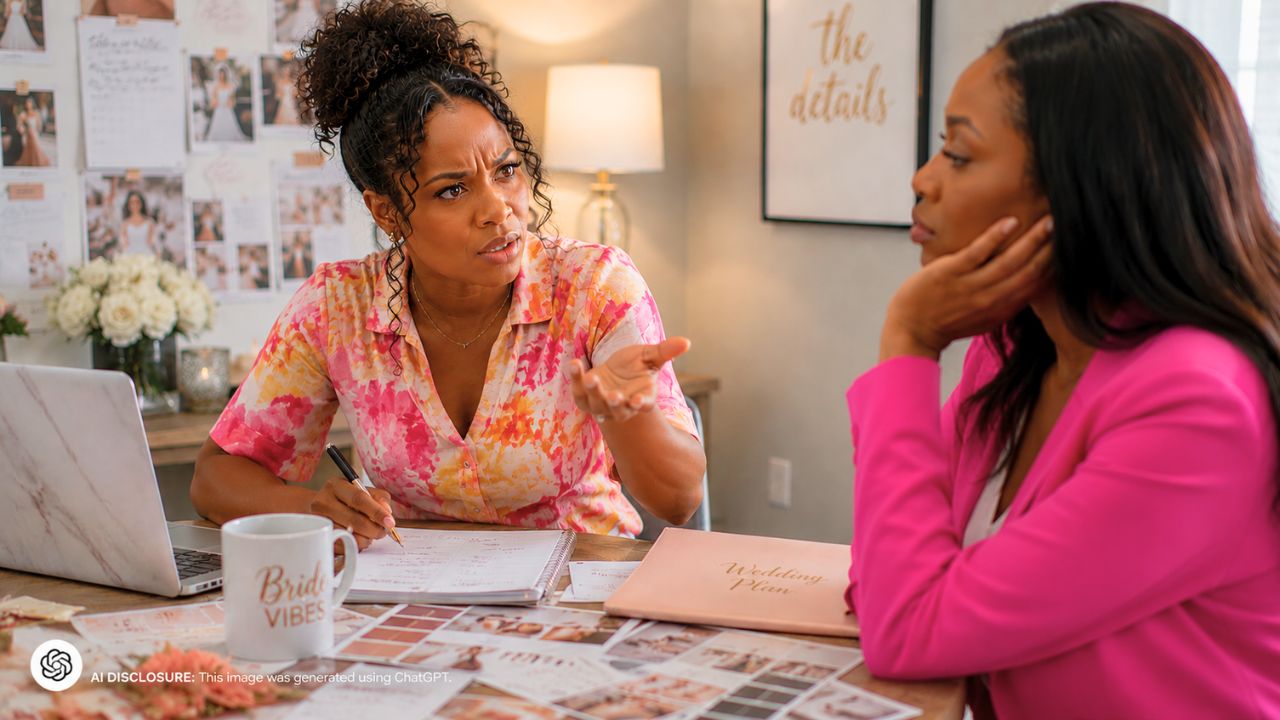
Photo credit: AI-generated image created using ChatGPT. Illustrative only.
There’s a kind of wedding stress you expect: the seating chart, the budget, the family opinions that show up uninvited. Then there’s the stress you don’t expect—watching a close friend slowly start acting like the day belongs to her, too.
In the original post, a 23-year-old bride describes months of growing tension with her maid of honor, “Maddie,” a friend of about ten years. What began as excitement and “help” kept sliding into control, disregard, and a strange possessiveness over the wedding. By the time the bride asked her to step down, she felt both guilty and relieved—two feelings that often show up together when you finally enforce a boundary you should’ve enforced earlier.
The details are specific, but the dynamic is familiar: one person is trying to build a marriage, and someone close to them is quietly trying to build a stage.
When “help” starts to sound like ownership
The bride says she initially brushed off the smaller moments—her opinions getting minimized, plans getting adjusted without her consent, boundaries getting crossed outside of wedding events. A lot of people do this because they don’t want to be labeled difficult, especially during wedding season when every preference can get framed as “bridezilla behavior.”
But there’s a difference between a friend offering strong opinions and a friend treating your wedding like a joint project. When someone starts referring to your wedding as “her big day too,” and she’s not the one getting married, that’s not enthusiasm anymore. That’s a confused sense of entitlement.
The honeymoon comment wasn’t funny, it was a warning
The clearest sign that something was off wasn’t a color palette disagreement. It was the maid of honor repeatedly talking like she was coming on the honeymoon, and not as a joke. She said it multiple times, even in front of other people, and kept pushing when the bride tried to redirect or laugh it off.
A honeymoon is not a group trip. It’s the first private exhale a couple gets after a public day, and it’s often when a husband and wife start learning how to be a unit instead of two individuals. Someone inserting herself into that space—verbally, emotionally, or practically—should set off alarms. It signals a person who doesn’t recognize healthy relational lines, or worse, doesn’t respect them.
Planning behind her back: the slow drift into disrespect
As the months went on, the bride describes her maid of honor changing ideas and plans behind her back. The bride had a clear “vibe” in mind, but Maddie would take over and plan something different without checking in. When confronted, she didn’t just disagree—she sometimes called the bride’s ideas “lame” or tried to convince her she didn’t really want what she said she wanted.
This is where a lot of friendships break, even outside weddings. It’s one thing to say, “Have you considered this?” It’s another to rewrite someone else’s vision and then talk down to them for not appreciating it. That isn’t leadership; it’s control dressed up as competence.
The bridal shower that stopped being about the bride
The bridal shower issue put the whole pattern in fluorescent lighting. The bride wanted a whimsical, fairytale feel, relaxed and soft, and asked specifically for pink invitations. What got sent out were bright blue invitations for a posh high-tea theme that didn’t match her request, and she didn’t find out until her mom received one.
Then there was the venue: Maddie chose her favorite café/bakery, which would’ve been fine if the bride could actually eat there. The place didn’t offer gluten-free options and didn’t allow outside food, while the bride has dietary restrictions and allergies that require gluten-free food. If you can’t eat at your own shower, the event has officially stopped being for you.
That’s a small detail with a big message. A good friend might forget a preference. A good maid of honor doesn’t forget whether the bride can eat.
The guest list move that forced a decision
The final straw was the guest list. The bride says the shower was being paid for entirely with help from Maddie’s parents, which she appreciated. But when she asked for an RSVP screenshot, she noticed Maddie had invited a bunch of her own family and friends—people the bride didn’t know—while some of the bride’s close friends and family weren’t invited due to limited space.
When asked about it, Maddie insisted that because she was planning the shower, she should be able to invite whoever she wanted. That logic might hold for a backyard barbecue you host for yourself. It doesn’t hold for an event meant to honor someone else, especially when space is limited and the guest list is supposed to reflect the bride’s relationships.
Then came the posture that usually ends things: she got defensive and mean, quit the shower entirely, and told the bride she needed to be the one to rescind the invitations to these strangers—despite not having their contact information and never having met them. That’s not just immaturity. That’s an attempt to punish someone for disagreeing.
Removing her from the bridal party wasn’t cruelty, it was clarity
After dealing with the awkward task of undoing invitations, the bride stepped back and saw the bigger pattern. She told Maddie it might be healthier—and preserve their friendship—if Maddie stepped down from the wedding party. She also asked for her house key back, noting that Maddie had one and would sometimes let herself into the house uninvited and unannounced.
Then the bride did something many people don’t do: she tried to keep the decision clean. She reimbursed the bridesmaid dress and sent a check to Maddie’s parents for the bridal shower deposit so nobody would be out money. That’s not “dramatic bride” behavior. That’s a person trying to be fair even while drawing a hard line.
Maddie responded by sending receipts, agreeing to drop off the key, and adding a parting shot—she hoped everything went “as well as I deserved”—before blocking the bride and several friends and saying not to contact her again. That response doesn’t sound like someone interested in repair. It sounds like someone angry that her access got revoked.
A wedding reveals character, and so does the fallout
Weddings have a way of exposing what’s already there. Some people rise to the occasion and serve quietly. Others treat the moment as a chance to grab influence, attention, or control. If a friend can’t handle not being the center, a wedding won’t fix that. It will reveal it.
The bride admits she feels sad and wonders if she overreacted, but she also feels an “enormous sense of relief.” That relief matters. Guilt can show up any time you disappoint someone, even when you did the right thing. Relief shows up when you stop carrying something you were never meant to carry.
Marriage requires a couple to protect their new household. That doesn’t mean you cut people off for minor friction, but it does mean you don’t keep someone in an inner-circle role when they’ve proven they can’t respect your voice, your boundaries, or your home. If someone is letting herself into your house unannounced and inviting strangers to your bridal shower while excluding your people, you don’t have a “wedding planning” problem. You have a relationship problem.
It’s a hard ending to a long friendship, but a wedding party isn’t a lifetime achievement award. It’s a place of trust, support, and service. If somebody can’t carry that with humility, the kindest thing you can do—for your marriage, and maybe even for them—is to take the role away before the day gets here and the damage gets bigger.
Read more from Thrive Girly:
- Mother-in-Law Expected to Sleep Over After Every Visit — Then the Mom Said Overnight Stays Were No Longer an Option
- Relatives Showed Up to the Wedding Without Being Invited — Then the Couple Refused to Find Them Seats
- Grandma Buckled the Baby Into Her Car and Left Without Telling Anyone — Then the Mom Made Sure It Never Happened Again