Her In-Laws Drove Seven Hours Unannounced Pretending They Wanted to Apologize — Then She Refused to Meet Them

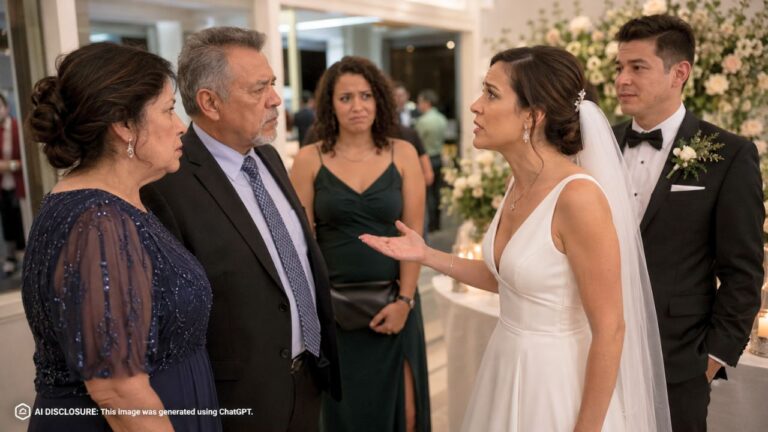
Photo credit: AI-generated image created using ChatGPT. Illustrative only.
There’s a particular kind of nerve you hit when family shows up at your door without warning. It’s not just inconvenient. It’s a statement: “We get access whenever we want.” If you’re pregnant, tired, and already carrying the weight of old conflict, that surprise visit doesn’t feel like a reunion—it feels like an ambush.
In the original post, a woman explained that her in-laws drove seven hours unannounced, supposedly to apologize, but also to get her signature on property papers. She didn’t go downstairs to meet them. Her husband handled the interaction, brought the documents up, and she signed—then they left, booked a hotel, and didn’t follow up.
What makes this situation so relatable is that it sits right at the crossroads of marriage, family pressure, and the temptation to “just smooth it over.” A lot of men know that pressure well: keep the peace, don’t make it worse, tell your wife to go along for a minute so nobody explodes. The problem is, that instinct can slowly sell off your household’s safety and dignity one uncomfortable compromise at a time.
An apology that arrives with paperwork isn’t an apology
If you drive seven hours to make peace, you don’t do it like a process server. You call ahead. You ask if it’s a good time. You accept “not today” without punishing anyone for it. Showing up unannounced—especially after a history of conflict—doesn’t look like humility. It looks like control dressed up as reconciliation.
In this case, the visit had a clear practical purpose: papers tied to property in their home country, and her signature was required because she’s married to their son. She suspected the “apology” was mostly a wrapper on the real mission. And honestly, even if the apology had been sincere, the delivery method still mattered. You don’t get to demand someone’s emotional availability on your schedule just because you drove a long distance.
Peacekeeping can turn a husband into a doorman for his parents
The husband here did one important thing right: he respected his wife’s decision not to meet them in that moment. He didn’t drag her downstairs like a hostage and he didn’t insist she perform niceness to keep everyone calm. That’s not a small detail. A man’s first loyalty is to his wife and the home he’s building with her, not the family system he came from.
But the situation also shows how easily a man can get stuck in the middle. The wife described a cultural “debt of gratitude” that keeps her husband quiet even when his mother is out of line. Plenty of men—across plenty of cultures—know that feeling. You owe your parents, you don’t want to be labeled disrespectful, and you’re afraid setting boundaries will cost you the relationship.
Here’s the hard part: gratitude doesn’t mean surrendering your marriage. Honoring parents doesn’t require letting them barge into your home, insult your wife, or operate like your front door is a suggestion. If a man won’t guard his household, someone else will try to run it.
Pregnancy changes the math, and wise people respect that
Pregnancy is already a season of limited bandwidth. You’re managing health concerns, sleep problems, and a nervous system that doesn’t respond well to surprise conflict. So when she said she felt overwhelmed and not in the headspace to talk, that wasn’t dramatic. It was an honest assessment of capacity.
There’s also a quiet wisdom in her restraint. She said she didn’t want to force herself to talk and end up saying something she’d regret. That’s emotional maturity, not avoidance. Some conversations should happen face-to-face, but not all of them should happen today, and certainly not on someone else’s terms.
Men should pay attention to this, especially if you’re a husband. Your wife doesn’t need you to manage her feelings. She needs you to respect her limits and make your home a place where she’s not required to entertain conflict on demand.
History matters: boundaries aren’t “drama” when someone has already shown their hand
This wasn’t a clean slate. The wife explained that a prior conflict blew up after she and her husband set boundaries. She says she never engaged disrespectfully, but her mother-in-law insulted her in a family group chat that included her husband. That kind of public disrespect changes what “reconciliation” looks like.
Then there was the pregnancy news. She tried to keep it private, asked her brother-in-law not to share it, and he told their mother anyway “to ease the situation.” That move tells you a lot about the family system. Information becomes a tool, and whoever leaks it gets rewarded for “keeping the peace,” while the person who asked for privacy gets painted as difficult.
When someone has already broken trust, you don’t owe them immediate access to your living room. Trust can be rebuilt, but it’s rebuilt with consistent behavior over time, not a surprise visit and a few well-practiced words.
Signing the papers was practical; meeting them was optional
One thing I respected in her update was how clear-eyed she was about separating the practical from the personal. The property papers mattered, and she understood her signature was required. She signed to get it handled and remove an excuse for future “emergency” visits.
That’s a sober way to approach it: do what needs doing without confusing it for reconciliation. A lot of men blur those lines. We’ll say, “Just talk to them while they’re here,” as if the same interaction can cover logistics, apology, relationship repair, and family unity all in one living-room session. It usually can’t, and forcing it often makes things worse.
She also noticed something telling: after she signed, they left immediately. No checking in. No request to schedule a calmer conversation later. No message afterward. That doesn’t prove their motives beyond all doubt, but it does support her instinct that the paperwork was the main attraction.
The boundary wasn’t “no contact”—it was basic respect
Some people hear “boundary” and think it means exile. What she set was simpler than that: no one shows up uninvited again. That’s not harsh. That’s normal adult life, especially for a married couple with a baby and another child on the way.
It also sounds like the husband agreed, which matters. A boundary that only one spouse enforces becomes a constant marital stress. When a man tells his parents, “You need to call first,” he’s not betraying them. He’s stepping into adulthood and treating his home like a home, not an extension of his mother’s household.
And yes, there’s cultural weight here. In many families, boomer parents were never challenged, and “respect” got defined as unquestioning compliance. But respect is not the same as access. You can honor your parents and still require courtesy, notice, and accountability.
There’s also a quiet detail that mattered: the in-laws booked a hotel. That’s a good sign, even if it was unplanned, because it means they didn’t force an overnight invasion. It gave space, and space is often what keeps a bad situation from becoming a permanent rift.
Unannounced visits are rarely just visits. They’re tests, and they’re power plays, even when the people doing them don’t admit it out loud. This woman didn’t scream, didn’t posture, and didn’t create a spectacle—she simply declined to participate, signed what needed signing, and let the message land: this home has a door, and the door has rules.
Read more from Thrive Girly:
- Mother-in-Law Expected to Sleep Over After Every Visit — Then the Mom Said Overnight Stays Were No Longer an Option
- Relatives Showed Up to the Wedding Without Being Invited — Then the Couple Refused to Find Them Seats
- Grandma Buckled the Baby Into Her Car and Left Without Telling Anyone — Then the Mom Made Sure It Never Happened Again