Her Hired Caregiver Sued to Void the Deed That Gave the Neighbors of 40 Years Their 25 Acres — Then a Jury Let Them Keep It
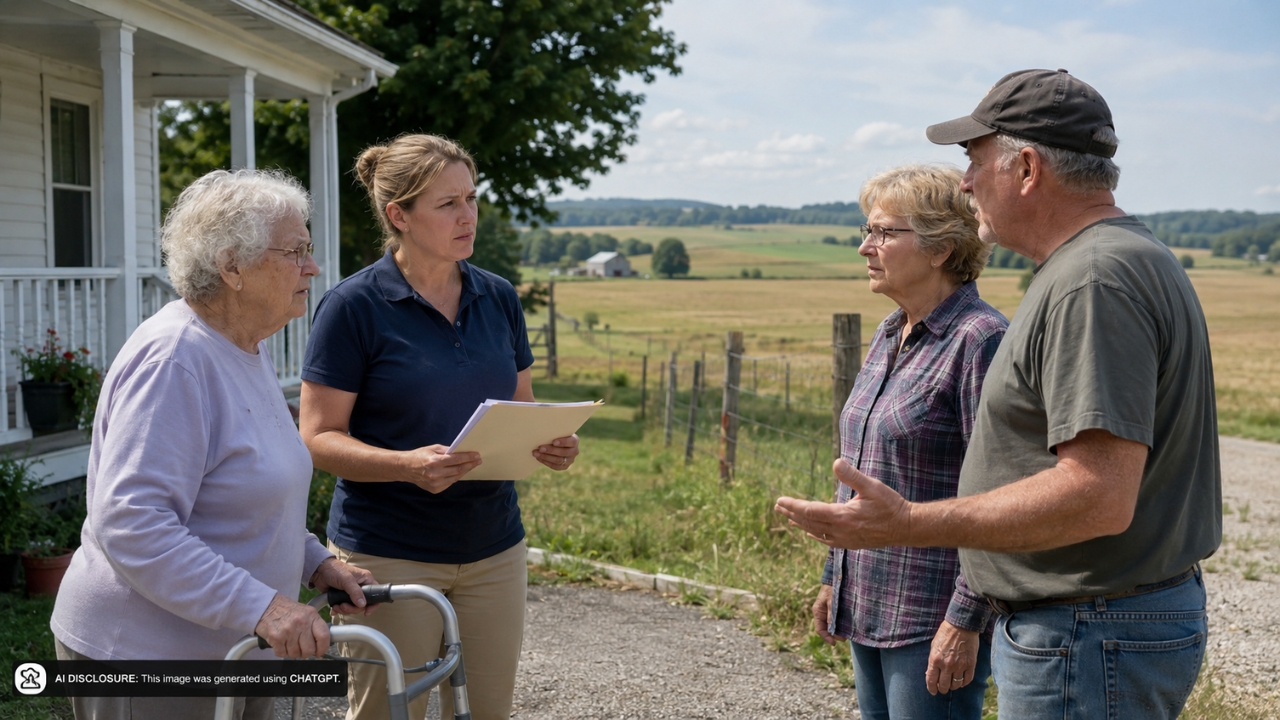
Photo credit: AI-generated image created using ChatGPT. Illustrative only.
Some legal fights aren’t really about land. They’re about loyalty, fear, aging, and the messy reality that shows up when an older person’s circle suddenly changes. That’s what sits underneath an Ohio case where a woman’s estate tried to unwind a deed that had transferred nearly 25 acres to neighbors who’d been around for decades.
The appeals court decision in McDonald v. Foos lays out the story plainly, even if the emotions behind it are anything but plain. The full opinion is available through the source material, and it reads like a cautionary tale about what can happen when care arrangements, property, and family expectations all collide.
Here’s where it ended up: a jury found the land transfer wasn’t a simple gift, and it wasn’t a clean contract either. The jury concluded there was an agreement tied to care, the neighbors breached it, and yet the neighbors still got to keep the acreage because the hired caregiver wrongfully prevented them from performing what they’d promised.
A 40-year friendship and a deed for nearly 25 acres
Wilma Jennings and George and Rita Foos were friends and neighbors for more than 40 years. In 2018, Jennings signed a survivorship warranty deed granting the Fooses about 24.85 acres of agricultural land. Later testimony fought over what that meant: a “thank you” gift for decades of help, or part of a deal involving care.
By 2020, Jennings was close to 90 and needed more assistance at home. The Fooses contacted Debra McDonald, a retired STNA and longtime family friend, to help Jennings. Soon after McDonald started helping, Jennings told the Fooses they were “parting ways,” and efforts by the Fooses to talk with her led to multiple calls to the sheriff’s office.
From there, the relationships didn’t just cool off; they hardened. The Fooses believed McDonald was influencing Jennings, while McDonald portrayed the Fooses as people who wouldn’t respect Jennings’ wishes to be left alone.
What each side said they were doing for Jennings
At trial, George Foos described years of practical help: mowing, plowing snow, taking Jennings to appointments, working on the roof and furnace, and assisting with Jennings’ adult daughter Karen, who had epilepsy and required specialized care. He also said the acreage was given “based on everything we had done in the past” for Jennings and her family. Jennings’ deposition testimony, which the jury saw, denied much of what he claimed, though she agreed he fixed at least one sink.
Rita Foos testified that Jennings’ 2018 estate plan left the farmhouse on 40 acres and the remainder of her property to the Fooses, and that Jennings’ will asked the probate court to appoint George as Karen’s guardian, with Rita as successor. Rita said they would be caring for Karen “if the will had not been voided.” She also denied an allegation that she pushed Jennings down into a recliner and called her incompetent, saying it was the first she’d heard of it.
McDonald testified that she ended up living in Jennings’ home. She described arriving to find poor conditions—garbage, cobwebs, piles of belongings, a soiled mattress, and mice feces—photos of which were admitted into evidence. McDonald said she initially didn’t expect payment, but the conflict escalated quickly and she called the sheriff several times regarding the Fooses.
The deal: gift, or care-for-land?
This case didn’t hinge on one clean story. The jury had to sort through competing versions: the Fooses said the 25 acres were a gift, but there was also testimony about care obligations and other land. George Foos also explained that there was a separate agreement where he and Rita would become Karen’s guardians and care for her in exchange for a different property—roughly 40 acres including the house.
Jennings’ deposition testimony mattered a lot because she died before trial. In her August 2022 deposition, she said the purpose of the deed was that the Fooses “agreed to take care of Karen” but “they didn’t do it.” She also clarified in that testimony that she didn’t give the deed because the Fooses promised to take care of Jennings for the rest of her life.
That kind of testimony can feel like trying to nail down smoke. People blend gratitude, expectations, and informal promises all the time—especially in long neighbor relationships—without writing anything down. Then a crisis hits, a new helper arrives, and everybody starts speaking in absolutes.
The caregiver’s role—and why the jury saw “prevention”
The key legal concept that ended up saving the Fooses’ claim to the land was “prevention of performance.” In plain terms, it means you can’t blame someone for failing to perform a contract if you’re the one who blocked them from doing it.
The record included multiple incidents after Jennings cut off contact. George Foos testified that when he tried to go to Jennings’ home, he saw McDonald inside counting money, couldn’t get in, and a deputy sheriff soon arrived. Later, the sheriff was called again after phone calls, and again regarding removal of property from a barn and alleged damage. Another sheriff’s call involved a zero-turn mower; George said Jennings couldn’t use it, that she gave it to him, and that he sold it (he testified he gave Jennings $1,000 after selling it for $1,200, keeping some amount for repairs).
McDonald, for her part, said the Fooses wouldn’t respect Jennings’ boundary and that she called the sheriff four or five times to report them. She testified she filed suit to protect Karen and said she wanted the land returned to be placed in Karen’s trust, along with damages for items and lost crop revenue.
The jury’s split decision: breach happened, but so did interference
The jury’s interrogatories landed in a place that probably frustrated everybody. The jurors found the 25-acre transfer was not a gift. They also found it was transferred in exchange for the Fooses’ promise to care for Jennings and Karen “for the rest of their lives,” and the jury found the Fooses breached that agreement.
And yet the jury still returned a verdict in favor of the Fooses on title to the 25-acre parcel. Why? Because the jury also found McDonald “wrongfully prevented” the Fooses from performing under the contract. On a separate issue, the jury found for McDonald regarding the return of a tractor.
That’s a hard outcome to explain to someone who’s never been in a family-property dispute. But it makes sense in a grim way: if the jury believed the Fooses didn’t do what they promised, and also believed they were blocked from doing it, then the law gives them a lane to keep the deed despite the breach finding.
The appeal: excluded statements and the jury instruction fight
After the verdict, McDonald appealed. One issue was whether the trial court wrongly excluded certain hearsay statements from Jennings that McDonald wanted to use to rebut the Fooses’ testimony. The appellate court agreed the trial court was wrong to exclude the testimony under Ohio’s hearsay exception for statements by a deceased person (Evid.R. 804(B)(5)). Still, the appellate court found the error was harmless because the jury already rejected the Fooses’ “it was a gift” story.
The second issue was the jury instruction on prevention of performance. McDonald argued the Fooses didn’t plead it as an affirmative defense and had withdrawn a similar “tortious interference” instruction before trial. The appeals court wasn’t persuaded. It said the prevention-of-performance idea had been part of the Fooses’ argument throughout, the evidence supported it, and the instruction was proper.
So the verdict stood. McDonald, as executrix, was ordered to pay the costs of the appeal, and the Fooses kept the 25-acre parcel.
What this says about care, cash, and control
No matter how you slice it, the timeline raises the kind of questions families hate asking until it’s too late. McDonald acknowledged Jennings changed her will, trust, and power of attorney on October 16, 2020—about two weeks after McDonald became her caregiver—naming McDonald as executrix and trustee. McDonald also acknowledged she was a beneficiary of Jennings’ home and roughly 80 acres, and that she received a $2,500 monthly trustee fee.
Rita Foos testified that McDonald refused payment by check and requested cash so there’d be no “paper trail.” McDonald disputed the narrative that she was doing something improper, saying she was acting to protect Karen. The legal system wasn’t asked to decide every moral question in the background, but the jurors still had to weigh credibility, motive, and who was steering Jennings during her final years.
There’s a simple stewardship lesson here, and it isn’t fancy: older folks should put important promises in writing, and families should talk plainly before outsiders become the default decision-makers. People can mean well and still end up fighting over property because nobody wanted an awkward conversation at the kitchen table.
In the end, this wasn’t a neat story of heroes and villains. It was a story of aging, dependence, and relationships strained under pressure, with a jury trying to sort out what was promised, what was blocked, and what fairness looked like inside the limits of the law.
Read more from Thrive Girly:
- Mother-in-Law Expected to Sleep Over After Every Visit — Then the Mom Said Overnight Stays Were No Longer an Option
- Relatives Showed Up to the Wedding Without Being Invited — Then the Couple Refused to Find Them Seats
- Grandma Buckled the Baby Into Her Car and Left Without Telling Anyone — Then the Mom Made Sure It Never Happened Again