Her Family Said They Would Visit the Baby Whenever They Felt Like It — Then She Sent an Email That Changed That
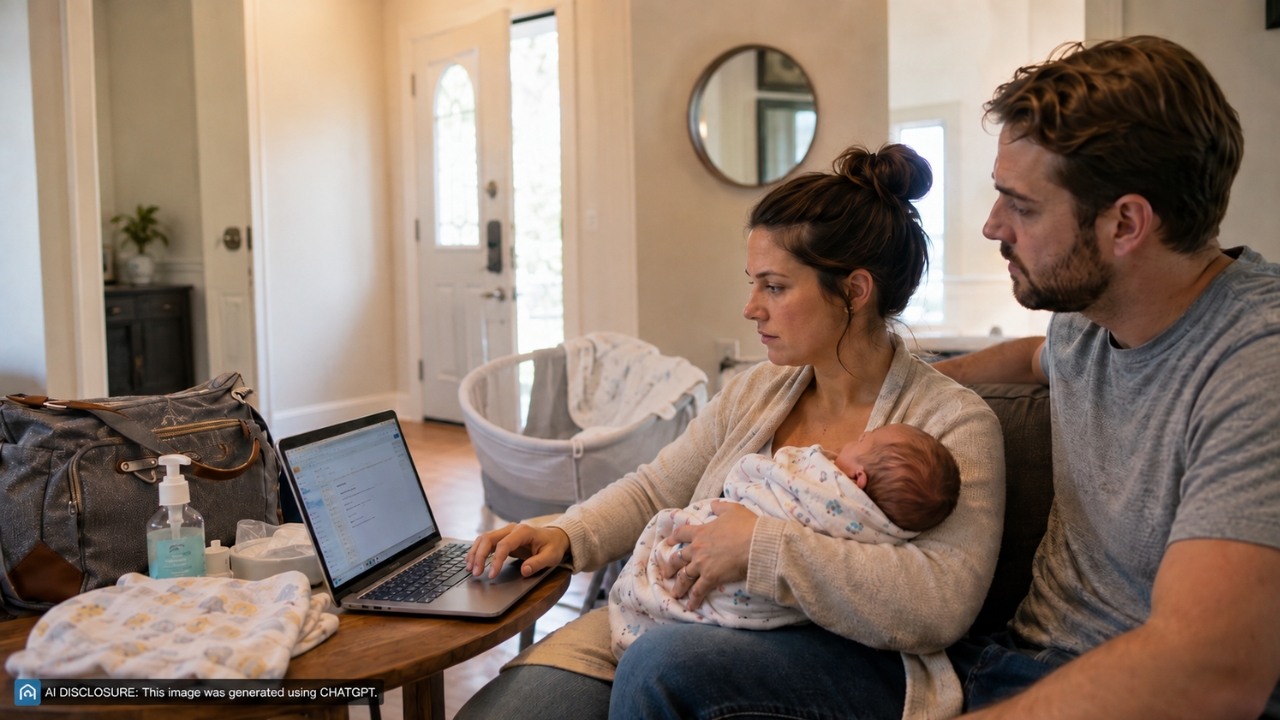
Photo credit: AI-generated image created using CHATGPT. Illustrative only.
Three days into becoming a dad, he thought he was doing the responsible thing: keeping his brand-new baby safe, keeping his exhausted wife from getting overwhelmed, and keeping both sides of the family on the same page. Instead, one carefully written email turned their first round of newborn visits into a full-blown family showdown.
The couple had just welcomed their first child, a baby boy, and they decided to wait a day before letting relatives come by. But once they were ready, the new dad—already feeling anxious and protective—decided not to leave things up to vague texts and assumptions. He put everything in writing and hit send.
The problem started before the big blowup
Even before the baby arrived, he and his wife knew they weren’t dealing with families who naturally “get” limits. He described his parents as old fashioned, the kind of people who think a little dirt is better than vaccines. His wife’s parents, he said, tended to make everything about themselves.
So when it came time for visitors, he didn’t want a constant stream of people popping in, passing the baby around, and turning their first fragile days home into a revolving door. He wanted the kind of structure that would let them breathe—especially because he knew he’d be anxious, and because his wife had just given birth.
In his mind, clarity wasn’t rude. It was preventative.
The email that was supposed to keep things calm
He sent one message to everyone who said they wanted to meet the baby, laying out what he called “guidelines” for visiting. The big requests were health-related: nobody sick, and no children under 18 because schools can be a breeding ground for viruses.
He also tried to head off one specific issue: his mother’s heavy perfume. Instead of singling her out, he made it a general note asking everyone to go with light or no fragrance.
Then came the practical stuff—things that feel small until you’re sleep-deprived and bleeding and learning how to keep a tiny human alive. He asked people to let him know what time they’d like to come, keep visiting hours between 9 and 5, stay an hour or less, and keep it to 3–4 visitors at a time. He even asked for no gifts because it would be a hassle to bring everything home.
He admitted it felt a little overbearing, but his wife read it over and told him it sounded fine. So he figured: done. Problem solved.
It didn’t go that way. Some relatives replied with sarcasm—“do you need the last 4 of my social too?”—but most people simply texted him and made a plan. The exceptions were the ones who, unsurprisingly, would become the loudest about it: his parents and his in-laws.
When everyone showed up anyway
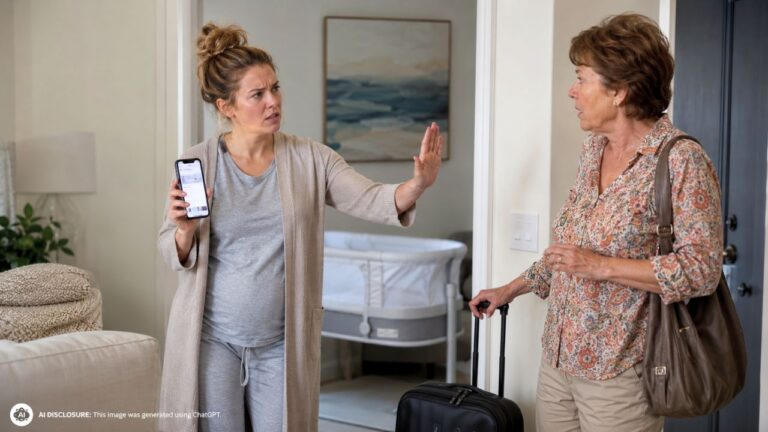
The first warning sign came when his parents arrived around noon while his aunt, her husband, and their two adult children were already visiting. He tried to manage the flow by asking his parents to wait outside so the couple wouldn’t be overwhelmed.
His aunt, sensing the strain, politely cut her visit short. But the “spacing visitors out” plan didn’t exactly work the way he’d hoped.
Once his parents were inside, his mother made herself comfortable fast. Without asking, she took the baby and undid his swaddle. In that moment, the email wasn’t just a message anymore—it was a test of whether anyone would respect that these were the parents now.
And the clock started ticking. An hour passed. His parents were still there.
The no-kids rule became the spark
Then the next group showed up: his in-laws, with their grandson in tow. That immediately collided with the “no children under 18” request. His wife told them they couldn’t bring him in.
Their grandson started to cry, and instead of pivoting, his mother-in-law scolded them for forbidding children. It turned into a moment where everyone’s emotions were louder than the parents’ rules—crying kid, offended grandparents, the kind of scene that makes new parents’ hearts pound.
His father jumped in too, saying they were being “too coddling.” Suddenly it wasn’t about a health precaution anymore. It was about their parenting style, their judgment, and whether the older generation got to overrule them because they’d done it before.
And then came the line that changed the entire tone of the visit.
“It’s my right” turned it into a power struggle
His mother told them they’d been rude and cold. Then she escalated: as grandmother, she said it was her right to visit the baby when she pleased, and she shouldn’t have to “RSVP” to her grandson’s birth.
To her, the email wasn’t organization—it was a personal insult. She called it “demanding” and warned that if they regulated their son as strictly as they regulated visits, he’d grow up resenting them.
That was the moment it stopped being about germs, perfume, or scheduling. It became a fight over control, access, and who gets the final say when a baby enters the family.
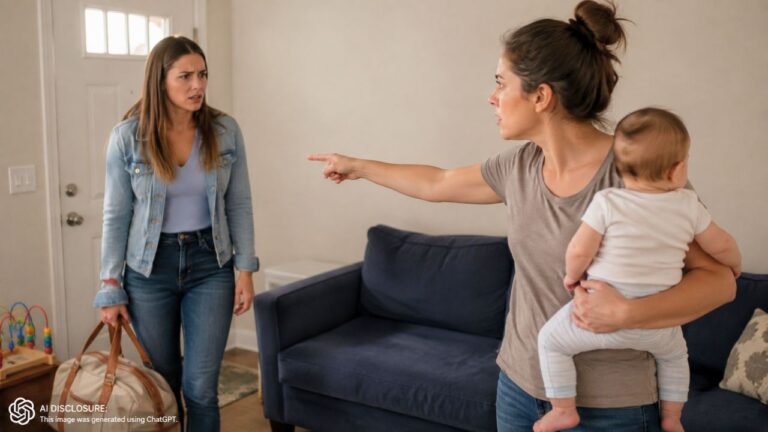
They told their parents and in-laws to leave. His mother shot back that she’d raised him too well for him to be so rude to his own family. His mother-in-law went for a different kind of threat, saying that if her daughter didn’t “crack down” on him, they’d never be visiting again.
So in the span of one afternoon, the couple went from cautiously welcoming visitors to being told they were disrespectful for asking people to text first and wash their hands—basically.
After the door closed, the couple wasn’t fully aligned anymore
The worst part wasn’t just the argument in the living room. It was what happened after: his wife changed her tune.
At first she’d approved the email, but after getting hit from both sides—her mom furious, his mom furious—she started to feel like he’d been too combative. Meanwhile, he felt like the fact that they ignored the requests proved the email was necessary in the first place.
It left them in that vulnerable postpartum spot where you’re trying to be a united front, but the pressure is relentless. When family members frame basic requests as “rudeness,” it can start to feel easier to give in than to keep fighting.
Still, he couldn’t shake how quickly “meeting the baby” turned into adults making demands, breaking rules, and acting like the parents were obstacles instead of the point.
He later shared the full story in the original post, asking if he was wrong for sending the guidelines at all.
For now, the standoff is the only clear outcome: a baby just a few days old, two exhausted new parents, and four grandparents who reacted like an RSVP was a personal attack. And if they’re already claiming “rights” this early, the next chapter—holidays, birthdays, daycare rules—probably won’t get any quieter.