Her Mom and Grandmother Decided Baby Visits Were on Their Terms — Then She Set the Terms Herself
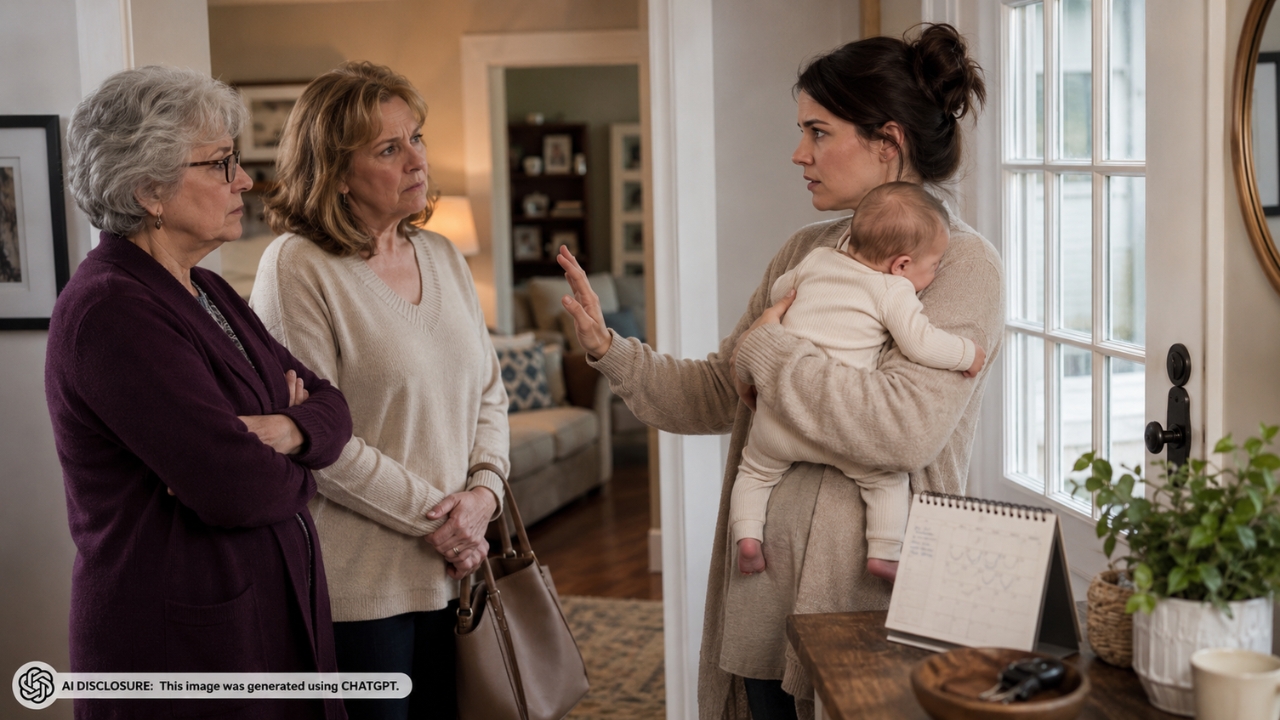
Photo credit: AI-generated image created using CHATGPT. Illustrative only.
It started with one simple request that most new parents don’t think twice about: please don’t kiss the baby. No drama, no debate—just a rule meant to get their daughter through those earliest months safely. But in this family, a basic health precaution didn’t land like a normal request. It landed like an insult.
And once her mom and grandmother decided they were the authority on baby access, baby rules, and how often they should be visited, she realized something: if everyone was going to “set terms,” she could set hers, too.
The problem started long before the baby arrived
For years, the woman at the center of this story says she’s dealt with narcissistic behavior from her mom and grandma. It was a lifelong dynamic—one of those situations where you learn what topics to avoid, what feelings to swallow, and how to keep the peace because it’s easier than dealing with the fallout.
Even before the baby, the pattern was already there. She and her partner would visit her mom fairly regularly, but her mom rarely came to them. Instead, her mom complained they didn’t visit enough, which set the tone: effort was expected from one side, but not the other.
Then they had their daughter, and the stakes changed. What used to be annoying became serious, because now “keeping the peace” could mean ignoring basic safety choices for a newborn.
The no-kissing rule turned into a power struggle
When their daughter was born, the couple asked her mom and grandma not to kiss the baby until she was fully immunized. It wasn’t framed as a personal attack—just a normal, modern baby precaution. But the response wasn’t, “Of course.”
They ignored it. Repeatedly.
Her mom even argued she knew better than doctors, saying sometimes doctors don’t know everything and you have to trust parents instead. The problem was, the parents in this situation were the woman and her partner—not her mom. And yet her mom was positioning herself as the decision-maker.
Visits turned into constant monitoring. Instead of relaxing and letting family enjoy time together, she felt like she had to keep reminding grown adults of a single rule they clearly didn’t respect. That “forgetfulness” started to look less like absent-mindedness and more like a choice.
Grandma’s first meeting came with a warning—and consequences
When grandma wanted to meet the baby, the couple went to visit. Before handing over their daughter, the mom made it crystal clear: “Do not kiss her.” She says she was very serious about it.
Apparently, that didn’t come across as a safety rule. It came across as a challenge.
The day itself went okay, but afterward grandma threw a tantrum about not getting to kiss the baby. Not “I’m sad I can’t show affection,” but a full reaction over being told no. The issue wasn’t a kiss. It was entitlement.
And then it got worse. Her stepdad called her and, according to her, essentially tried to “parent” her—except the conversation devolved into screaming. He told her she couldn’t keep her daughter in a “plastic bubble,” and then went after their home, claiming it was filthy and unsafe because they have horses, dogs, and cats. She says it was exaggerated: not spotless, but not dangerous.
What really made that criticism sting is what she pointed out next: her mom and stepdad smoke heavily. They even smoke in their basement next to an air purifier, acting like the purifier cancels it out. When the couple spends an hour there, the smell clings to their clothes for days. So being lectured about “filth” felt less like concern and more like a weapon.
They asked for one apology—then got guilt instead
After the blowup, she tried to smooth things over with grandma and says they made some progress. But with stepdad, she and her partner drew a line: they wanted an apology before allowing more visits. It wasn’t about winning. It was about not rewarding someone who screamed at her for parenting her own child.
That’s when the guilt campaign arrived. Instead of a straightforward “I’m sorry I yelled,” it was the classic “after all we’ve done for you, this is how you treat us” routine. The apology, when it finally came, was only “sort of” an apology—she says she even has screenshots—and they decided to let it go.
Not because the situation felt resolved, but because new parents don’t have unlimited energy for family stand-offs. Sometimes you accept the half-apology because you’re tired and you want to move forward.
But moving forward only works if the other side changes their behavior, too.
When they finally visited, they still found a way to blame the baby
Eventually, after what she described as a lot of convincing—“like pulling teeth”—her mom and grandma came to visit them. You’d think that would be the moment to reset: show up, be present, stop keeping score, and build a relationship with the baby.
They stayed for about three hours and then complained that the baby was “making strange,” which the mom says is their usual excuse. In other words, the baby acted like they were strangers.
And honestly? A baby isn’t doing anything wrong by reacting to people she doesn’t see often. If they rarely visit, the baby will respond like they rarely visit. Instead of seeing that as motivation to show up more consistently, they used it as a reason to leave—and another way to make it the parents’ fault.
The breaking point came when she chose someone else’s baby visit
The real explosion didn’t happen over kissing or smoke or cleaning standards. It happened over travel plans.
She and her partner planned a vacation to Quesnel, BC, to visit her brother, who had just had a baby. That decision seemed to trigger something in her mom and grandma—because now she started getting messages calling her ungrateful, telling her she needed to treat them better, and insisting she needed to visit more.
In their minds, they weren’t being asked to respect the couple’s rules and show up consistently. They were being “denied” something they felt entitled to. And the fact that the couple was willing to travel for someone else made it feel like a public rejection, even if the reasons were completely different.
It’s hard not to notice the pattern: when her mom and grandma don’t get what they want, the narrative becomes, “You’re ungrateful.” When they behave in a way that pushes people away, the narrative becomes, “You’re treating us badly.” Accountability never really enters the chat.
In her update, she added one more detail that captures the vibe perfectly: her grandma blocked her on Facebook and then tried to refriend her. Then she texted to gaslight her with, “Hi, did you unfriend me on Facebook? Can’t seem to find you.”
It was the same move, just in miniature: cause the rupture, deny the rupture, and make the other person feel crazy for noticing.
For anyone who wants to read her full account in her own words, it’s in the original post.
Right now, there’s no neat resolution—just a new reality where she’s choosing her daughter’s wellbeing over keeping older relatives comfortable. And if her mom and grandma truly want more time with the baby, they have a clear path: show up, respect the rules, and stop treating basic parenting decisions like personal insults.