Her Family Refused to Follow One Rule at the Wedding — Then the Bride Removed Every Person Who Said No

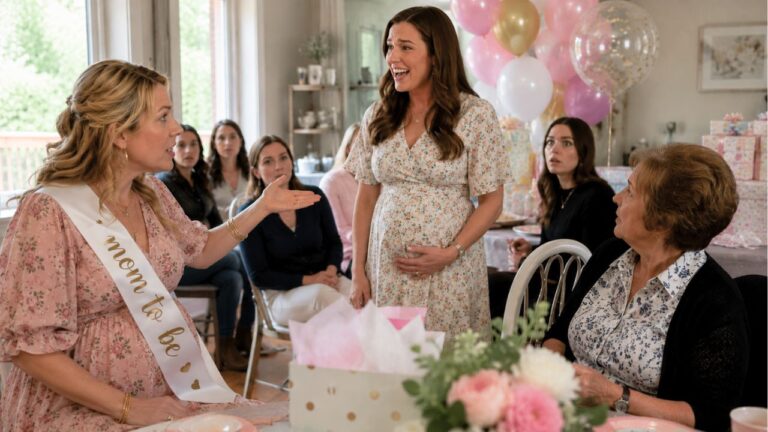
Photo credit: AI-generated image created using ChatGPT. Illustrative only.
It was supposed to be simple: a small wedding, a firm date, and a guest list that actually fit the couple’s lives. Instead, one phone call turned an already-tight plan into a family power struggle—complete with money strings, sibling rivalry, and a groom-to-be the bride can’t stand to be in the same room with.
The bride-to-be, 27, said she and her fiancé got engaged about 10 weeks ago and started planning for November 2021. They even locked down a venue early because there were only three local options, and that date was the earliest any of them had available.
But her family didn’t just want a say. They wanted a takeover.
The problem started long before the wedding planning
Her relationship with her sister “Rosie” was already complicated, but the real issue was Rosie’s fiancé, “Mick.” The bride didn’t mince words: she said she detests him “with my entire being,” and gave examples that made it clear this wasn’t some petty personality clash.
She described Mick as a walking stereotype of toxic masculinity. One moment that stuck with her happened when her 7-year-old daughter painted nails—her 5-year-old son’s and her fiancé’s. Mick reportedly reacted by calling the fiancé and the little boy “sissies” for wearing nail polish.
It didn’t stop there. She said Mick had hit on her in the past and also slut-shamed her. It was the kind of behavior that doesn’t just make someone unpleasant at family dinner—it makes them feel unsafe and disrespected. And importantly, her fiancé wasn’t neutral about it either. He hated Mick too.
A small guest list… until her parents wanted to add 40 people
The couple’s plan was modest: about 20 guests. That’s intimate on purpose—less chaos, less cost, and more control over the day. But her parents wanted to invite about 40 people of their own, which instantly would have doubled the wedding.
They struck a deal: the parents would pay for two-thirds of the wedding since they’d be bringing two-thirds of the guests. From the bride’s perspective, it sounded like a compromise—fine, bring your people, and help cover the added expense.
At that point, the planning still felt salvageable. The venue was booked. The date was set. The couple was moving forward with their original vision, just expanded.
Then Rosie got engaged—and her parents announced a double wedding
Everything changed when Rosie and Mick got engaged the week before. Rosie started looking for venues too, but the earliest date she could find was April 2022—months after her sister’s planned wedding.
That’s when the parents made their move. They told the bride and groom-to-be that the wedding would now be a double wedding.
Not asked. Told.
And it wasn’t like the family didn’t know there were issues. The bride said “everyone involved” was aware of the problems with Mick. Still, her parents treated the double-ceremony idea like an obvious solution: one venue, one date, one big event, two couples.
For the bride, the idea wasn’t just unappealing—it made her stomach turn. She said the thought of seeing Mick standing next to her fiancé at the altar gave her a “visceral negative reaction.”
Money turned into leverage, and the bride snapped
When the couple refused to share their wedding day, the parents didn’t back off. They argued that because they were paying for two-thirds of the wedding, they should get final say. The bride’s response was immediate: they don’t get a say in “who is getting married.”
Her parents framed it as immaturity and accused her of not wanting to “share the spotlight.” They also tried to talk down to her—she said they pulled the “young lady” routine even though she’s nearly 28. Their justification was that Rosie “can’t get anything in the next 18 months,” and it wasn’t fair to make her wait that long.
But this wasn’t about a sister having to wait her turn. The bride’s issue was Mick. She didn’t want him woven into her ceremony, her pictures, or her memories. She didn’t want to smile next to someone who had insulted her fiancé and child and had treated her with disrespect.
So she made a hard pivot. She told them she and her fiancé would pay for the entire wedding themselves, go back to the original smaller guest list, and remove her parents, Rosie, and Mick from the invite list entirely. Then she hung up.
She admitted she snapped in the moment—but also made it clear this wasn’t a casual threat. She wanted distance, and she wanted the day back.
Anyone who’s ever accepted “help” from family knows how quickly it can turn into a receipt. In this case, the money wasn’t just money—it was a claim on the event.
The aftermath: support at home, backlash from family
After the blowup, the bride’s fiancé surprised her: he said he was fine with the decision. He didn’t expect it to go that way, but he supported her. That mattered, because in wedding drama, the pressure often comes from people telling the couple to “keep the peace.” Instead, she had her partner firmly on her side.
Her parents and sister were not. They felt she overreacted and said she was wrong for uninviting them over “one thing they wanted” at the wedding they were paying for.
Then her brother weighed in—and his take was more complicated. He also hates Mick “as much as we do,” but told her she needed to calm down. He argued that the logical response would have been to return the parents’ money and remove the parents’ extra guests, not to disinvite her parents completely. He warned that if she didn’t fix it, she’d be going full bridezilla.
The bride clarified one point: she fully intends to return the money. The deal was connected to adding her parents’ guests, and if those guests weren’t coming, she didn’t feel right keeping the funds.
If you want to read her full version of events, she shared the details in the original post.
Where things were left: a wedding reclaimed, but a family split
By the end of her story, the wedding was technically back in the couple’s control: smaller guest list, self-funded, and no forced double ceremony. But emotionally, it was messier than ever.
Her parents had tried to turn their contribution into authority, and when that didn’t work, they painted her as selfish. Her sister wanted the shared event because she couldn’t find a venue sooner. And hovering over everything was Mick—someone the bride and her fiancé clearly didn’t want anywhere near their marriage day.
Now the bride is left with a choice that doesn’t come with a clean win: stand firm and potentially lose her parents at her wedding, or negotiate with people who already tried to rewrite the entire event in their favor.
For the couple, though, one thing is clear: they’d rather downsize and pay more than let someone else decide what their vows are supposed to look like.