Her Sister Announced Her Own Pregnancy at the Baby Shower — Then the Pregnant Woman Asked Her to Leave
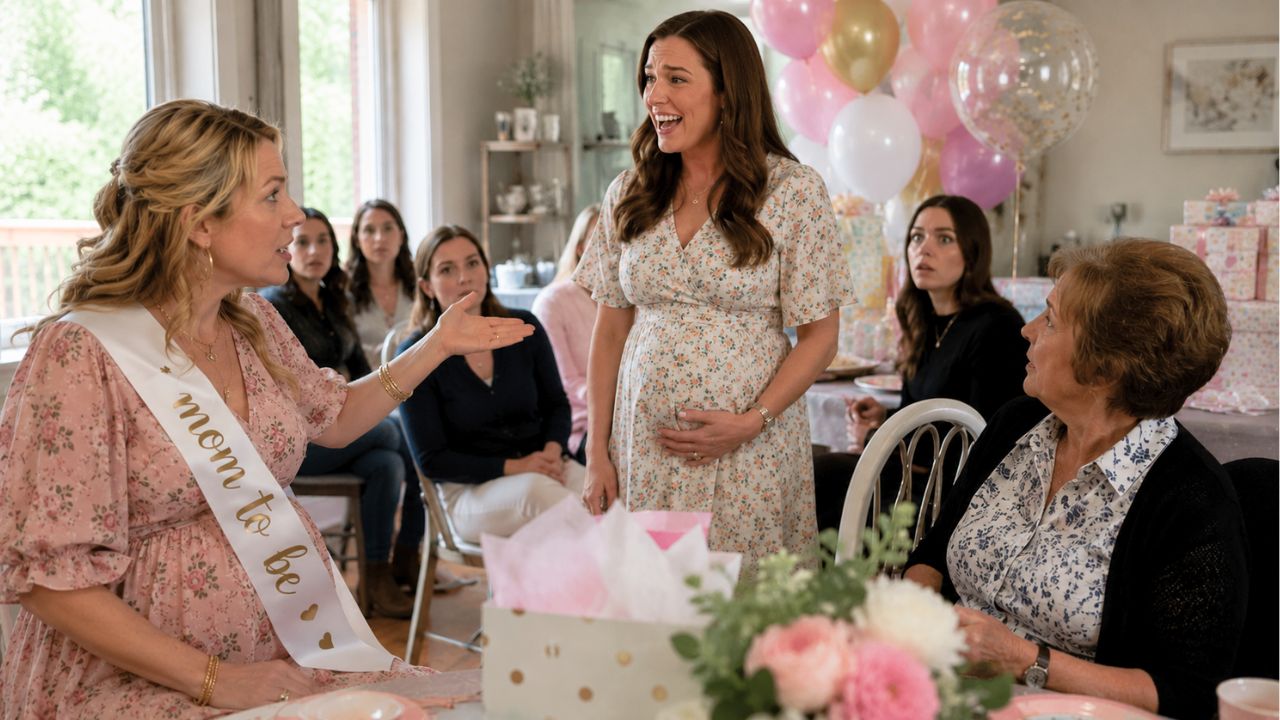
Photo credit: Thrivegirly.com
By the time the ribbon-wrapped gifts were stacked against the living room wall and the mocktail station was running low on fruit, the baby shower had the kind of warm, busy energy people hope for. The expecting mom had spent weeks planning it around her due date, her registry, and a simple goal: one afternoon where she didn’t have to manage anyone else’s emotions.
Her older sister arrived late, dressed up and carrying a small gift bag that felt more like an accessory than a present. She hugged a few relatives, lingered near the food, and kept circling back to the center of the room—where the guest of honor was opening cards and smiling for photos.
Then, during a lull between games, the sister tapped a spoon against a glass and announced she had news. What was supposed to be a celebration for one baby abruptly shifted, as the sister revealed she was pregnant too. The room reacted the way rooms do: surprised squeals, gasps, immediate questions, and attention swinging away from the person the party was for.
The pregnant woman didn’t cry in front of everyone. She simply set down the card in her lap, stood up, and asked her sister to leave.
The announcement didn’t feel accidental
Guests described a moment where it was hard to know where to look. Some congratulated the sister instinctively, while others glanced at the expecting mom to gauge whether this had been planned together. The sister didn’t frame it as sharing the spotlight; she framed it like she was delivering the headline of the day.
The expecting mom’s partner tried to smooth it over by redirecting attention back to the gifts, but the rhythm was gone. The sister kept talking—about timing, symptoms, and how she “couldn’t keep it in” any longer—while a few relatives drifted closer to her with questions.
For the expecting mom, it wasn’t just the announcement. It was the setting and the timing, and the fact that her sister hadn’t pulled her aside privately first. This wasn’t a casual dinner. This was the one event that was explicitly about her pregnancy, hosted in her home, paid for by her and her partner with help from a friend.
When she asked her sister to leave, she kept her voice controlled. She didn’t argue about the pregnancy itself. She said it was disrespectful to hijack the event, and that she needed space.
A family gathering turned into a logistics problem
The sister didn’t go quietly. She first acted confused, then offended, then started bargaining—asking to stay “just for cake,” suggesting they could “celebrate both,” and implying their mother would be upset if she left. The expecting mom repeated herself and walked to the front door.
At that point, the host’s friend—who had helped set up chairs and games—stepped in to keep people from crowding the entryway. The sister raised her voice enough that nearby neighbors could probably hear through the open windows. A few guests pulled out their phones, not to record for social media, but out of that anxious habit people have when they sense a moment is about to spin out.
The expecting mom’s partner asked the sister to lower her voice and leave. The sister refused, saying she had a right to be there because it was “family.” The partner pointed out it was their home and asked again. That’s when the expecting mom said she would call for help if her sister didn’t leave on her own.
Within minutes, the sister grabbed her bag and went outside—but lingered on the porch, still talking, still trying to pull relatives into the conflict. The shower didn’t fully recover. People stayed, but conversations became careful and split into side groups.
Old patterns came rushing back
After guests left, the expecting mom told a few close family members that this wasn’t an isolated incident. She said her sister had a long track record of redirecting attention at major milestones—graduations, engagement announcements, even a previous birthday dinner where she revealed a new relationship during the toast.
Some relatives argued that pregnancy news is sensitive and people blurt things out when they’re excited. But the expecting mom saw it as a choice. She had sent out invitations, set a start time, and made clear the shower schedule included a group photo and gift opening in the middle. If the sister had wanted to share news, there were a dozen ways to do it that didn’t involve taking the microphone at someone else’s event.
The tension sharpened because the sister’s pregnancy was early. A couple of guests later said they worried she might have announced before she was ready, and that the shower was a “safe audience.” The expecting mom didn’t see that as her problem to solve, especially not at the cost of her own day.
By that evening, family group chats were moving fast. Some people focused on the sister being “kicked out.” Others focused on the sister’s decision to make the announcement in the first place. The expecting mom stopped responding and asked her partner to handle any messages that felt aggressive.
The fallout hit practical pressure points
The next day, the expecting mom’s mother called and urged her to make peace. The call wasn’t just emotional—it included logistics. The mother had been planning to rotate time between both daughters after the births. Now she was worried she’d be forced to “choose sides,” especially if boundaries turned into no-contact rules.
The expecting mom, meanwhile, had immediate concerns. Her sister had a spare key from years ago, back when she helped watch pets during trips. After the porch argument and the refusal to leave promptly, the expecting mom didn’t feel comfortable assuming that key would never be used. She asked for it back, in writing, and told her partner they should change the locks anyway.
She also reached out to the friend who helped host and asked if anyone had captured video of the argument at the door. Not because she wanted to post it, but because she wanted documentation in case the sister escalated—showing up uninvited, making claims about being “forced out,” or trying to rewrite what happened.
Nothing about it felt like a court case, but it felt like the kind of family dispute that can spill into real life fast: surprise drop-ins, angry calls to workplaces, and drama that shows up on your doorstep when you’re heavily pregnant and trying to rest.
Commenters focused on boundaries and proof
People who heard about the situation tended to land in two camps. One side said the expecting mom had every right to protect her own event and that asking someone to leave your home is a straightforward boundary, not a punishment. They emphasized that major moments around pregnancy are already emotionally charged, and adding competition can be genuinely stressful.
The other side focused less on who was “right” and more on prevention. They suggested changing locks if a key had ever been shared, keeping messages in text instead of phone calls, and avoiding in-person confrontations without a neutral witness. Several people also suggested calmly sending one clear message to the sister: you can share your news in your own way, but you cannot use someone else’s milestone to do it.
A few people pointed out that if the sister truly couldn’t leave and refused to exit the property, calling for assistance is not an overreaction—it’s a safety decision, especially when the homeowner is pregnant and the situation is escalating. Others advised keeping future gatherings in public spaces or with firm start-and-end times until trust is rebuilt.
Two pregnancies, one family, and a hard reset
In the weeks that followed, the expecting mom didn’t block her sister, but she stopped sharing updates. She limited what she posted online, asked relatives not to pass along private details, and focused on preparing the nursery without outside noise. She also made it clear to her mother that “keeping the peace” couldn’t mean tolerating repeat behavior.
The sister continued telling relatives her announcement “just happened,” and that she didn’t mean to steal attention. But she didn’t apologize in a way that addressed the actual choice—standing up at someone else’s shower and making it about herself. What remains unclear is whether the two will reach an agreement before the babies arrive, or whether the family will split holidays into separate visits.
For now, the expecting mom is treating the baby shower as a line in the sand. She got the day back in small ways—thank-you notes, photos with friends, a quiet evening with her partner—but the bigger shift is how she plans to protect her space going forward. When you’re about to become a parent, “family” starts meaning something more practical: who respects your boundaries when it counts.