Her Best Friend Cut Her From the Wedding Party Without a Real Explanation — Then She Said She Wouldn’t Be Attending Either
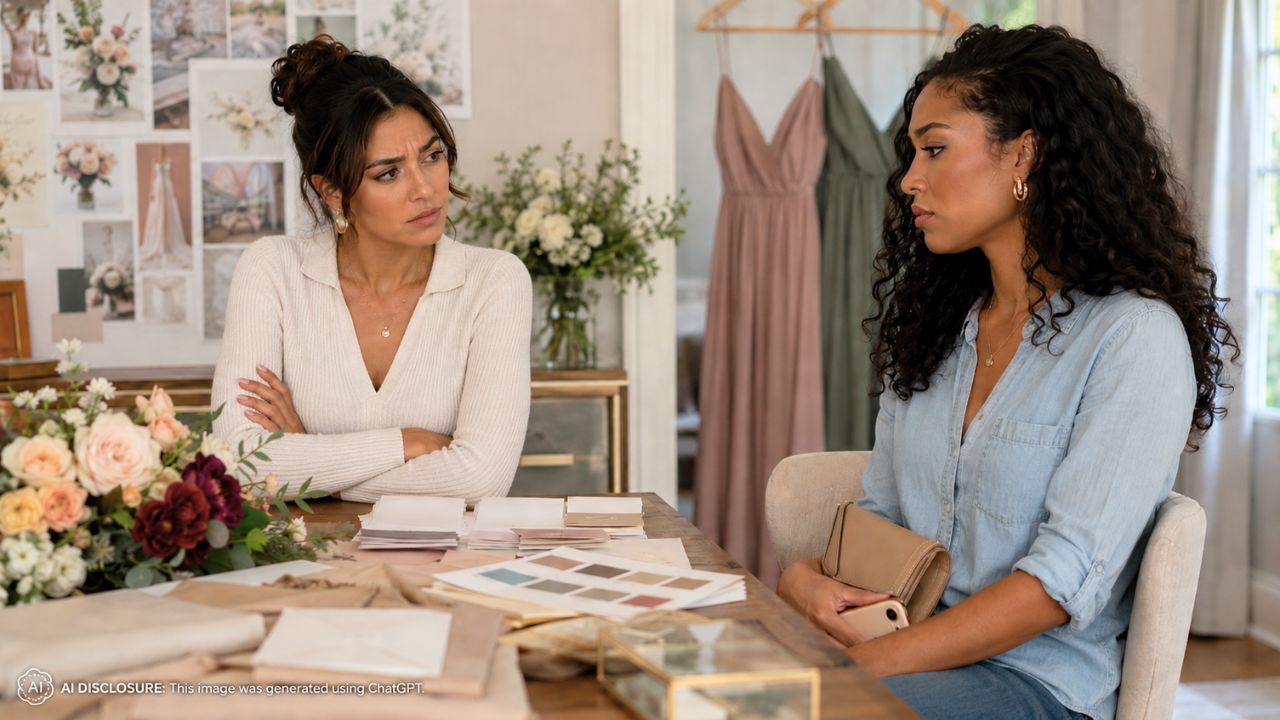
Photo credit: AI-generated image created using ChatGPT. Illustrative only.
She thought being asked to stand beside her best friend on her wedding day meant she was being pulled closer into the inner circle, not handed an invoice. At first, she was genuinely excited—until the dress details landed and the price tag made her stomach drop.
In the original post, she explains that the bridesmaid dress her friend chose cost over $400, and the bride expected every bridesmaid to pay for their own. It wasn’t a small “maybe I can shuffle things around” expense. It was firmly outside her budget, and it changed everything about how she felt walking into the wedding.
She was thrilled to be asked—until the dress details hit
When her best friend asked her to be a bridesmaid, she said yes with the kind of excitement that comes from feeling chosen. Being in the wedding party isn’t just a role; it’s a signal. It says, “You’re my person,” and for a best friend, that can feel like an honor you don’t even question.
But then the practical side arrived. The dress was over $400, and there was no suggestion that the bride would help cover it. It wasn’t framed as optional or flexible, either—it was simply what the bridesmaids were expected to do.
That’s the moment the glow started to dim. Because it wasn’t only about fabric and color. It was about being told, in a not-so-subtle way, that participation required a financial buy-in she couldn’t realistically make.
She tried to compromise, and the answer was a hard no
She didn’t blow up. She didn’t shame the bride for having expensive taste. She did what most people wish they could do in awkward friendship moments: she spoke up plainly and explained it was out of her budget.
Then she offered a middle ground. Could her friend cover at least half?
The bride’s response was firm: it’s tradition for bridesmaids to pay for their own dresses. No wiggle room, no “let’s find something similar,” no “we’ll figure it out.” Just a rule—one that, in that moment, mattered more than her best friend’s reality.
And that’s where it stopped being a simple money problem. The bride wasn’t just choosing an expensive dress. She was choosing to keep the plan exactly as-is, even if it priced someone she supposedly loved out of standing beside her.
Declining the wedding party role changed the whole relationship overnight
After getting shut down, she made the decision a lot of people dread: she declined being a bridesmaid. It wasn’t dramatic, at least not in the way she tells it. It was more like a resignation—an admission that she couldn’t meet the expectation and didn’t want to go into debt or scramble to please someone who wasn’t listening.
But the bride didn’t take it as a practical decision. She took it as a personal one.
Instead of understanding that $400 is a major expense for many people, her friend got upset and told her she was jeopardizing the friendship “over money.” That line stung, because it flipped the situation around. Suddenly, the bridesmaid wasn’t the friend who couldn’t afford the dress; she was the villain who wasn’t willing to “show up.”
And from there, the rupture widened. The woman who declined the bridesmaid role also didn’t want to attend the wedding at all, because after that exchange, it didn’t feel like a celebration she’d be welcome at. It felt like a place she’d be judged for what she couldn’t pay.
The ugliest part wasn’t the price tag—it was the accusation
Weddings have a way of turning people into accountants of loyalty. Who paid for what, who traveled, who attended every event, who “made it work.” And once that mindset kicks in, it can make even longtime friendships feel transactional.
In her mind, she wasn’t asking for something outrageous. She wasn’t demanding the bride buy her an entire outfit out of spite. She was saying, “This is too expensive for me,” and offering a split as a compromise.
But being told it was “tradition” put her in a corner. Tradition is a convenient shield because it makes a personal choice sound like an unbreakable rule. And when the bride followed it up by blaming her for “jeopardizing” their friendship, it took the sting to another level.
Because if the friendship was that fragile, was it ever really as mutual as she thought?
Once she stepped back, attending started to feel impossible
There’s a big difference between stepping down from being a bridesmaid and skipping the entire wedding. Plenty of people can manage the first without the second. They buy a gift, they show up, they clap, they smile for photos, and they quietly accept that the season of “being close” shifted a little.
But in this case, the emotional tone changed so sharply that attending didn’t feel neutral anymore. If the bride was already framing her as someone who cares more about money than friendship, showing up as a guest could easily feel like walking into a room where that story had already been told.
And even if nobody said it out loud, she’d be sitting there with the knowledge that she tried to make it work, got dismissed, and then got blamed for not magically producing $400.
Skipping the wedding, then, wasn’t just about refusing to spend. It was about refusing to participate in a day where she’d be quietly punished for not being able to afford entry into the bridal party.
The situation ended with one big question hanging in the air
What makes this messy is that both women seem to believe they’re defending something important. The bride is defending her vision and what she sees as normal wedding etiquette. The best friend is defending her finances—and the idea that a friendship shouldn’t come with a bill attached.
The bride’s insistence that it’s “tradition” doesn’t erase the reality that $400 is a lot of money. And the accusation that the friendship is being jeopardized “over money” ignores that the money issue didn’t appear out of nowhere; it was created by a specific expectation and a refusal to budge.
In the end, she’s left wondering whether she’s wrong for not attending at all after declining the bridesmaid role. But the real heartbreak is simpler than any wedding-party debate: she thought she was showing up for her best friend, and instead she found out the price of standing next to her.
Whether they repair things later or not, the wedding has already done what weddings sometimes do—turn a friendship into a test. And this time, the passing grade was a $400 dress.
Read more from Thrive Girly:
- Mother-in-Law Expected to Sleep Over After Every Visit — Then the Mom Said Overnight Stays Were No Longer an Option
- Relatives Showed Up to the Wedding Without Being Invited — Then the Couple Refused to Find Them Seats
- Grandma Buckled the Baby Into Her Car and Left Without Telling Anyone — Then the Mom Made Sure It Never Happened Again