Grandma Kept Doing the One Thing She Was Explicitly Told Never to Do — Then She Lost Her Standing Invitation Entirely
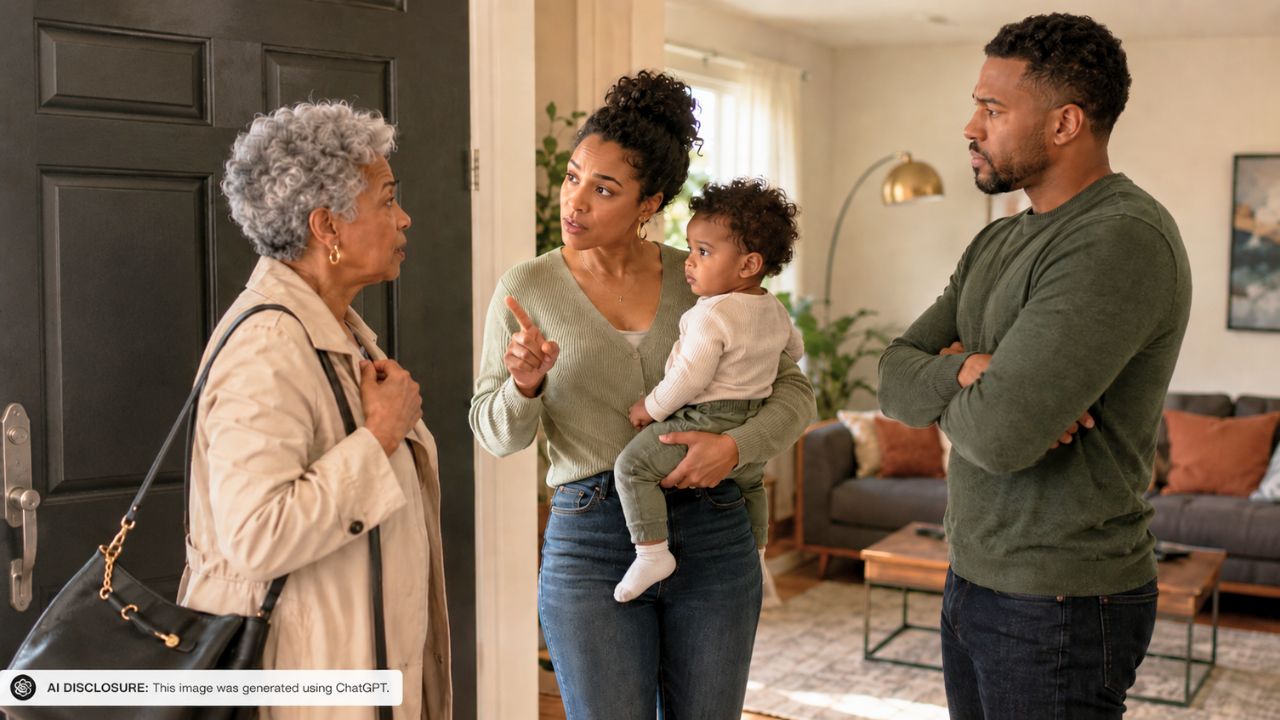
Photo credit: AI-generated image created using ChatGPT. Illustrative only.
By the time her baby girl arrived in December, the new mom thought she’d done everything right: clear boundaries, repeated reminders, and a simple rule meant to keep a newborn safe during peak sick season. One request sat at the top of the list—no one kisses the baby.
Most people listened. Even the baby’s dad, she said, wasn’t kissing the newborn. But one family member kept pushing, joking, and testing limits until the mother reached the point where “please stop” no longer felt like enough. The person crossing the line wasn’t a stranger, or even a casual relative. It was her grandmother.
It started with the hospital, before the baby was even home
The mother, 28 and a first-time parent, said she’d been vocal throughout pregnancy about what she would and wouldn’t allow around her child. That included no visitors during birth. She didn’t want anyone in the hospital while she was delivering, and she didn’t want a crowd right after.
Her grandmother fought the idea, she wrote, upset that she wouldn’t be present and framing it as something she was owed—wanting to be the first person to hold the baby and pointing to the fact she’d held the mother first when she was born.
After four days of labor and an emergency C-section, the mother said she ended up allowing visitors in the hospital even though she hadn’t wanted any. That’s when the first boundary test happened: her grandmother came in and, according to the mother, immediately tried to kiss the baby. She had to remind her not to, and her own mother repeated the warning.
A clear “no” turned into a game of sneaking and laughing
Once they were home, the mother said the behavior didn’t stop—it escalated into a pattern. Her grandmother, she wrote, had kissed the baby four separate times despite being reminded at every visit.
When confronted, the grandmother didn’t act confused or apologetic. Instead, the mother described a routine of guilt-laced comments—“you’re REALLY not gonna let me kiss her???”—followed by a kiss anyway, then a denial played for laughs: “oh oh oh! I didn’t do it!!”
Even when she wasn’t actively kissing the baby, the mother said her grandmother would hold the newborn close to her face as if daring someone to stop her, rub her face against the baby, and treat the whole thing like a joke. She also claimed her grandmother wouldn’t immediately hand the baby back when asked, adding another layer of stress to what should have been a simple visit.
For the mother, the issue wasn’t just disrespectful behavior. It was control—an adult deciding her wants mattered more than a parent’s rules.
The health stakes were not hypothetical in this household
This wasn’t a vague “no kissing” preference. The mother said it was winter, prime season for RSV, flu, COVID, stomach bugs, and other infections. Her daughter is a newborn without age-appropriate vaccines and, as the mother put it, “zero immune system.”
What made it worse, she said, is that her grandmother was an OB nurse for more than 20 years. In other words, this wasn’t someone who didn’t understand how easily newborns can get sick. The mother also said she herself has worked in healthcare for a decade and wasn’t making the rule lightly.
Then she added the detail that made her feel like this wasn’t just reckless—it was dangerous: her grandmother has HSV-1. The mother stressed that transmission can happen even without an active outbreak and said she believed exposure could be devastating for an infant.
In her mind, that removed any room for “it’ll probably be fine.” She felt like she was watching someone knowingly roll the dice with her child’s health.
Then the boundary pushing spread beyond the baby
The mother said the grandmother’s behavior wasn’t limited to a quick kiss here and there. She described constant pressure to bring the baby to her grandmother’s house, combined with complaints that she wasn’t visiting enough.
At the same time, she said she’d invited her grandmother to come to her home multiple times during pregnancy and after the birth, and her grandmother declined. Yet when the mother called her, she was often out with friends. To the mother, it felt like the visits weren’t about making things easier on a new parent—they were about access, on her grandmother’s terms.
One moment in particular stuck out: the grandmother brought a friend to the mother’s home. That friend then told the mother about a baby at church who gets kissed and touched, and the parent just “wipes him down with a baby wipe.” The message was clear: other people allow this, so you should too.
The mother also said her grandmother has mentioned wanting to keep the baby while the mother works. While she appreciated the offer, she didn’t trust it, especially given the repeated boundary violations and her grandmother’s tendency to get overstimulated by the mother’s young nieces or nephews.
What people told her to do: make the rule enforceable
In the original post, the mother didn’t ask for sympathy as much as a plan. She wanted to know if she was wrong for considering a full stop: her grandmother no longer being allowed around the baby until she can follow rules.
She also acknowledged the fallout. She expects “a lot of family issues” and said she doesn’t have the mental capacity for a big fight while recovering and caring for a newborn. Her own mother’s assessment was blunt: the grandmother is “just going to do what she wants.”
The practical responses centered on making consequences immediate and consistent. The underlying theme was that reminders don’t matter if nothing changes afterward—especially when the boundary breaker treats the rule like a punchline. People pushed the idea that the mother doesn’t need to win an argument about whether the rule is reasonable; she only needs to enforce it.
That means visits that end the moment the rule is broken, no holding the baby if the person can’t be trusted, and fewer opportunities for someone to “sneak” physical contact. Just as important: stopping the tug-of-war over handing the baby back, because a parent shouldn’t have to negotiate to get their child returned.
A standing invitation can disappear fast when trust is gone
The mother’s post reads like someone who tried to keep the peace until the pattern became impossible to ignore. She says she loves her grandmother and credits her with doing a lot for her over the years. But she also draws a hard line: she loves her child more, and her child’s safety comes first.
In the end, the kiss itself is almost beside the point. What she’s describing is a repeated decision to override a parent, paired with laughing denials, guilt trips, and pressure campaigns. And once a parent believes a relative will ignore clear rules—especially around a newborn—trust doesn’t just crack. It collapses.
Whether the grandmother sees it as “just a kiss” or not, the mother is now looking at the only lever she has left: access. If the grandmother can’t respect the simplest instruction, the standing invitation doesn’t stay standing.