Grandparents Fed Her Son His Allergen After Being Warned Twice — Then She Banned Visits Until They Completed an Allergy Safety Course
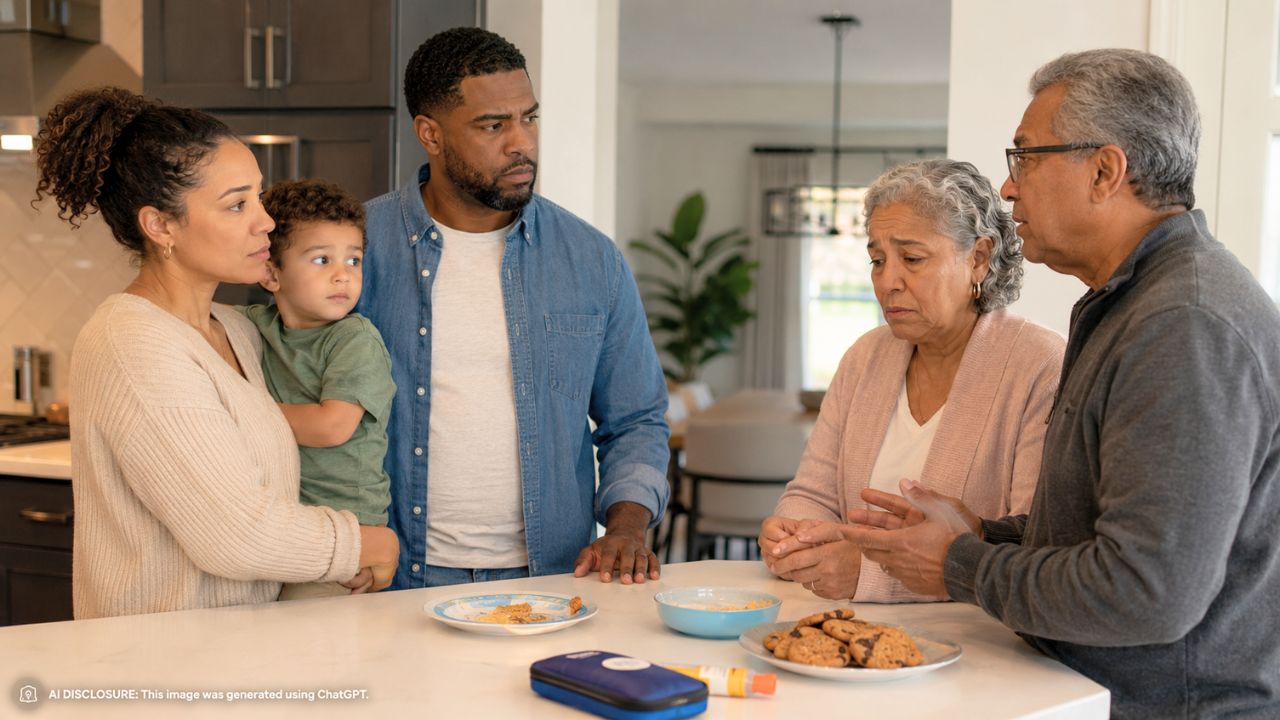
Photo credit: AI-generated image created using ChatGPT. Illustrative only.
A pregnant mom with a newly mobile 10-month-old thought she’d found a lifeline: her in-laws offered to take the baby one or two weekdays so she could rest and run errands. It worked—until it didn’t. The help came bundled with another standing appointment in the house: the grandparents also regularly babysat their 8-year-old granddaughter, and the mom says the dynamic turned her calm routine into a safety and sleep nightmare.
In her account, the grandparents were loving and capable when it was just them and the baby. The problem was what happened when the older child was there too—and what the adults let slide. Eventually, the mom drew a hard boundary: no more babysitting her son on days the granddaughter is around.
A “helpful” arrangement that came with a catch
The mom explained that her husband’s side of the family has one granddaughter—an 8-year-old niece—surrounded by boy cousins. Between being the first grandchild and the only girl, she says the child is treated like royalty at her grandparents’ house, to the point that “the princess complex is REAL.”
She also described the niece’s home environment as extremely permissive: lots of candy and ice cream, and hours of TV. The mom had largely stayed out of it for years, keeping a “not my kid, not my problem” mindset. But once her own son entered the picture, the overlap in childcare made it her problem fast.
The grandparents’ offer to babysit during the week wasn’t just kind—it was practical. Being pregnant while caring for a baby who’s starting to crawl, pull up, and cruise along furniture is exhausting. The mom says she was genuinely grateful, and at first, it seemed manageable.
Little disruptions turned into a pattern
The first red flag wasn’t dramatic; it was the kind of thing people brush off as a one-time fluke. Her son, she said, is a great sleeper if he sticks to his schedule. But multiple times, she’d pick him up and hear the same update: he missed his nap.
When she asked why, she says the grandparents laughed and blamed it on the niece going into the room and waking him up. That might sound small—until you’re the person dealing with an overtired baby for the rest of the day and trying to keep any kind of rhythm in a house that’s already stretched thin by pregnancy.
Then came the smaller boundaries, the ones that signal whether adults are treating your routines like they matter. The mom sent her baby with books, only to be asked if the grandparents could keep some at their house because the niece liked a particular title. Her answer was a firm no: those books were for her son at home.
Each moment on its own could be explained away. Together, she says, they painted a picture: when the niece was present, the baby’s needs were optional.
The moment that made it feel unsafe
The turning point wasn’t a missed nap or a borrowed book. It was physical handling. The mom walked in and saw her niece yanking the baby around by his arms—dragging him while he was half-standing. Her son can stand and is working on walking, but he’s still a baby, still fragile, and not a toy.
What rattled her wasn’t just the niece’s behavior, but the adult reaction. The grandparents were sitting there watching, according to the mom, not intervening as her child was being pulled around. In her view, that crossed from “annoying but manageable” into “my kid could get hurt.”
That’s where her boundary snapped into place. She decided her son would no longer be babysat at the grandparents’ house on days the niece was there.
A boundary that hit the family like an accusation
The mom says she didn’t ban the grandparents from seeing her child altogether. She still trusts them to watch him when no one else is over—she even notes they “actually do a good job otherwise.” The issue was the combination of kids and the way the adults, in her telling, defaulted to catering to the older child.
She framed it as a matter of autonomy and basic respect: with the niece around, she felt her baby stopped being treated like a person and started being treated like a doll. That difference matters when the baby can’t speak up, can’t set boundaries, and relies on adults to step in.
The grandparents didn’t take the new rule as a logistical adjustment. They were “incredibly pissed,” she wrote, and told the parents they must hate the niece. For the mom, that response only reinforced her concern: instead of acknowledging what she’d seen, they made it about hurt feelings and loyalty.
She worried she might be blaming an 8-year-old too much and questioned whether she should’ve offered a vaguer explanation. But her bottom line was blunt: she doesn’t hate the niece; she simply loves her son more and doesn’t want him mistreated.
What people focused on: supervision, schedules, and who’s really responsible
In the discussion of the original post, the judgment shared in the pasted material was “Not the A-hole,” and the reasoning follows a common-sense line: the niece is 8, but the responsibility sits with the supervising adults. A child pushing boundaries is one thing. Adults ignoring a baby being handled roughly is another.
People also tended to treat the nap issue as more serious than it sounds. For parents of infants, sleep isn’t just comfort—it’s the difference between a manageable day and a meltdown, especially when a parent is pregnant and running on fumes. Repeatedly letting an older child interrupt sleep can look less like a cute cousin moment and more like caregivers refusing to enforce basic rules.
And the physical moment mattered most. Pulling a baby by the arms can be dangerous, and many parents reading a story like this would see that as a “no second chances” kind of scene—not because the older child is evil, but because it’s exactly what supervision is for.
A family standoff over access and control
The mom’s new rule is simple on paper: grandparents can babysit, just not when the niece is there. In real life, it forces the grandparents to choose between watching one grandchild or the other on certain days, and it challenges the household’s existing hierarchy—where the niece’s wants appear to come first.
That’s why the fallout is so intense. The grandparents aren’t only being told “don’t do that.” They’re being told their normal way of managing the kids isn’t safe or acceptable. And rather than adjust, they responded by accusing the parents of hating the niece, turning a safety boundary into a character judgment.
For now, the mom is holding the line. She’s not trying to punish a child, she says—she’s trying to protect a baby who can’t protect himself. The unresolved tension is whether the grandparents will change their approach, or whether this new baby-on-the-way will make the divide even sharper once there are two little ones to keep safe on the same schedule.