Grandma Kept Breaking Every Rule the Parents Set — Then She Lost Access to Her Grandson
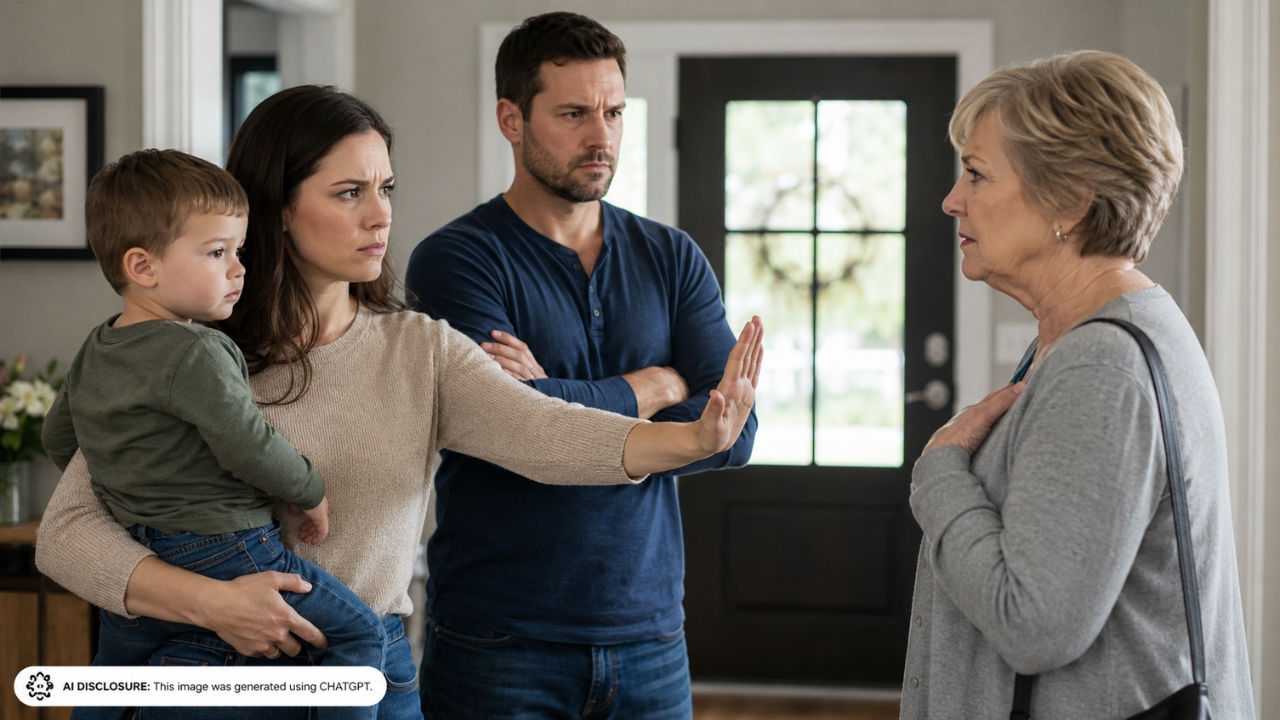
It was supposed to be one of those sweet family trips you power through for the memories: a cross-country flight with a baby, a reunion, proud grandparents, a few photos, and everyone pretending to be on their best behavior for a week.
Instead, it turned into the moment one couple realized “Grandma” wasn’t just being a little overexcited—she was willing to do whatever she wanted, even if it meant going behind the parents’ backs.
The rules were clear long before the spoon came out
The parents—both in their 30s—had a 6-month-old son who had just started solids. They weren’t winging it. They had specific guidelines they’d discussed for weeks with the baby’s grandmother, including no sugar before the baby turned one and no spoon-feeding because they were doing baby-led weaning.
And this wasn’t the first time the mom (68) had acted like their parenting choices were suggestions. Earlier, she’d already pushed back on smaller stuff, like demanding photos at 9 a.m. even though the couple had previously asked for no photo requests before 10.
When they reminded her, she apparently had a simple explanation: “Rules don’t apply to Grandma.”
The custard moment that changed the whole trip
Things seemed fine at first during the visit. Then the wife walked in and caught the grandmother trying to feed the baby custard off a spoon.
It hit two “no”s at once—sugar and spoon-feeding—and it wasn’t a misunderstanding. The wife didn’t argue in the moment. She just took the baby and walked out of the room, clearly upset, not saying a word.
The husband stayed behind and confronted his mom. Her response didn’t calm anything down. She admitted she didn’t ask because, “Because I knew you’d say no.”
That was the part that made him feel genuinely furious. It wasn’t a clumsy mistake. It was a choice. And to make it even more validating for the couple, the mom’s sister had witnessed it and agreed the wife’s reaction made sense.
Apologies, backpedaling, and rewriting what happened
The next day, the couple sat both parents down to talk it through. At first, the grandmother apologized. But almost immediately, the apology started slipping into defensiveness—and then into revision.
She began changing details: saying it was a fork, not a spoon, or implying the baby reached for it. The couple felt like they were watching the story morph in real time, and the conversation got heated.
The husband’s dad jumped in too, telling them they were being harsh. Then came another escalation: later, the grandmother claimed the wife “screamed” at her.
The couple didn’t remember it that way, but they also said they weren’t going to tell her she was lying or try to overwrite her memory. Still, they didn’t see it as a fair summary of what happened.
In the end, they cut the trip short and went home early. And the emotional pullback started immediately: the wife, who had been sending daily photos and videos, stopped completely. The husband continued sending occasional updates, but much less than before.
They tried a reset—until Grandma refused to show up
After the trip, they didn’t slam the door shut completely. They tried to work on the relationship and find a way forward.
The wife suggested an exercise: the grandparents would answer questions about their expectations as grandparents, and then everyone would discuss it together. It was structured, calm, and meant to keep things from spiraling into the same “but I’m Grandma” argument.
The deal was simple. If they completed the exercise, they could attend their grandson’s first birthday.
But it didn’t go smoothly. They had to reschedule multiple times, partly because the wife was dealing with postpartum struggles. Finally, they set a time—last minute.
That’s when the grandmother refused to get dressed to be on video. She said she’d listen off-camera because, in her words, the husband had “called every shot so far.”
For the wife, that wasn’t a small preference. It felt like another power move—another refusal to meet them where they were. And with the birthday on the line, she made the call: the invitation was revoked.
After that, the grandmother offered a veiled threat and then a different excuse, but the couple felt like it didn’t matter anymore. The pattern was louder than the explanation.
Therapy became the new requirement, and the answer wasn’t reassuring
Eventually, the husband and wife took more time to reflect, including therapy on their end. And then they drew a new line: before any visits resumed, the grandparents needed to seek therapy too.
It wasn’t framed as punishment. It was framed as the only way the couple could trust that future conversations wouldn’t turn into denial, defensiveness, or “that didn’t happen” energy.
The response they got didn’t exactly build confidence. The grandparents referenced the alleged “screaming” again and expressed uncertainty about whether “this will work out.” But they still asked for photos “every once in a while.”
That combination—doubting the relationship while still requesting access—made the couple pull back even more. The husband kept casual conversation open, but he started deflecting photo and visit requests until therapy actually happens.
In his mind, he isn’t trying to punish his mom over one dessert. He’s trying to prevent the next “I knew you’d say no” moment—because next time it could be something bigger than custard.
He later shared the full situation in the original post, asking if he was wrong for holding firm and whether his wife was wrong for pulling photos and revoking the birthday invite.
Where things stand now: low contact, fewer photos, and a standoff
Right now, the grandparents aren’t fully cut off, but they also aren’t getting what they want: regular pictures, visits, and the easy “we’re all fine” version of the relationship.
The wife’s daily photo stream is gone. The husband sends occasional updates, but he’s not giving in to repeated requests while the bigger issue is unresolved.
And the core issue isn’t really the custard anymore. It’s the attitude behind it: the grandmother openly admitted she bypassed the parents because she expected to be told no, then tried to minimize it, then reframed the argument as the wife “screaming,” and finally refused to fully participate in the repair conversation.
So the family is stuck in a tense in-between. The parents feel like they’re protecting their son and their authority as parents. The grandparents seem to feel controlled and offended. And until someone moves—by taking therapy seriously or by dropping the power struggle—access to the grandson stays limited.
For this couple, the message is simple: being a grandparent is a relationship, not a loophole. And if “Grandma rules” means ignoring the parents on purpose, then Grandma doesn’t get the same level of access anymore.