His Grandparents Drove to the House Without Calling — Then She Turned Them Away at the Door
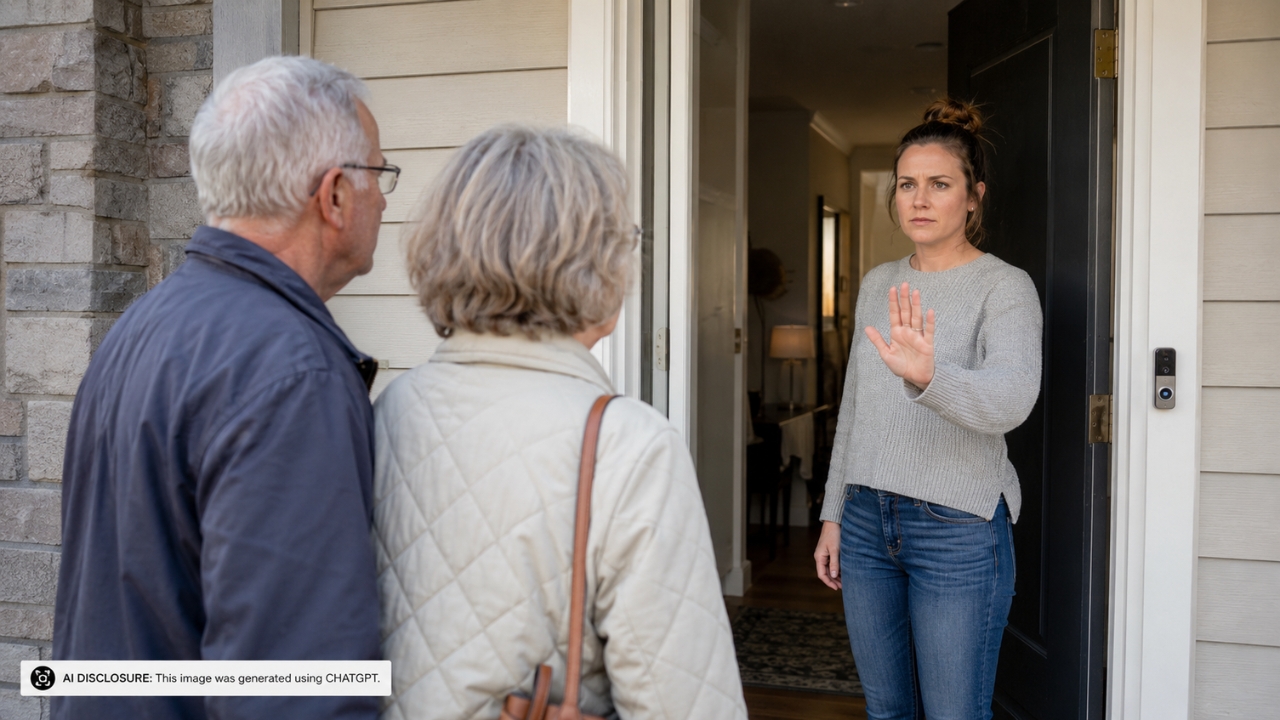
Photo credit: AI-generated image created using CHATGPT. Illustrative only.
The twins had finally settled. After feeds, diaper changes, and that exhausting newborn dance of trying to time sleep just right, the house was quiet enough for a nap. Then the doorbell rang—twice—like someone was determined to make sure nobody rested.
In the middle of those precious few minutes of peace, one partner found themself standing between a closed door and two grandparents who’d decided “dropping by” was totally fine. What happened next didn’t just wake a baby. It set off a family blowup that was already waiting to happen.
The problem started before anyone walked up the driveway
The couple welcomed twins in February, and life since then has been a blur of survival mode. They’re currently living next door to her parents in a neighboring house her parents acquired after the previous neighbor passed away. The couple is renting it and renovating it with them, which means family is physically close—like, “walking over” close.
Because of that setup (and because newborns don’t care about anyone’s social calendar), they’d already tried to get ahead of the chaos. They set a clear expectation: no surprise visitors, and ideally visits limited to once or twice a week so they could still have privacy and downtime.
It wasn’t framed as a personal rejection. It was a “we are drowning and trying to keep these tiny humans asleep” situation. But as they were about to find out, not everyone hears that the same way.
A heads-up text turned into an incoming visit anyway
On the day things blew up, her dad texted her while she was trying to nap. He let her know that her grandmother—his mother—had shown up at their house without calling first. The couple appreciated the warning and tried to carry on with resting since, for once, the twins were fed, changed, and not fussy.
Then, about 10 to 15 minutes later, her phone started ringing. It was her dad again. She was still trying to sleep, so her partner answered.
That’s when the situation shifted from “heads-up” to “brace yourself.” Her dad said the grandmother and grandfather were walking over to their place.
He said turning them away would “start a fight”
With everyone finally asleep, the partner didn’t hesitate. He told her dad he would turn them away because it wasn’t a good time. The dad pushed back, warning that doing that would start a fight.
The response was basically: okay, then it starts a fight. Because the alternative was letting two unannounced visitors come in and disrupt the one sliver of calm they’d managed to build.
And then, while that phone call was still happening, the doorbell rang. Twice, close together. It woke her up, and it woke one of the babies.
At that point, it wasn’t theoretical anymore. The “fight” had already begun, and it was wearing a diaper.
The door opened, and the visit got shut down fast
He told his partner to keep trying to sleep and said he’d handle it. When he opened the door, the grandmother could tell immediately he was exhausted. She asked if they were sleeping.
He answered honestly: yes, all of them were. That’s when she said, “Too bad,” and tried to step toward the door anyway.
He didn’t yell, and he didn’t let it turn into a long argument on the porch. He pulled the door in so it was barely open enough for him and told her no—this wasn’t a good time. The babies hadn’t been sleeping well, and he didn’t want them waking up now that they were finally down.
The grandmother acted like she accepted it and left. But the calm didn’t come back with the closed door. The real aftermath was still waiting on the phone.
The real explosion came from her dad, not the grandparents
A few minutes later, the partner called her dad with the twins screaming in the background and told him they’d turned the grandparents away. The dad’s first move was the kind of icy response that signals anger without saying it outright—short, one- or two-word replies.
Then, after she finished talking, he blew up. He ranted about how he was going to have to deal with his mother being upset now. He complained that he might as well “broadcast” their rules to everyone so nobody comes over unless they call ahead.
It wasn’t just frustration. It was the kind of anger that feels like it’s been building—like the grandparents showing up unannounced was only the spark, not the fuel.
While he was still yelling, she started crying. She said goodbye and hung up.
Now they’re second-guessing the choice they made in the moment
Afterward, the partner who answered the door felt torn. Part of him wondered if he should’ve just let them in for a little while, even though everyone was exhausted and the babies were finally asleep. Not because it was right, but because it would’ve been easier than dealing with her dad’s reaction.
That’s the part that stings: it wasn’t the grandparents’ feelings that made him regret it—it was the reality that her dad apparently couldn’t handle his mother’s emotions (or his own) without unloading the stress onto his daughter in the middle of a newborn meltdown.
Instead of “Sorry, that timing was rough, I’ll talk to them,” the message became: you’ve created a problem for me, and now I’m going to punish you for it.
The whole story, shared in the original post, lands in that painfully familiar place for new parents: when you finally protect your peace, someone else treats it like a personal attack.
The house is close, the expectations aren’t, and nobody wants to “own” the fallout
This family lives in a setup where access is easy. The grandparents can walk over. The parents are right there. And because everyone’s so physically close, it’s tempting for relatives to treat the home like an extension of their own—especially when a new baby (or two) enters the picture.
But the couple had already spelled out what they needed: no surprise visits. It wasn’t a hidden rule. And the dad clearly understood it well enough to warn them the grandparents were coming.
What made it messy is that, instead of supporting the new parents’ plan, the dad tried to stop them from enforcing it because it might make his mother angry. In other words: don’t do what you said you’d do, because I don’t want to deal with her reaction.
So now the couple is left with two problems instead of one—relatives who show up anyway, and a gatekeeper who resents being asked to respect the same rules he already knows.
And the hard part? The babies are still going to need naps tomorrow. The doorbell will still exist. The family will still be close enough to walk over.
For now, the visit ended at the doorstep. But the bigger fight—about access, control, and who gets to be upset without consequences—sounds like it’s just getting started.