Bride Says Her Mother-in-Law Called Her a ‘Princess’ Over Her Strict Wedding Dress Code — Then Every Guest Complied and the MIL Was Impressed
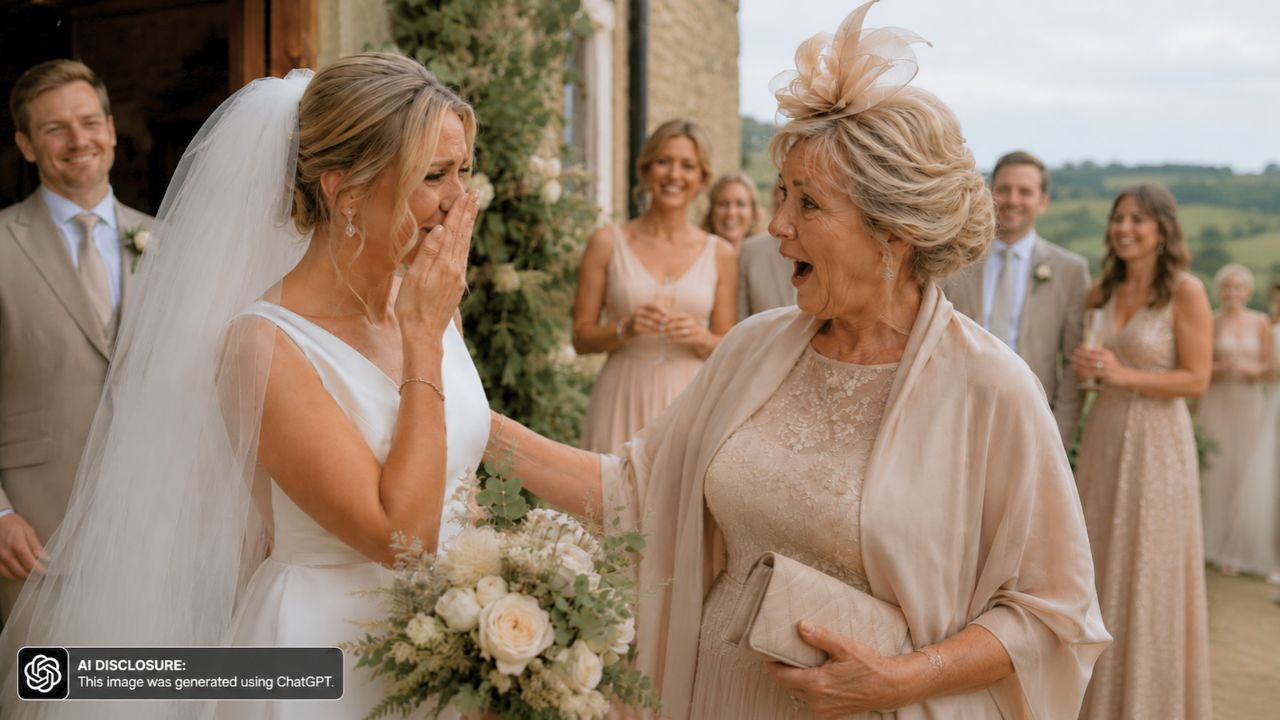
Photo credit: AI-generated image created using ChatGPT. Illustrative only.
Some weddings feel like a family reunion with cake. Others feel like a film set with a seating chart. Shanie Ryan knew which one she wanted, and she wasn’t shy about it.
In a story shared by the source material, Ryan, 39, asked guests to stick to a strict palette of nude and neutral tones—beige, pale pinks, creams, champagne, pale golds—because she had a clear vision for the photos and video. The request didn’t land softly with everyone, including her mother-in-law, who reportedly called her a “princess,” but the twist is that the entire guest list complied and her mother-in-law ended up impressed.
Their wedding day came with rolling hills in the background at Primrose Hill Farm in Banbury, Oxfordshire, on July 6, 2023. Ryan said she’d spent good money on photography and videography and wanted “cinematic and romantic,” not a mix of bright colors, bold patterns, and distracting shine in every frame.
A dress code that wasn’t subtle
This wasn’t the usual “cocktail attire” suggestion tacked onto the bottom of an invitation. Ryan and her now-husband, Tony Sinclair, 39, put the color scheme in writing and explained why: she had a vision for the overall look of the wedding photos and asked guests to respect it.
Along with the neutral palette, the invitation reportedly encouraged looks that were “glamorous, formal, red carpet worthy,” allowing for delicate prints, texture, gentle shimmer, and embellishment. At the same time, it drew hard lines: no bright colors, no black, no white, no dark colors, no neons, no bold prints, no polka dots, no stripes, and no glitter.
That’s a lot of “no,” and it’s easy to see why a few guests rolled their eyes. Ryan herself admitted it felt “a bit cheeky,” especially since some people love black or love color and don’t want their wardrobe choices curated by someone else.
Why she cared so much about the photos
There are couples who treat the wedding album like a historical document. Then there are couples who want it to feel like a magazine spread. Ryan, an interior designer and presenter, said she had a clear plan and worried that “crazy bright colours, or glitters and feathers” would shift the whole vibe.
That may sound overly controlled, but it’s also honest. People spend a lot on photographers and videographers, and once the day is over, you don’t get a reshoot. You can’t rewind the moment you walk down the aisle and ask everyone to change into something that doesn’t fight the background.
Ryan even used a blunt comparison for what she didn’t want: “a wacky warehouse.” It’s a funny line, but it’s also the point. She wasn’t trying to shame anyone’s style; she was trying to make the day look cohesive in the one place it would live forever—photos and video.
The “princess” comment and the family dynamics
Family has a special gift for saying what everyone else is thinking, especially when weddings bring out strong opinions. Ryan said some guests mocked the idea, and her family accused her of being a “princess” for making the request. Her mother-in-law said it directly, and Ryan seemed to take it on the chin rather than turn it into a feud.
That’s not nothing. Weddings create the perfect storm: money on the line, expectations running high, relatives traveling in, and everyone convinced their preference is the reasonable one. It’s also the season where a couple learns quickly whether they can hold a boundary without becoming difficult people.
Ryan said she was prepared for it to come up in speeches and for her to laugh at herself, because people assumed the invitation meant there’d be a bridezilla moment on the day. Instead, the day arrived, the plan worked, and the mother-in-law who called her a “princess” reportedly ended up impressed.
Everyone complied, and the photos matched the vision
The simplest part of the story is also the rarest: the guests actually did it. No bright pink glitter defiance. No “I wear what I want” statement outfit. People showed up in the requested tones, and Ryan said it looked as good as she’d hoped.
She also said it became part of the fun leading up to the wedding, with guests excited to show what they were wearing. That’s the upside of clear direction: it removes some decision fatigue, gives people a theme to play with, and can even create a sense of shared participation.
On the day itself, Ryan said people commented that it looked good and that the idea made sense once they were there. With the countryside backdrop, the coordinated palette helped capture the “essence of the day,” and it became a talking point for the right reasons.
The one exception, handled like an adult
Rigid rules tell you a lot about a person, but so does how they handle exceptions. Ryan made one pre-agreed exception for a guest of African descent who wanted to wear traditional attire that didn’t match the color scheme.
That detail matters because it shows she wasn’t trying to flatten everyone into identical mannequins. She had a strong aesthetic preference, but she could still recognize that someone’s cultural attire carries meaning beyond a photo palette. The exception was discussed ahead of time, which is usually how peace is kept in situations like this.
A dress code can be a tool, not a weapon. The moment it becomes a weapon is when couples surprise people with rules, punish them publicly, or treat family and friends like props. From the details shared, this one sounds like it stayed on the tool side.
What this says about marriage, not just weddings
It’s easy to get stuck on whether a strict guest dress code is “right” or “wrong.” The more interesting question is what it reveals about the kind of marriage a couple is building. Ryan and Sinclair agreed on a vision, put it in writing, absorbed some criticism, and still showed up on the day united.
That’s a small preview of real married life. A husband and wife will make decisions other people don’t love—how they spend money, where they live, what they prioritize, how they raise kids if they have them, how they handle extended family. The skill isn’t pleasing everybody; it’s leading your home with humility, clarity, and enough backbone to stay steady when opinions fly.
From a faith-shaped perspective, marriage is stewardship. You’re entrusted with a spouse, a home, a reputation, and a future, and you don’t manage those things well by drifting. You also don’t manage them well by turning every preference into a moral crusade. There’s a middle ground where you can care about beauty and order while still caring more about people.
If you’re the guest, the couple is asking for a gift
People hear “dress code” and immediately think control. Sometimes it is. Other times, it’s a couple asking for one more gift: help us make this day feel the way we’ve planned it. You can decide it’s not your thing, but if you’re attending, compliance is usually the simplest form of kindness.
Ryan said if someone had shown up in loud, intentional defiance, she would’ve moved them to the back of photos or had them edited out. That may sound harsh, but it’s also the reality of what people do when boundaries are ignored—especially on a day they’ve paid to document.
The good news here is that it never came to that. Everyone showed up, played along, and the mother-in-law who thought the bride was being a “princess” ended up seeing the payoff in real time.
There’s a balance most adults learn the hard way: you can’t build a life trying to impress everyone, but you also don’t have to apologize for having a plan. Ryan’s plan was specific, her delivery was upfront, and her guests chose to honor it. In a world full of stubbornness and silent resentment, that’s not a bad outcome for one wedding day.
Read more from Thrive Girly:
- Mother-in-Law Expected to Sleep Over After Every Visit — Then the Mom Said Overnight Stays Were No Longer an Option
- Relatives Showed Up to the Wedding Without Being Invited — Then the Couple Refused to Find Them Seats
- Grandma Buckled the Baby Into Her Car and Left Without Telling Anyone — Then the Mom Made Sure It Never Happened Again