Partner’s Grandparents Ignored the No-Surprise-Visitors Rule Just Days After the Twins Came Home — Then They Got Turned Away at the Front Door
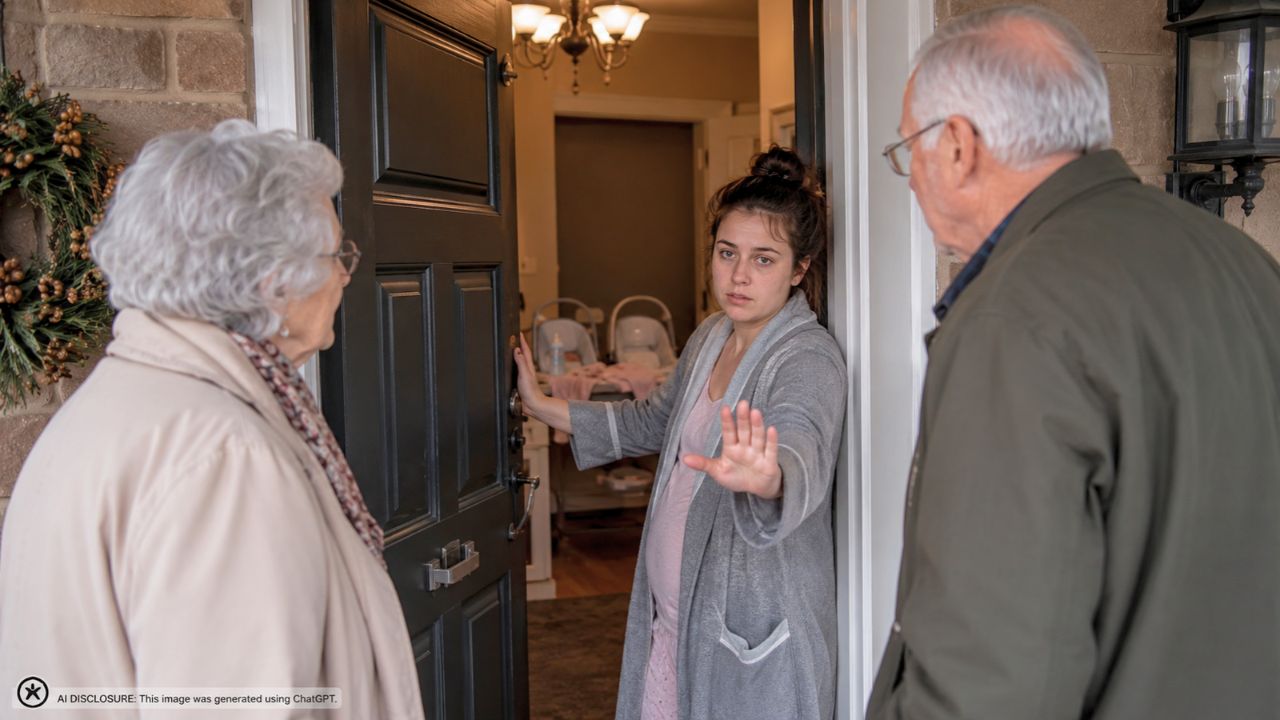
Photo credit: AI-generated image created using ChatGPT. Illustrative only.
The first weeks after bringing newborns home aren’t a season for drop-ins and polite hosting. They’re a season for survival: feeding schedules, half-slept naps, and trying to keep the whole house from turning into one long meltdown. Add twins to the mix, and “quiet” becomes a kind of currency you guard with your life.
In the original post, a new father described a situation plenty of men will recognize. He and his partner had set a clear boundary: no surprise visitors, and family visits limited to once or twice a week so they could have privacy and recover. They’re currently renting a neighboring house owned by her parents, which adds a layer of “family access” pressure that doesn’t exist when you’re three towns over.
Then the grandparents showed up unannounced just days into life with the twins at home. The babies were finally asleep. His partner was finally trying to nap. And the knock at the door wasn’t just an interruption—it was a threat to the fragile peace they’d fought for all morning.
Newborn rules aren’t “preferences,” they’re protection
Some older relatives hear “no surprise visitors” and translate it as, “We don’t really want you around.” That’s not what it means, and grown adults should be able to tell the difference. In those early weeks, a boundary like that is less about control and more about keeping the household stable while mom heals and the babies adjust.
The couple in this situation didn’t hide their expectations. They’d communicated clearly that they wanted visitors to call ahead and keep the frequency reasonable. That’s a normal request, especially when sleep is scarce and every extra stimulation can turn into an hour of screaming.
What happened at the door
The partner’s father texted while she was trying to nap, letting her know his mother—the grandmother—had arrived at their house unannounced. A few minutes later, he called again, warning that the grandparents were walking over. The new dad told him straight: he planned to turn them away because everyone was finally asleep.
The father pushed back, not because it was a good time, but because it “would start a fight.” That right there is a familiar family pattern: don’t address the actual problem; just manage the emotions of the loudest person in the room. Then the grandparents rang the doorbell twice in quick succession, waking the mother and one of the babies.
When he opened the door, the grandmother asked if they were sleeping. He said yes. She replied “Too bad” and tried to step forward into the home, and he physically reduced the opening of the door and told her no—this wasn’t a good time, the babies hadn’t been sleeping well, and he didn’t want them woken up again. She left, apparently acting agreeable in the moment.
The real explosion came later
Afterward, his partner called her dad with crying babies in the background and explained they’d turned the grandparents away. The dad responded with short, clipped replies and then blew up, angry that he’d “have to deal with” his mother being upset. He ranted about having to “broadcast” the couple’s rules and generally treated the boundary like an inconvenience that created work for him.
The partner ended the call in tears. The new dad then started second-guessing himself, wondering if he should’ve just let the grandparents in to keep the peace. That’s the trap: you trade your household’s stability for a temporary ceasefire with someone who thinks boundaries are a personal insult.
A man’s job is to guard his home, not manage extended family pride
There’s a moment in a man’s life when his primary loyalty shifts. You still honor your parents and respect your elders, but your first responsibility is your wife and children, and the home you’re building with them. If you don’t guard that home in its most fragile season, you’re teaching everyone—especially the pushy relatives—that your family can be accessed on demand.
This father did what fathers are supposed to do: he protected sleep, he protected recovery, and he took the heat so his partner could rest. It wasn’t flashy or fun, and it didn’t win him popularity points. It was leadership, the unglamorous kind.
The grandparents’ mistake wasn’t “being excited,” it was entitlement
It’s easy to excuse older family members because they’re thrilled about babies. Joy is a good thing. But joy doesn’t give you keys to someone else’s peace, and “I’m family” isn’t a hall pass to ignore house rules.
The detail that lands hard is the “Too bad” response when told the household was sleeping. That’s not confusion; that’s dismissal. It communicates, “My desire to see the babies outranks your need for rest,” and that’s exactly the mindset that boundaries exist to correct.
It also matters that the couple wasn’t saying “never.” They were saying, “Not right now.” A decent relative hears that and backs off without punishing everyone afterward.
Dad’s reaction shows a bigger family dynamic
The partner’s father didn’t seem primarily concerned about the mother’s exhaustion or the twins’ sleep. His concern was that he’d have to deal with his own mother being upset. That’s a common dynamic in families where one person’s emotions become the steering wheel and everyone else becomes the suspension system—absorbing the bumps, staying quiet, keeping the ride “smooth.”
But here’s the thing: if the couple gives in now, the rule becomes a joke. Next time it’ll be “we were already in the neighborhood.” Then it’ll be “we knocked and nobody answered so we kept ringing.” Then it’ll be “we didn’t think you meant it.” People learn what you tolerate, and newborn season is where patterns get set fast.
How to hold the line without turning it into a feud
Turning someone away at the door is blunt, but sometimes blunt is the only thing that works. Still, this couple may need a calmer, clearer follow-up so the message doesn’t get twisted into “they’re keeping the babies from us.” A simple script can carry a lot of weight: “We love you and we want you involved, but we need you to call before coming over. If you show up unannounced, we won’t open the door. That’s not personal; that’s how we’re keeping the babies on a schedule.”
It also helps if the partner’s parents stop acting like the rule is embarrassing. “Broadcasting the rules” shouldn’t be said with sarcasm; it should be said like a man doing the responsible thing. If you’re the bridge between households, you don’t get to complain about having to carry messages that protect newborns and a healing mother.
And if the grandparents want access, they can earn trust by respecting the basics: call first, keep visits short, don’t come sick, don’t treat a sleeping house like a social club. If they can’t do those things, the issue isn’t the new parents’ “strict rules.” The issue is that somebody believes family status cancels common sense.
A home with newborn twins doesn’t need more visitors; it needs more peace. The hard part is that peace sometimes has to be defended at the front door, and it’s rarely defended without somebody acting offended. A man can live with an offended relative for a few days, but he shouldn’t make his wife and children pay the price so everyone else can pretend the family is “easygoing.”
Read more from Thrive Girly:
- Mother-in-Law Expected to Sleep Over After Every Visit — Then the Mom Said Overnight Stays Were No Longer an Option
- Relatives Showed Up to the Wedding Without Being Invited — Then the Couple Refused to Find Them Seats
- Grandma Buckled the Baby Into Her Car and Left Without Telling Anyone — Then the Mom Made Sure It Never Happened Again