Grandparents Spanked Their 3-Year-Old Granddaughter Without Permission While Babysitting — Then Her Parents Cut Off All Visits
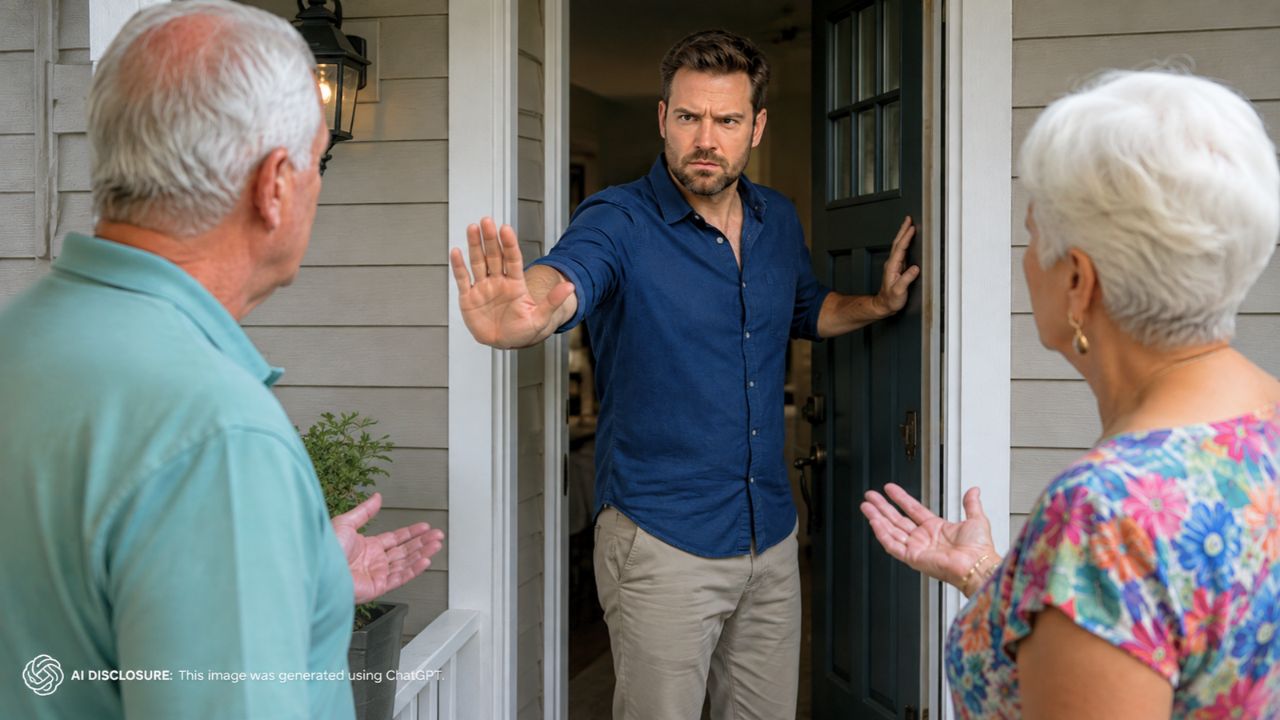
Photo credit: AI-generated image created using ChatGPT. Illustrative only.
There’s a particular kind of anger that hits a father when someone puts hands on his child. It’s not theoretical. It’s not a “let’s discuss parenting styles” moment. It’s a line being crossed, and once it’s crossed, you don’t get to pretend it was just a misunderstanding.
A man living abroad with his wife and 3-year-old daughter says that line was crossed during a holiday visit to Brazil. While he and his wife ran errands, his parents babysat—then spanked their granddaughter for “arguing” about what cartoon to watch. The account is laid out in the original post, including the aftermath: a blowup argument, an early hotel booking, and a hard cutoff on visits until his parents apologize and acknowledge what they did was wrong.
Now the pressure campaign is in full swing. His parents are “livid,” extended family members are calling to tell him to forgive and forget, and the central argument seems to be: “They don’t see her often, and they meant well.” But fatherhood isn’t a popularity contest, and “meant well” isn’t a permission slip.
What actually happened wasn’t complicated
The father explains that this was only the second time his family had met his daughter, since he lives abroad. During the trip, things felt fine until one afternoon when his mother called to complain the 3-year-old was being “disrespectful.” The issue wasn’t screaming, hitting, or running into the street—it was a small power struggle over a cartoon, and the child wanted to watch something else.
He responded like a modern parent who still believes in being a parent. He sent a link to a YouTube series his daughter likes and asked his mom to put that on, with the plan to talk with his daughter when he and his wife got back. Then his mother said she’d “already taken care of it,” which turned out to mean spanking the child “to teach her to not argue.”
That’s the moment the story turns. The parents weren’t asking for guidance or backing off. They were declaring, “In this house, we handle it our way,” and they chose physical punishment on a toddler without permission.
“We did it to you and you turned out fine” is not a defense
The grandparents’ main justification, as he tells it, is familiar: they spanked him growing up, he turned out okay, so it must work. Lots of families still use that line like it’s a trump card, as if survival equals health. But “okay” can be a low bar, and grown men often confuse functioning with flourishing.
The father also shared something important: he was spanked “a lot” as a child, including for “unnecessary and stupid reasons.” He doesn’t see it as discipline that shaped him well; he sees it as harm. So when his parents repeat the same pattern on his daughter, it doesn’t feel like tradition. It feels like his childhood showing up at the door again, looking for a new target.
Even if someone believes spanking is effective—and plenty of decent people do—the bigger point here is authority. These weren’t the child’s parents making a decision inside their own home with their own kid. These were grandparents deciding they still get to be the ultimate authority, even over someone else’s family.
Grandparent access is a privilege, not a right
Some relatives are leaning on the fact that the grandparents don’t see the child often because of distance. That’s real, and it’s sad in its own way. A long-distance family relationship takes effort, patience, and humility, and holidays can feel like borrowed time.
But that reality doesn’t buy anyone extra control. If anything, it should make the grandparents more careful, not less. When you rarely see a grandchild, you don’t get to “make it count” by enforcing your old house rules. You build trust, you learn the parents’ approach, and you earn the right to be close.
The father decided to pack up and leave the same day, moving plans forward and canceling additional time with his parents that had been scheduled for early February. That’s not a tantrum. It’s a man placing a physical boundary where a verbal boundary was ignored.
What the spanking communicated to a 3-year-old
A three-year-old arguing about a cartoon isn’t running a rebellion; she’s being three. She’s testing limits, learning words, and practicing agency in the safest arena possible—small choices that don’t matter much in the grand scheme. A parent can correct that with calm firmness without making it a war.
The spanking did more than “teach her not to argue.” It taught her that adults can hurt you for using your voice, and that confusion is met with force. It also taught her that her parents’ rules don’t protect her if another authority figure decides otherwise.
The father put it bluntly in his update: if a child is too young to reason with, they won’t understand why you’re hitting them. If they’re old enough to reason with, reason with them. You may not agree with every word of that, but you can’t miss the heart behind it: discipline should be about formation, not domination.
The refusal to apologize is the real crisis
In families, mistakes happen. Misjudgments happen. Even serious ones. What separates a salvageable relationship from a broken one is what comes next.
Here, the grandparents didn’t just defend the spanking—they refused to apologize or even acknowledge wrongdoing, not even for doing it without permission. That’s not stubbornness over a tactic. That’s defiance over who’s in charge.
And when older parents refuse to apologize to their adult children, it usually isn’t about the incident anymore. It becomes a referendum on authority: “I don’t answer to you.” That dynamic will wreck a marriage if a husband doesn’t stand with his wife, and it will confuse a child who needs to know her parents are her covering.
Family pressure doesn’t carry your responsibility
The father says calls started coming in from his sister, his sister’s husband, his father-in-law, uncles, cousins. The message was consistent: forgive them, they meant well, they don’t see her often. That’s the kind of chorus that can make a man doubt his own backbone, especially if he grew up in a home where peace was kept by letting the loudest person win.
But none of those relatives will be the ones waking up at 2 a.m. with a shaken child, or dealing with the long-term consequences if trust is broken. They won’t be the ones explaining to a daughter why the adults who are supposed to love her also get to hit her. The father and mother will carry that weight, not the extended family.
In his update, he and his wife decided to block people who were calling and texting about it so they could enjoy the rest of their vacation in peace. That’s not cruelty. That’s triage. Sometimes you have to quiet the crowd so you can hear your own home again.
What a strong boundary can look like from here
The father’s plan, once back home, is to talk to his parents one last time and set the terms clearly: they won’t ever be alone with his daughter again, and unless he can see they’ve learned and changed, they won’t see her at all. He also intends to keep them muted and only engage if something urgent happens.
That may sound severe to some people, but it’s proportional to the problem: an adult chose violence, then chose pride, then recruited the family to apply pressure. If the grandparents want relationship, the path back isn’t complicated. It starts with humility, a real apology, and a willingness to submit to the parents’ rules.
A man’s first loyalty after marriage is to his wife and the family they’re building together. Faith sharpens that responsibility, because stewardship isn’t abstract. If you’ve been given a child to protect, you don’t outsource that duty to tradition, guilt, or the comfort of “keeping the peace.”
Maybe time will soften everyone involved. Maybe the grandparents will come around, read what was sent, and accept that being elders in a family should mean being wiser, not just being louder. Until then, the father is doing the uncomfortable work a lot of men avoid: choosing his child’s safety and his marriage’s unity over the illusion of a calm holiday.
Read more from Thrive Girly:
- Mother-in-Law Expected to Sleep Over After Every Visit — Then the Mom Said Overnight Stays Were No Longer an Option
- Relatives Showed Up to the Wedding Without Being Invited — Then the Couple Refused to Find Them Seats
- Grandma Buckled the Baby Into Her Car and Left Without Telling Anyone — Then the Mom Made Sure It Never Happened Again