Estranged Cousin Asked to Wear the Exact Same Wedding Dress — Then the Bride Said Absolutely Not
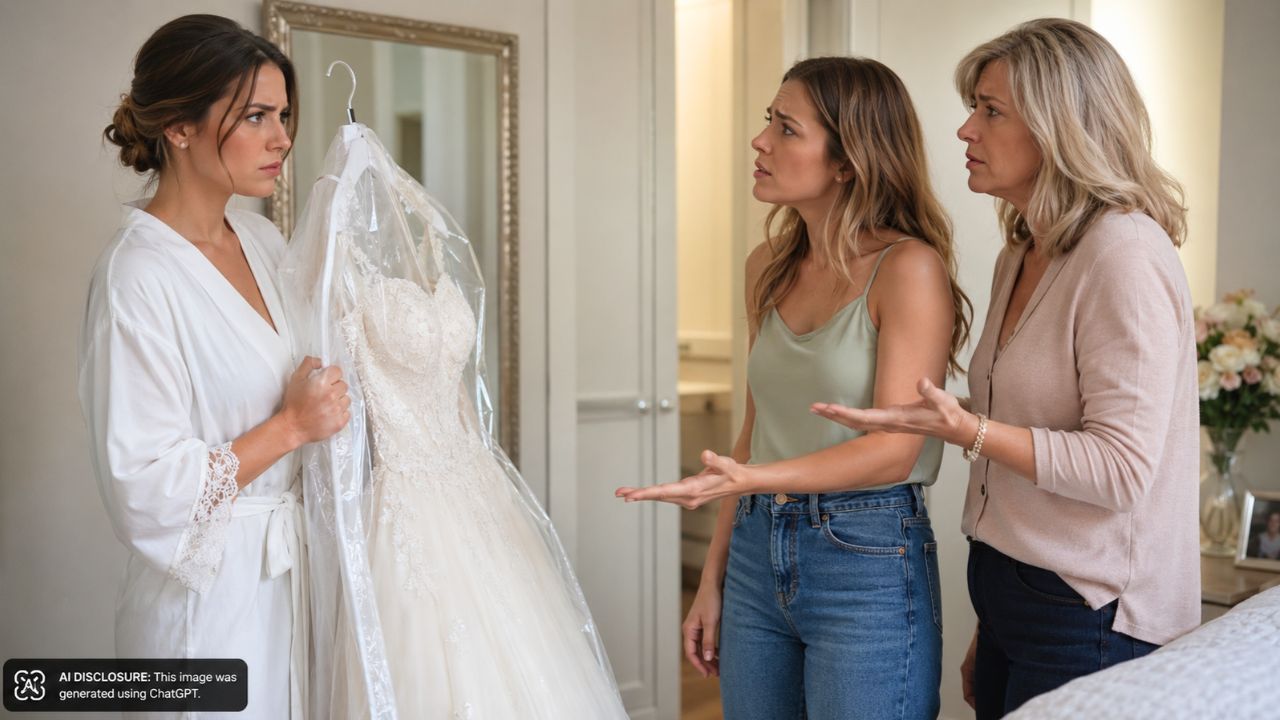
Photo credit: AI-generated image created using ChatGPT. Illustrative only.
There’s a particular kind of family pressure that doesn’t show up with strangers. It shows up with a smile, a little guilt, and a well-meaning “be the bigger person” that somehow always asks you to surrender something that mattered to you first.
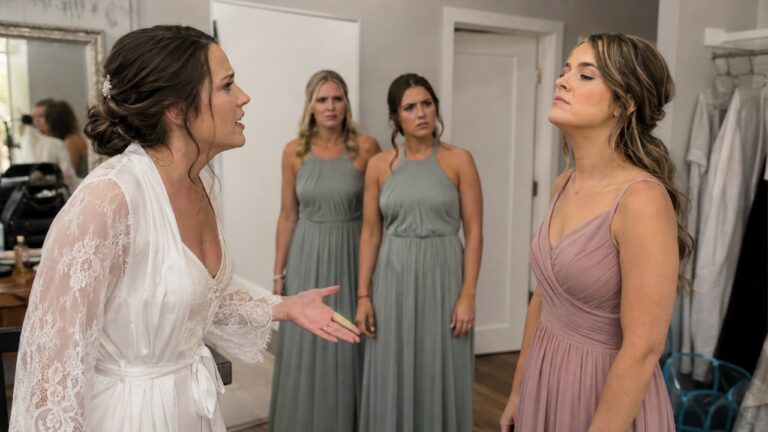
That’s the corner one newlywed found herself backed into in the original post. She married last September in a private holiday ceremony with only her parents present, then held a reception later. Now her cousin—who she admits she’s not close with anymore—is getting married in June and, piece by piece, appears to be recreating the same wedding: same colors, same suit choices, same vendors, even similar hair.
The bride didn’t mind the inspiration at first. But then her mother floated the idea that the cousin should “borrow” her wedding dress, even though the dress was purchased by grandparents who’ve since passed away and would need to be altered to fit a completely different body type. That’s where the polite support turned into a hard no.
A borrowed dress isn’t a neutral request
People talk about wedding dresses like they’re just fabric, but most men with any life experience understand symbolism. A man’s wedding ring is “just metal,” too, yet we all know what it represents and why you don’t toss it around casually. A wedding dress can carry the weight of the day, the family story, and the people who helped make it happen.
In this case, the sentimental piece isn’t small. Her grandparents bought the dress, and they’re no longer alive. Lending it out isn’t like lending a set of champagne flutes; it’s handing over an heirloom that cannot be replaced if it’s damaged, lost, or permanently changed.
The quiet part: this isn’t really about the dress
The dress request didn’t happen in a vacuum. The cousin is using the same wedding colors—pink, gold, purple, and cream/white—and the same style cues. She’s also using the same vendors for cake and décor, and the groom’s party is in grey suits with pink ties, mirroring the earlier wedding.
On their own, none of those choices are criminal. Wedding trends are wedding trends, and sometimes people borrow ideas because they genuinely love them. But when the entire package starts looking like a photocopy, and then the family asks for the one-of-one item—the exact dress—what’s being asked is bigger than “can I borrow it.” It becomes, “can I step into your moment and wear it like it was mine?”
Mom’s loyalty is real, but it’s pointed the wrong direction
The mother in this story seems deeply attached to the cousin, treating her “like her own daughter.” That kind of bond can be a beautiful thing. It can also create a strange dynamic where the actual daughter is expected to keep paying the emotional bill to keep everyone else happy.
Her mom’s framing says a lot: the cousin “deserves” a really nice dress. That sounds noble until you notice who’s being volunteered to provide it. Deserving something doesn’t make it yours, and generosity stops being generosity the minute it’s demanded.
There’s also a subtle disrespect in telling someone, after they say no, that they should “just be happy” for the other person. A healthy family can celebrate one person without squeezing another. If happiness requires you to hand over irreplaceable items under pressure, that’s not joy—it’s compliance dressed up as virtue.
Altering the dress is not “borrowing” it
The bride’s objection wasn’t petty. It was practical. She and her cousin have different body types, and the dress is fitted to her. Wedding alterations aren’t like adjusting a belt notch; they can change seams, structure, and silhouette in ways that can’t always be undone.
So the word “borrow” becomes misleading. Borrowing implies the thing returns in the same condition it left. If it has to be taken apart to fit someone else, you’re not borrowing it—you’re taking it, modifying it, and hoping the original owner is fine with the new version you hand back.
And even if the seamstress is excellent, there’s still risk. Weddings are chaotic. Drinks spill, makeup transfers, hems catch, zippers break, weather happens. Asking someone to gamble a sentimental heirloom so you can save money or avoid shopping is a big ask, even for sisters who adore each other. For estranged cousins, it’s wild.
“Be different” isn’t childish if you’ve lived the comparison game
The bride mentions something that a lot of families will recognize: she’s younger, and she got tired of hearing “following in her footsteps.” So she tried hard to be different. That doesn’t sound like vanity; it sounds like someone who’s been compared enough times to know it steals your joy.
When someone constantly positions you as the second draft of another person, you stop enjoying milestones. You start managing optics. You start guarding what’s yours, not because you’re selfish, but because you’re tired of your identity being treated like a shared family resource.
That’s also why this dress matters beyond sentiment. The bride wants to keep it for vow renewals and possibly pass it down to a daughter or daughter-in-law. That’s not “holding onto the past.” That’s stewardship—preserving something meaningful for a future moment and a future generation.
A mature “no” can still be kind, but it has to be firm
The simplest answer is still the right one: “I love you, and I’m cheering you on, but I’m not lending my dress.” No long trial brief. No debating. No apologizing like you did something wrong. A boundary with a thousand explanations is an invitation for someone to argue with your reasoning instead of respecting your decision.
If the family wants to help, there are other ways. They can contribute to a dress fund, help her shop secondhand, look for a sample sale, or find a local seamstress who can elevate a simpler gown into something special. The cousin can still have a beautiful dress without wearing the one that carries another couple’s story.
And if the mother keeps pushing, the husband-and-wife unit needs to hold the line. Marriage is, in part, learning that your home is not a public library for extended family expectations. You can be generous without being volunteered.
What this reveals about weddings and legacy
Weddings have a way of exposing what people believe about ownership, entitlement, and family hierarchy. Some folks treat a wedding like a stage where the “main character” can demand whatever props they want. Others treat it like a sacred threshold—one couple starting a life, supported by community, but not swallowed by it.
This bride isn’t refusing out of spite. She’s protecting an heirloom, her own memories, and her future plans for the dress. It’s not unkind to keep something that was given to you, fitted to you, and meant to mark your covenant.
Family will sometimes confuse closeness with access. But access is earned through trust, respect, and relationship—not through guilt, not through deadlines, and not through a rushed wedding timeline.
Keeping the dress doesn’t make her the villain. It makes her a grown woman who understands that “no” is a complete sentence, and that peace in a family often depends on someone finally saying it out loud.
Read more from Thrive Girly:
- Mother-in-Law Expected to Sleep Over After Every Visit — Then the Mom Said Overnight Stays Were No Longer an Option
- Relatives Showed Up to the Wedding Without Being Invited — Then the Couple Refused to Find Them Seats
- Grandma Buckled the Baby Into Her Car and Left Without Telling Anyone — Then the Mom Made Sure It Never Happened Again