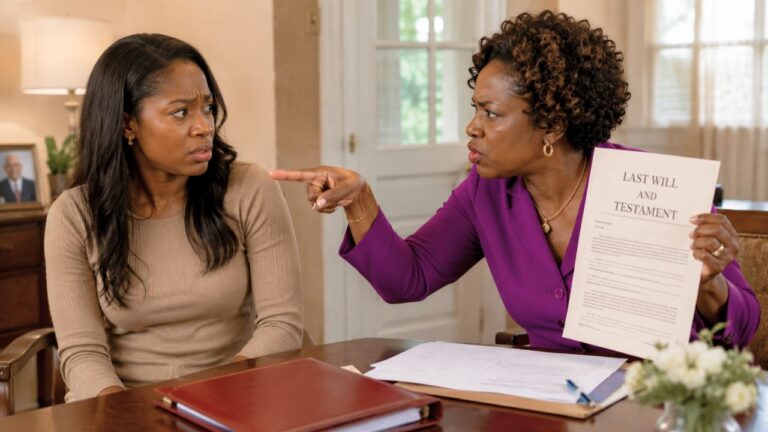
MIL Booked a Week-Long Family Trip That Excluded Her While She Was Sick — Then She Hung Up on Her

Photo credit: AI-generated image created using ChatGPT.
Some family conflicts aren’t really about vacations, birthdays, or holiday schedules. They’re about loyalty, priorities, and the quiet ways people signal who matters and who doesn’t. That’s what makes this story hard to read, especially because it’s happening while a wife is seriously ill and in and out of the hospital.
In the original post, a 30-year-old woman describes ongoing health issues that require infusion treatments. Her husband has been steady and supportive, but his mother decided to plan a week-long “family” trip for Thanksgiving and a shared birthday celebration. The catch was blunt: the mother-in-law suggested the sick wife stay home and “rest” while everyone else went.
When the husband refused, his mother revealed she’d already booked a resort three hours away and spent “thousands,” then framed their absence as “ruining” Thanksgiving and her birthday. The wife, exhausted and feeling intentionally excluded, asked to speak to her mother-in-law and ended the call with a pointed, sarcastic goodbye before hanging up. Now the in-laws are flooding them with messages about how rude and disrespectful she was.
A “family trip” that wasn’t really for the whole family
Calling it a family trip while telling one spouse to stay home isn’t a simple oversight. That’s a decision with a message attached to it, whether the planner admits it or not. If you want a family gathering, you plan it around the vulnerable people, not around whoever is easiest.
And it wasn’t just a casual day trip. This was a week-long resort stay tied to Thanksgiving, the kind of calendar anchor that carries weight. When someone tries to wedge a spouse out of a holiday, it’s not just inconvenient; it’s relationally aggressive.
The backstory: the move, the imbalance, and the quiet resentment
This didn’t come out of nowhere. The couple moved states at the in-laws’ request because they wanted to keep their small “micro family” close. Since then, the wife says the in-laws have barely visited, making a short, one-hour stop after the couple bought a house and leaving early to “beat traffic.”
Meanwhile, the couple has driven to the in-laws more than 15 times—an hour each way—even though the wife says the drive wipes her out and risks her health. The pattern is simple: the effort is expected from them, not offered to them. Over time, that kind of one-way street doesn’t just drain your energy; it drains your goodwill.
Booking first, asking later: a power move dressed up as generosity
Spending “thousands” before checking schedules is not responsible planning; it’s leverage. It sets the stage for guilt: “Look what I did for you, now you have to say yes.” It also allows the planner to paint themselves as the victim when people don’t comply.
The husband’s response was solid. He didn’t negotiate his wife’s place in the family, and he didn’t entertain the idea of leaving her behind during a holiday while she’s undergoing treatments. He tried to offer a reasonable alternative—postpone until she’s through this round, keep it local—and that’s a mature way to handle a tense situation.
But the mother-in-law’s answer exposed the priority list. She booked the week that worked for the husband’s brother because that was “the only week” he was free. That may be true, but it also confirms that the sick daughter-in-law’s medical reality wasn’t even a consideration.
Why her reaction landed like a slap (and why it wasn’t random)
The wife didn’t scream; she didn’t insult anyone with profanity; she didn’t threaten. She went for sharp sarcasm and ended the call. Was it warm? No. Was it understandable? Yes, especially in the context of illness, isolation, and repeated disregard.
People love to tone-police the person who finally snaps, while ignoring the steady drip of disrespect that got them there. There’s a difference between being “rude” for sport and being done after months of carrying more than your share. If you keep pushing a person who’s already physically depleted, eventually you’re going to hear what they really think.
There’s also something else: her husband backed her. He “had no notes,” put the phone in his pocket, and they went about their day. That tells you he didn’t hear her response as some out-of-the-blue attack. He heard it as his wife drawing a line that needed drawing.
The phone call flood is about control, not reconciliation
After the hang-up, the mother-in-law, father-in-law, and brother-in-law started calling nonstop, leaving messages about disrespect. That’s a familiar playbook: overwhelm the couple, isolate the “offending” spouse, and pressure the husband into smoothing things over. It’s not peace-making; it’s crowd control.
If they were truly concerned about relationship repair, the outreach would sound different. It would include questions like, “Are you okay?” or “We didn’t realize how hard this has been on you.” Instead, the focus is on defending the mother-in-law’s feelings and status, and punishing the wife for refusing to play along.
It’s also telling that the outrage isn’t directed at the decision to exclude a sick family member. The outrage is directed at the sick family member for objecting to being excluded. That kind of logic only works in families where the hierarchy matters more than fairness.
What a husband is supposed to do in a season like this
A man’s first adult loyalty is to his wife. That doesn’t mean he hates his parents, and it doesn’t mean he can’t honor them. It means he doesn’t sacrifice his marriage on the altar of keeping Mommy happy, especially when his wife is dealing with serious health issues.
This husband did several things right based on the account. He said no immediately, he refused to leave his wife during a vulnerable time, and he offered an alternative plan. He also didn’t rebuke his wife for her tone in order to win points with his family of origin.
If there’s a next step, it’s clarity and boundaries, not endless explanations. Something as simple as, “We won’t attend trips that exclude my wife, and we won’t be guilted for protecting our home,” goes a long way. You don’t have to win an argument; you just have to stop participating in the manipulation.
What respect actually looks like in extended family
Respect isn’t demanding compliance. Respect is consideration, especially for the weak, the sick, and the stretched-thin. If you’re retired and your daughter-in-law is in and out of the hospital, love looks like showing up, bringing a meal, offering a ride, or at least not making her the obstacle to your celebration plans.
And if you make a decision that hurts someone, humility looks like owning it. “I didn’t think that through” can repair more than a hundred defensive voicemails ever will. But that requires a person to value relationship more than being right.
The hard part is that some families would rather preserve the illusion of closeness than practice the actual work of it. They’ll say “family is everything” while treating a spouse like an accessory. Then they’re shocked when the accessory speaks up.
If you’re the husband in a situation like this, protect your wife without turning it into a war. If you’re the wife, don’t let anyone convince you that your presence is optional. A family that only includes you when it’s convenient isn’t operating like a family at all.
Read more from Thrive Girly:
- Mother-in-Law Expected to Sleep Over After Every Visit — Then the Mom Said Overnight Stays Were No Longer an Option
- Relatives Showed Up to the Wedding Without Being Invited — Then the Couple Refused to Find Them Seats
- Grandma Buckled the Baby Into Her Car and Left Without Telling Anyone — Then the Mom Made Sure It Never Happened Again