Her SIL’s Dog Lunged and Snapped at Her Toddler’s Face — Then She Refused to Bring Her Daughter Around the Dog Ever Again
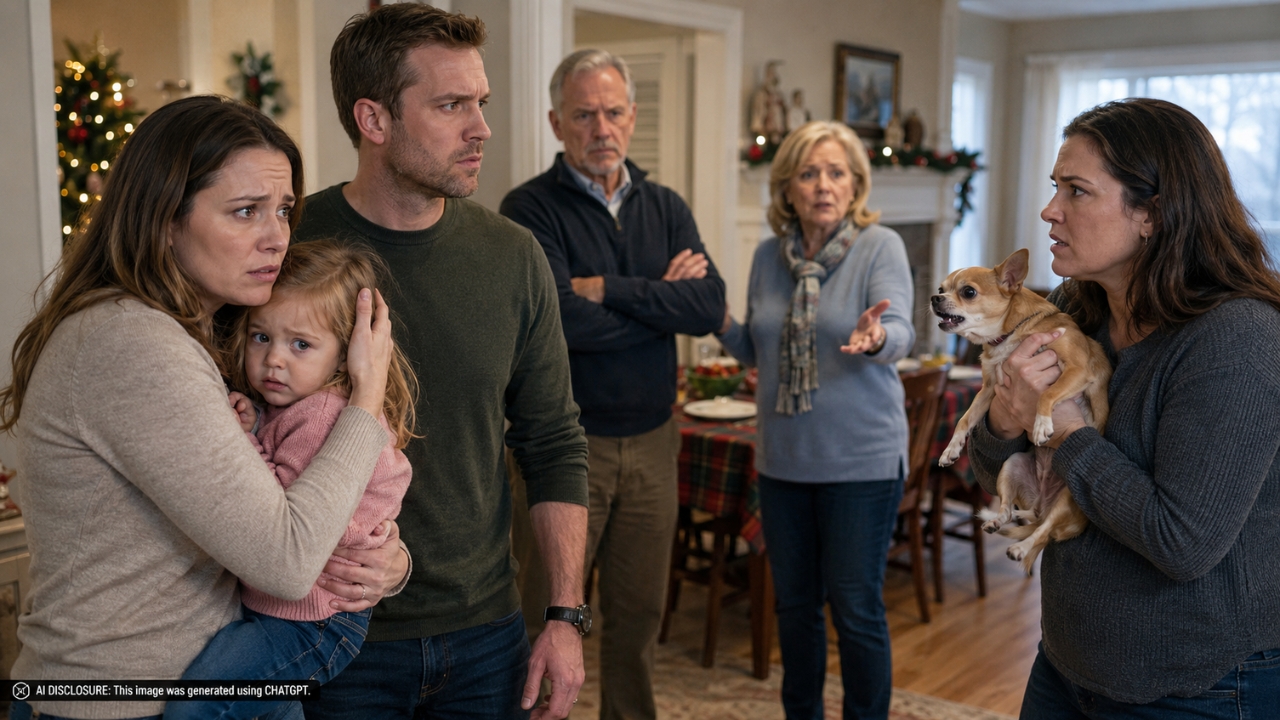
Photo credit: AI-generated image created using ChatGPT.
There’s a special kind of frustration that shows up right before a family holiday. Everybody wants the picture-perfect gathering, nobody wants to be the “difficult” one, and the easiest thing in the world is to pretend a serious problem will just behave itself for one afternoon.
A mom laid out that exact pressure point in the original post. Her sister-in-law has a chihuahua that’s been growling at her daughter “basically since birth,” and the family had been coasting on the idea that the dog “hates babies” but would be fine once the child was a toddler. Then, during a visit, the dog lunged at the 16-month-old’s face, snapping and growling, coming inches from a bite.
The parents did what a lot of us wish we had the clarity to do in the moment: they drew a line. They told the family their daughter wouldn’t be around that dog again unless the dog was fully separated. The sister-in-law apologized and said she’d get training, but by Thanksgiving the question wasn’t theoretical anymore—she was traveling with the dog, and the grandparents pushed back on keeping it behind a closed door.
The “He’s Fine With Toddlers” Story Fell Apart Fast
Plenty of families have a pet that’s a little moody. A growl here, a stiff posture there, and someone says, “Oh, he’s just nervous,” like nerves are a magic shield against teeth. In this case, the dog’s dislike wasn’t subtle—growling “since birth” is a long track record, not a one-off bad day.
The scary moment came after the child became mobile, which is often when these situations turn from inconvenient to dangerous. A 16-month-old doesn’t move like an adult; she’s unpredictable, wobbly, curious, and frequently face-level with small dogs. The dog lunging and snapping wasn’t a “warning shot” you ignore—it was the preview of what happens when warnings don’t work.
A Closed Door Is a Safety Plan; “Someone Will Hold Him” Isn’t
The parents asked for something simple: put the dog in another room, behind a shut door, while the toddler is there. They weren’t demanding the dog be rehomed, muzzled for life, or banished to the backyard forever. They wanted separation—because separation is the only plan that doesn’t depend on constant human perfection.
The grandmother’s counteroffer was that the dog didn’t need to be secluded if someone was holding him. Every man who’s been around kids and animals knows how that goes. Someone gets tired, someone sets him down “just for a second,” someone forgets and opens a door, a kid wanders over with a cracker in her hand, and suddenly everybody’s acting shocked like this wasn’t obvious.
The father-in-law’s “wishy-washy” smoothing-over is familiar, too. Some people treat boundaries like a negotiation tactic instead of a statement of responsibility. But a boundary involving a toddler’s face and a dog’s teeth is not a group discussion.
Grandparents Can Get Weird About Pets and Control
What’s striking here is how quickly the adults made it about feelings instead of facts. The dog had already lunged and snapped at the child’s face. That’s not an abstract fear; that’s a known risk. Yet the pushback came with guilt and reassurances—guarantees that the dog “can’t harm her” if someone holds him.
Sometimes grandparents hear a safety boundary as an insult. They don’t want to admit their home isn’t safe in the current setup, or that their adult kids are making rules. And in some families, a pet becomes a symbol: “If you ask us to separate the dog, you’re saying we’re bad hosts” or “you’re judging how we live.” None of that matters more than a toddler’s wellbeing.
A dog doesn’t care about family dynamics. A bite happens fast, and then you’re living with stitches, scars, and the kind of memory that doesn’t fade. It’s hard to respect the “we’ll keep her safe” promise when the last meaningful data point is a near-miss.
Husband and Wife Stayed Aligned, and That’s the Whole Ballgame
One detail worth noticing: the mother wasn’t doing this alone. She wrote that the incident was the “last straw” for both her and her husband. That matters because family pressure tends to target the seam—if one spouse can be peeled away from the other, the boundary collapses.
In marriage, especially once kids arrive, you find out quickly whether you’re a unit or two individuals trying to keep everyone happy. His parents can be disappointed, and her sister-in-law can be offended, but the child belongs to the two of them. When a couple is aligned, they can withstand a lot of whining and emotional leverage.
There’s also something quietly honorable about a husband refusing to outsource his daughter’s safety to “trust me” assurances. A father’s job isn’t to maintain holiday harmony at the cost of his kid’s face. Peace matters, but peace built on denial is just a countdown.
“We’ll Separate Them If He Gets Aggressive” Misses the Point
After some back-and-forth, the sister-in-law replied with a vague one-liner about keeping the toddler safe. When pressed for the specific plan—shut door separation—she said her parents weren’t okay with that, and that they’d be kept separated, and if the dog showed aggression, the dogs would be shut in her room.
If you’ve lived a little, you know why that’s not acceptable. “If he shows aggression” is a plan that begins after the danger signal, not before it. The dog already showed aggression. Lunging at a toddler’s face is the definition of “we learned what we needed to learn.”
Also, people say “we’ll keep them separated” like it’s a switch you flip, but it’s more like herding cats during a busy holiday. Doors open, plates move, coats pile up, kids toddle, adults get distracted. A shut door is not overkill; it’s the only setup that doesn’t rely on everyone staying sharp all day.
Sometimes the Most Grown-Up Holiday Plan Is Staying Home
In the update, the parents decided to do Thanksgiving as a nuclear family. They were “pissed and heartbroken” and expected guilt calls from the parents, but they didn’t cave. They also mentioned they had a lot of food because they’d planned to bring “like half the thanksgiving meal,” which is both funny and painfully relatable.
This is the part that separates adults from kids who happen to be tall. Being grown means you can disappoint people without panicking. It means you can say, “We love you, but no,” and accept that someone might sulk about it.
Their second update was simple: they didn’t go, they had a great holiday as a trio, and their daughter went to sleep safe in her crib. That’s not dramatic. That’s what success looks like when the alternative is taking a foolish risk just to keep the mood light.
Family gatherings are supposed to be about gratitude and togetherness, but neither of those require you to gamble with your child. If the adults in the room can’t agree that a snapping dog and a toddler shouldn’t share space, then the adults in your home have to make the call. It’s not rebellion; it’s stewardship, and it’s what responsible parents do.
Read more from Thrive Girly:
- Mother-in-Law Expected to Sleep Over After Every Visit — Then the Mom Said Overnight Stays Were No Longer an Option
- Relatives Showed Up to the Wedding Without Being Invited — Then the Couple Refused to Find Them Seats
- Grandma Buckled the Baby Into Her Car and Left Without Telling Anyone — Then the Mom Made Sure It Never Happened Again