Her Sister Told Their Parents About Her Fiancé’s Past Right Before the Wedding — Then She Cut Her From the Guest List
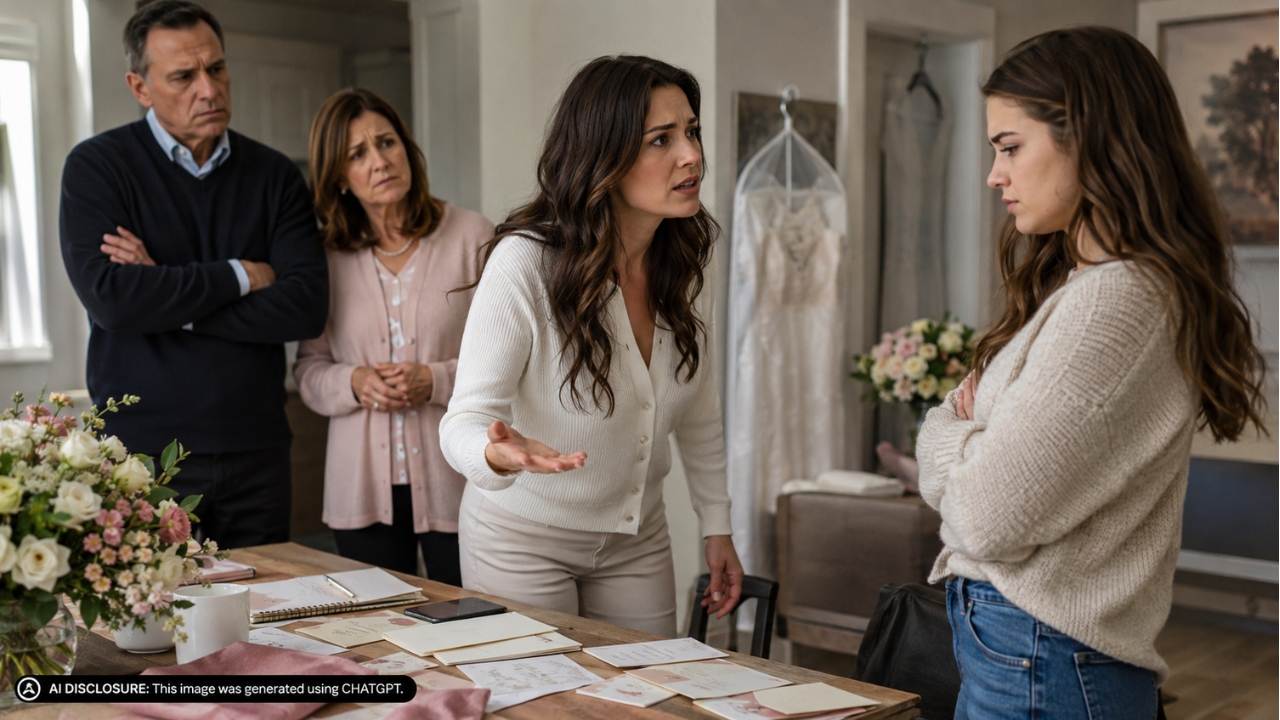
Photo credit: AI-generated image created using ChatGPT.
Weddings have a way of exposing the fault lines in a family. People start acting like the seating chart is a moral document, and old resentments show up dressed in formalwear. In one recent story, a bride-to-be says her younger sister brought up her fiancé’s past legal trouble to their conservative parents, and now the bride is considering keeping her sister out of the ceremony entirely.
The situation was shared in the original post. The bride, 28, says she’s two months out from marrying her fiancé, John, 30. She knew about his “troubled past” from his early twenties—minor legal offenses he regrets—and she believes he’s grown into a stable, supportive man.
Her sister Anna, 26, found out through a mutual acquaintance and told their parents immediately. The parents “freaked out,” questioned the marriage, and accused their daughter of hiding the truth. The bride confronted Anna, felt betrayed, and decided Anna wouldn’t be invited. Now the parents are pressuring her to reverse it and have even threatened not to attend if Anna isn’t included.
A man’s past isn’t his whole story, but it isn’t nothing either
Let’s be clear: “I used to be a mess” doesn’t automatically mean “I’m safe to build a life with.” A clean record isn’t the same as good character, and a rough season isn’t the same as a permanent identity. What matters is repentance, patterns, and fruit—whether a man owned what he did, changed his habits, and lives in a way that’s consistent over time.
In this case, the bride says John disclosed his past to her, regrets it, and has turned his life around. That’s a meaningful detail. A man who hides things, minimizes them, or blames everybody else is a risky bet, but a man who tells the truth and walks straight for years is showing the kind of maturity you can actually build on.
The sister didn’t “just tell the truth,” she chose the worst channel
Anna’s defense is familiar: she was “looking out” for her sister and thought she deserved the truth. The problem is that the bride already knew, and Anna didn’t start with her. She went straight to the parents—who she knows are conservative and reactive—then acted surprised when it caused an explosion.
If Anna genuinely cared about her sister’s well-being, the first conversation would’ve been private: “Hey, I heard something about John. Do you know about it?” That’s not being secretive; that’s being respectful. Telling the parents first doesn’t look like protection so much as control, gossip, or a need to be the person holding the “important information.”
Parents can ask hard questions without trying to run the marriage
The parents’ reaction matters too. A father and mother have a right to be concerned about their child marrying wisely, especially if they hear about legal trouble. Asking questions isn’t wrong. The issue is tone and posture: demanding, panicking, accusing, and pressuring her to reconsider as if she’s incapable of judgment.
In a healthy family, parents can say, “We’re worried; help us understand,” and then listen like adults. In an unhealthy one, parents act like the wedding is a vote, not a covenant. Threatening not to attend unless the bride complies is a power move, and it shifts the focus from “Is this man trustworthy?” to “Will you obey?” Those are different tests, and the second one is poison to a marriage.
Cutting someone from a wedding is a big deal—and sometimes it’s still the right call
Removing a sibling from the guest list isn’t a small boundary. It’s a public statement, and it tends to echo for years in family relationships. If the bride does it, she should do it with her eyes open: it may not just cost her a bridesmaid; it may cost her a certain version of peace at holidays for a long time.
Still, a wedding is not a courtroom where everybody gets equal microphone time. It’s a day meant to be marked by blessing, support, and unity around the couple. If Anna reliably brings drama, can’t keep confidences, and has already shown she’ll stir things up in the weeks leading to the wedding, it’s reasonable for the bride to protect the day from chaos.
There’s also a practical reality: if Anna is invited without any real change, she may feel justified, and that usually means more of the same later. Consequences aren’t about revenge. They’re about teaching people how to treat you.
The question isn’t “forgive or not,” it’s “trust or not”
Families love to quote “forgive and move on” when they don’t want to deal with accountability. Forgiveness is a Christian duty, but it doesn’t automatically restore access. You can forgive someone and still recognize they’re not safe with sensitive information, not helpful in tense moments, and not welcome in certain spaces until they’ve shown real maturity.
Anna cried and begged to be invited, but tears aren’t the same as repentance. An apology that includes, “I crossed a line. I should’ve come to you first. I won’t do that again,” is different from, “I was just protecting you.” One owns the harm; the other justifies it. If Anna can’t admit what she did wrong, it’s hard to imagine she’ll behave better when the wedding stress peaks.
If the parents boycott, that’s tragic—but the couple still needs to lead
The parents threatening not to attend is the heavy club in this story. It puts the bride in a position where she’s choosing between her sister and her parents, and neither choice feels like a win. But a marriage can’t begin with the couple bending to ultimatums from outside the relationship.
John’s role here matters as well. The bride says he’s supportive and will stand by her decision, though he’s hurt by the family reaction. That’s understandable. A man doesn’t need his in-laws to adore him, but he does need to know his home won’t be governed by their moods. The bride has to decide what kind of leadership she’s going to practice in her own life: calm, honest, and firm, or anxious and easily steered by the loudest voice.
If the parents choose to miss their daughter’s wedding over a guest list dispute, that’s on them. It would be a painful choice, but it reveals their priorities. The bride can grieve that without rewarding it.
A cleaner path: one last door offered, with clear terms
There’s a middle option between “invite her like nothing happened” and “you’re dead to me.” The bride could tell Anna plainly: you can attend if you apologize without excuses, agree to stop discussing John’s past with extended family, and commit to being supportive on the day. No side conversations, no whispers, no stirring up the parents again. If she can’t agree, she’s choosing her own exclusion.
The same goes for the parents: they can be invited to share concerns in a respectful conversation, but they don’t get veto power. If they want reassurance, the bride can offer what’s reasonable—speaking calmly about what she knows of John’s past and what she’s seen in his life since. But she doesn’t have to litigate his early twenties forever to earn permission to marry him.
Weddings don’t fix family dynamics; they reveal them. If the bride wants a marriage that lasts, she’ll need to practice the hard skill now: honoring family without letting family run her home. And if Anna wants to be present for her sister’s big day, she’ll need to learn a grown-up truth—being “honest” isn’t the same as being faithful.
Read more from Thrive Girly:
- Mother-in-Law Expected to Sleep Over After Every Visit — Then the Mom Said Overnight Stays Were No Longer an Option
- Relatives Showed Up to the Wedding Without Being Invited — Then the Couple Refused to Find Them Seats
- Grandma Buckled the Baby Into Her Car and Left Without Telling Anyone — Then the Mom Made Sure It Never Happened Again