His Estranged Half-Sibling Appeared After the Funeral Demanding a Cut — Then He Said the Will Only Listed One Name
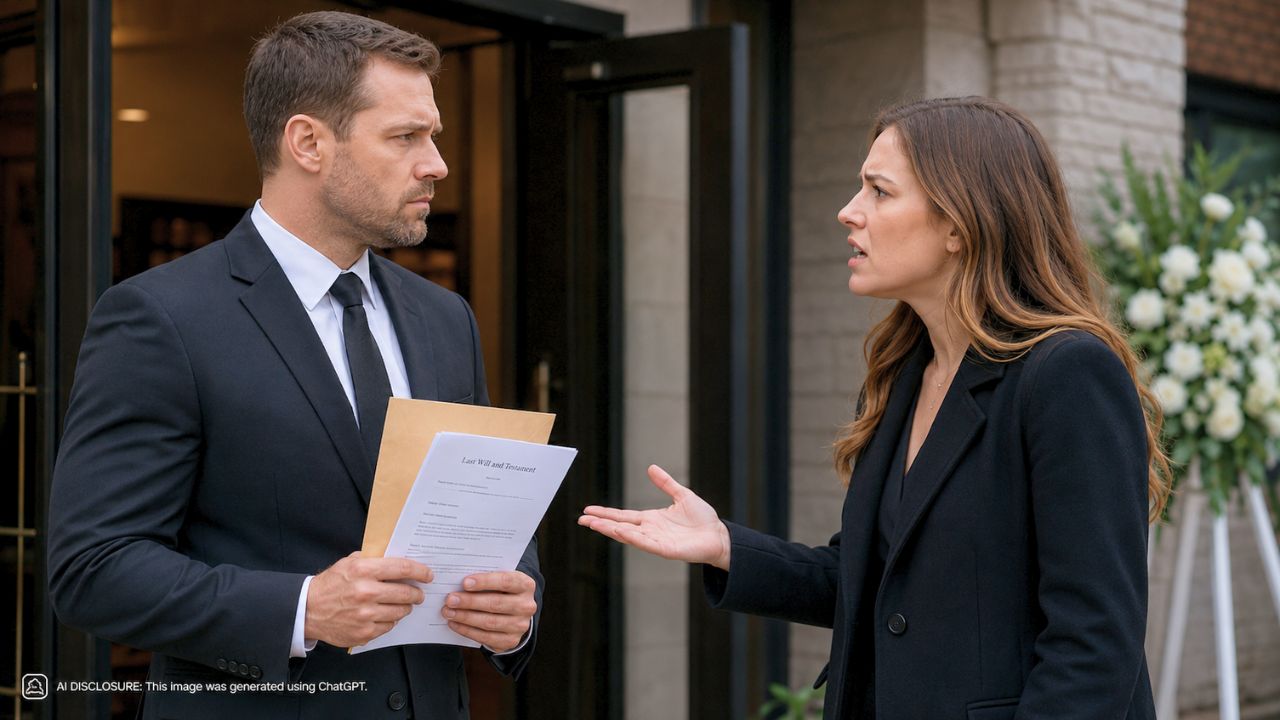
Photo credit: AI-generated image created using ChatGPT. Illustrative only.
He thought he understood his family story. He was an only child, his mom was close with her parents, and everyone knew what the future looked like.
Then adulthood arrived with two surprises almost back-to-back: a half-sister he never knew existed, and a huge inheritance his grandparents had deliberately placed in his name. When he laid it all out in the original post, it wasn’t the money that sounded hardest to manage. It was what everyone suddenly felt entitled to ask of him.
He went from “only child” to “oh, I have a sister”
The 20-year-old said he grew up believing he was his parents’ only kid. That wasn’t a lie his dad didn’t know about—his father was aware—but it was a secret kept from him anyway.
Just over a year earlier, he found out his mother had given birth in college and placed the baby for adoption. That baby grew up to be Lucy, the half-sister who eventually reached out and made contact with their mother.
From there, things moved quickly in a way that can feel both exciting and awkward. Lucy and his mom started building a relationship—keeping in touch, meeting for lunches, and folding Lucy into a couple family events.
As for the siblings? He said they got along fine. But “fine” didn’t mean close. Lucy didn’t feel like a sister in the emotional, lifelong way he associated with the word. More like an acquaintance who happened to share DNA.
The money wasn’t a mystery—just the size of it
On his mom’s side, his grandparents had already passed away a few years earlier. His mother was their only child, and he was seen as their “only” grandchild when they made their plans.
They’d been clear about what they wanted: their estate would go to him. It wasn’t an accidental paperwork situation, either. His parents knew in advance because the grandparents had expressed it when they made their will.
The only part that caught him off guard was the amount. He received access to it on his 20th birthday, and the estate totaled around $6 million—far more than he expected.
That kind of number changes the air in a room. He even mentioned he couldn’t really talk to friends about it because he didn’t want people around him suddenly seeing dollar signs.
After the funeral chapter ended, his mom made the ask
A few weeks before he wrote his post, his mother sat him down for a serious conversation. She wanted him to share the inheritance with Lucy.
Her reasoning was simple: Lucy could use the help. She was in college, she had debt, and this money could dramatically change her life.
But for him, it didn’t land as a reasonable request—it felt like pressure. He didn’t see Lucy as someone he’d grown up beside, leaned on, fought with, and loved in the messy way siblings usually do. He saw her as someone who’d recently entered the picture and was still, emotionally, on the outside.
So he told his mom no. He explained that he didn’t feel the kind of connection that would make him want to give away a large sum of money, or any money at all.
His mother didn’t take it well. She called him selfish, and the conversation turned from a request into a judgment of his character.
He kept coming back to one detail: his grandparents knew
In situations like this, people often argue that the “right” thing to do is what the deceased would have wanted. And that’s exactly where he planted his feet.
His grandparents weren’t in the dark about Lucy’s existence. They knew there was another grandchild out there, even if they never met her. And still, they left everything to him.
To him, that mattered. It meant this wasn’t a case of correcting an injustice or making things fair after a mistake. The decision had already been made by the people who earned and saved the money.
He also pointed out something else his mom didn’t seem to want to hear: Lucy didn’t grow up in hardship. She wasn’t bounced through foster care or left without support. She was adopted at birth by two parents he described as great people—an accountant and a teacher.
Meanwhile, he wasn’t planning to stash the money and do nothing with it. He said he was starting law school and hoped to use the inheritance to start his own firm one day.
That’s what made the whole thing feel even more frustrating on his end. His mom wasn’t asking him to share “extra.” She was asking him to redirect something that had already been earmarked for his future.
The real fight wasn’t about Lucy—it was about who counts
Underneath the money talk, he was wrestling with a bigger question: what makes someone family?
His view was blunt and personal. Family is who feels like family, not simply who shares your DNA. And if that sounds cold, it’s also honest. He didn’t get a vote in his mother’s past choices, and he didn’t get to grow up with Lucy. Now he was being asked to act like the last twenty years happened differently.
From his mother’s side, it likely looked like a chance to make up for a painful decision—placing a child for adoption—and to smooth over guilt with something concrete. But she wasn’t offering her own money. She was asking her son to do it.
And that’s where the emotional math starts to feel ugly. Because if Lucy needed support and his mother felt responsible, there was an obvious place to start: the parents who were “well off financially,” as he described them. Instead, the burden was being shifted onto the person who happened to be named in the will.
He didn’t call Lucy a bad person. He didn’t even say she’d demanded money. The pressure, at least in his telling, came from his mom—who seemed to believe the inheritance should automatically be treated like a shared pot for both kids, regardless of what the grandparents decided.
The post didn’t end with a resolution—just a hard line
He asked if refusing made him a selfish jerk, and it’s easy to see why he felt torn. Six million dollars is life-changing, and he knew Lucy was a student dealing with debt. Saying no can make anyone sound heartless if you strip away the backstory.
But the backstory is the whole point. His relationship with Lucy was new and polite, not deep. His grandparents made a clear choice. And the person calling him selfish wasn’t the sister he barely knew—it was his mother, the one who kept the sister secret in the first place.
For now, the inheritance remains in his name, and his mother remains unhappy about it. And even without shouting matches or ultimatums spelled out, the message was clear: the money didn’t just add a half-sibling to his life. It turned a fragile new family connection into a test he never agreed to take.
Read more from Thrive Girly:
- Mother-in-Law Expected to Sleep Over After Every Visit — Then the Mom Said Overnight Stays Were No Longer an Option
- Relatives Showed Up to the Wedding Without Being Invited — Then the Couple Refused to Find Them Seats
- Grandma Buckled the Baby Into Her Car and Left Without Telling Anyone — Then the Mom Made Sure It Never Happened Again