Relatives Showed Up to the Wedding Without Being Invited — Then the Couple Refused to Find Them Seats
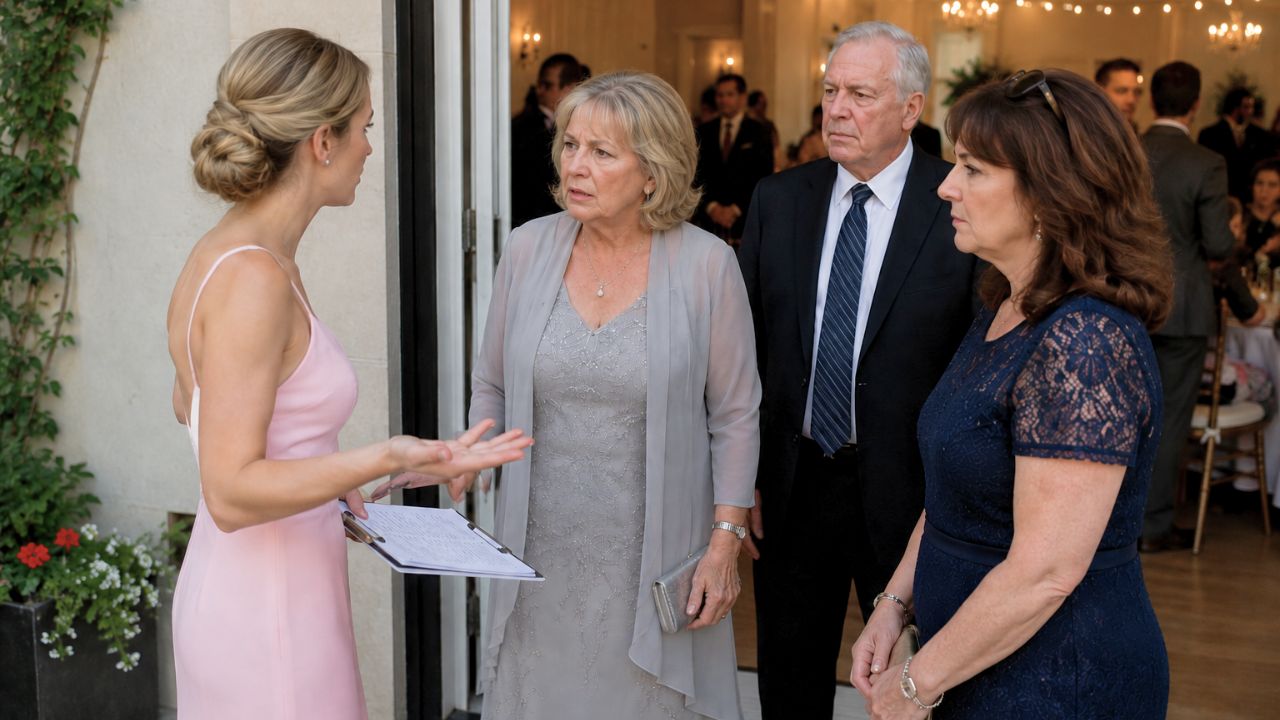
Photo credit: AI-generated image created using ChatGPT. Illustrative only.
Two weeks before her wedding, a 23-year-old bride thought she was done with the big logistical headaches. The guest list was set, the vendors had the final headcount, and the couple had been clear on their wedding website: if your name isn’t on the invite, you can’t be accommodated.
Then her dad texted at 5 a.m. with a request that felt less like a question and more like a problem being dropped in her lap. Some extended relatives—specifically her dad’s cousins’ kids, totaling “6–7 people”—were coming along for the weekend even though they weren’t invited to the ceremony or reception. Could she just add an extra table?
A destination wedding with no wiggle room left
The bride and her 24-year-old fiancé had spent about a year and a half planning what she described as a “destination-ish” wedding in northern Michigan, with most family traveling in from out of state. That kind of setup tends to lock in timelines: catering deadlines, rental cutoffs, seating charts, and venue limits that don’t care if a family member got the wrong idea.
By the time her dad raised the issue, the couple had already submitted final numbers to vendors. In other words, the stage was built, the chairs were counted, and the meal plan was done. Any last-minute additions weren’t just awkward—they could become expensive, chaotic, and potentially impossible depending on the vendor policies.
The bride also said conflict is hard for her, especially with family. So when her dad asked her to scramble and make space for people she hadn’t invited, it put her in the exact position she’d tried to avoid: being forced to play “bad guy” right before the biggest day of her life.
The extra names that weren’t supposed to be there
The first red flag popped up when her dad looped the couple into his side of the family’s plans for the wedding weekend. Her sister—also her maid of honor—noticed something off: the list included more people than the actual invitations did.
The uninvited group, she explained, consisted of her dad’s cousins’ kids. They weren’t invited to the ceremony. They weren’t invited to the reception. Yet they were apparently included in the travel plans, as if it had already been decided they’d be part of the celebration.
That kind of mismatch can snowball fast at a wedding. A few extra people isn’t just “a few extra plates.” It’s seating assignments, meals, rented chairs, table settings, and the domino effect on the venue’s staffing and capacity.
A 5 a.m. text turns into a pressure campaign
Her dad’s message, sent before dawn, started with an apology: he was sorry they were bringing uninvited people. But the apology came with an immediate ask—could she contact catering or the rental company to add another table?
The bride said she told him no. Not a vague “I’ll see what I can do,” but a firm refusal: she would not be contacting catering or rentals to accommodate guests who weren’t invited.
That’s when the dynamic shifted. Her dad continued to push, arguing that because he was paying for that part of the wedding, he would cover the additional cost. But the couple wasn’t treating this as a money issue. They were treating it as a boundary issue—and a respect issue. Their position stayed the same: no extra seats for people who weren’t on the guest list.
It left the bride wondering if she was being unreasonable. She’d set expectations publicly, met her vendor deadlines, and planned an event around a specific headcount. Yet she was still being asked to bend, and quickly, because someone else had made plans without her sign-off.
Where the tension really was: control, cost, and who gets a say
The fight wasn’t only about chairs and chicken. It was about who gets to make last-minute decisions and who has to absorb the stress when relatives ignore the rules.
The bride later clarified that her dad wasn’t paying for the entire wedding. Both her fiancé’s parents and her mom had also contributed financially, and her parents are divorced. Even if one parent is covering a specific portion, that doesn’t automatically translate into the power to override the couple’s guest list—especially when the couple had already communicated “no uninvited guests” in writing on the wedding website.
And there’s a practical angle here that couples recognize instantly: once you cave on one group of extras, you can trigger a second wave. If six or seven people can be squeezed in, why not two more cousins? Why not a friend who “already traveled”? Weddings have a way of attracting “since we’re here” logic, and it almost always lands on the couple to fix.
The bride’s stance was simple: if someone shows up without being invited, that’s not her emergency to solve. It’s theirs.
What people focused on: vendor deadlines and holding the line
In responses to the original post, the most practical focus was the reality of final numbers and contracts. Once catering counts are submitted, changes can be restricted, expensive, or flat-out denied—especially with only two weeks to go. Even if a vendor agrees, it can introduce a new round of questions: who’s managing the new seating chart, where the table goes, whether there’s staff for it, and whether the venue allows it.
Another theme was boundaries. The bride and groom had already communicated their policy. The uninvited guests were not a surprise plus-one or a misunderstood invitation; they were people who simply hadn’t been asked. Many readers treated the 5 a.m. text as a sign the bride’s dad knew it was a problem and hoped urgency would force a yes.
The common-sense framing was: the couple can’t be expected to reorganize their reception because extended relatives decided to turn the weekend into a family trip.
An update: it was “a metric ton of miscommunication”—and there was a buffer
Later that morning, the bride posted an update saying things escalated quickly, emotions ran high, and the whole day was exhausting. But she also said the blowup came down to major miscommunication between her and her fiancé, her dad, and her mom.
The key detail: her parents had separately communicated and reached an agreement about the extra people, but her dad came to her afterward and made it sound like he needed permission—or that she had to fix it with vendors. In reality, she said they’d already built a buffer into catering, and the venue had extra seating outside the main dining area for “unexpected scenarios.” Her mom’s phrase for it was “unexpected scenarios.”
So the emergency request to add a table wasn’t necessarily real. In her words, her dad “made a non-issue an issue.” The couple still felt hurt by the relatives’ behavior, but she said they were being heard, and it looked like the weekend would work out.
Notably, they weren’t hiring security. But her stepdad did offer to wear a suit of armor to scare away any party crashers—an idea they scrapped because it wasn’t on theme. Even with the logistics handled, the emotional residue remained: when people test wedding boundaries, the couple may still remember who tried to force their way in.