His Mom Told His Wife She Didn’t Belong in the Family — Then He Let Her Finish and Watched His Wife Walk Out the Door
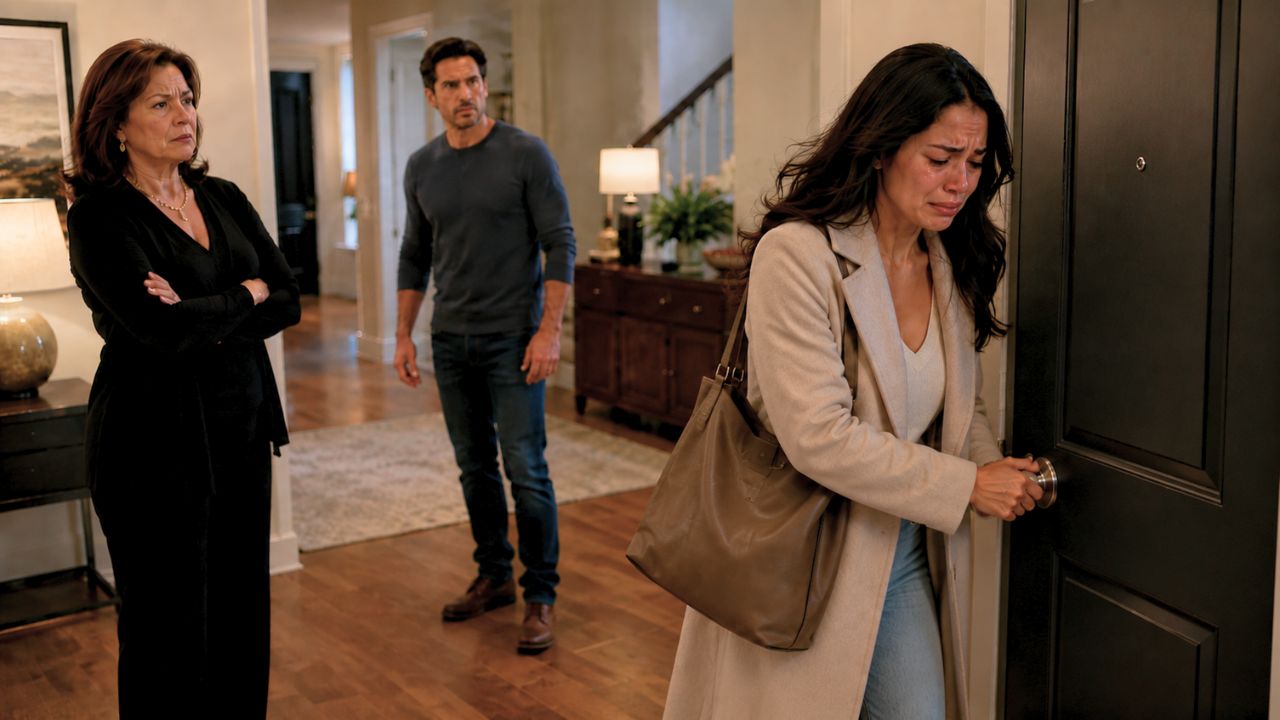
Photo credit: AI-generated image created using ChatGPT. Illustrative only.
It was supposed to be a simple family update: a better job, a new city, and a plan to keep the kids cared for. Instead, one Sunday argument turned into a threat that changed the tone of the marriage—and left a wife feeling like she’d just been told she wasn’t really part of the family at all.
A husband described how his mother, who regularly watched his preschool-aged children while he and his wife worked, erupted when she found out the couple planned to move. The wife, Liz, had landed a higher-paying opportunity that required relocating, and the couple agreed it made sense. That’s when the husband’s mother stopped talking about feelings and started talking about court.
Grandma wasn’t just helping—she was part of the routine
The couple has been married for seven years and has young kids. Because they live in the same city as his parents, childcare had become a family affair, with his mom taking the children while the parents were at work.
That arrangement mattered for more than convenience. It built expectations: the grandmother’s time with the kids wasn’t occasional, it was consistent. So when Liz’s job offer came along—one that would increase her already larger income—the move didn’t just change their address. It threatened a day-to-day role his mother had grown used to having.
The husband said he agreed to relocate because he could find work in his field in the new city. But once the extended family heard they were selling the house to move, the mood shifted fast.
The move went from logistics to a power struggle in one conversation
The blowup happened during a Sunday confrontation between Liz and the husband’s mother. Liz told her mother-in-law they were moving away and would hire a babysitter, meaning grandma would no longer be “needed” for daily childcare.
His mother didn’t take that as a neutral plan. She argued she didn’t want her grandkids moving away and even suggested a dramatic alternative: that the kids could live at her house while the parents moved.
Liz laughed at the idea, and that’s where things escalated. The husband said his mother “lost it,” calling Liz an “ungrateful witch” and declaring the move would only happen “over her dead body.” The back-and-forth got harsher, with Liz telling her to stay out of private matters and insisting she had no right to make decisions about the children.
His mother disagreed—and then raised the stakes.
The threat that changed everything: “I’ll take you to court”
According to the husband, his mother told Liz she knew her rights “as an involved grandmother” and would take both parents to court to ensure she still got to see the kids. Liz was stunned, and her reaction wasn’t subtle: she looked over at her husband, expecting him to step in.
He didn’t. He stayed seated, silent in the moment, and later told Liz she was being unfair. He framed his mother’s outburst as an understandable reaction from someone facing the idea of not seeing her grandchildren as often.
To Liz, that wasn’t comfort—it was abandonment. She pressed him to “check” his mom, but he doubled down, saying Liz was selfish for not considering his mother’s feelings and “crucial presence” in the children’s lives first.
The fight didn’t end there. Liz left with the kids, telling him his family was his problem to manage—especially now that court threats were on the table.
He tried to stay neutral, and it only made things worse
After the argument, the husband said the tension kept rising. Liz and his mother continued to fight, and he claimed he chose to stay out of it because he believed “both have valid arguments.”
But the neutrality itself became the central issue in his marriage. Liz wasn’t only upset about the insults. She was shaken by the idea that her mother-in-law was willing to use the legal system to pressure them over a move, and that her husband reacted by excusing it.
From Liz’s perspective, the moment his mother threatened court was the moment the dispute stopped being a heated family opinion and became a direct challenge to the parents’ authority. And the fact that he treated it like an emotional outburst—rather than a serious escalation—made her feel alone in the decision to protect their household.
He, on the other hand, described his mother as being “punished through no fault of her own” after being a loving grandmother. In his mind, the move stripped her of something she had earned through care and involvement.
That gap—seeing the same facts as either entitlement or devotion—left the couple stuck.
People focused on one detail: court threats aren’t “just venting”
In the responses to the original post, the practical concern wasn’t just the name-calling. It was the moment legal action entered the conversation, because court threats have a way of hardening everyone’s positions.
When someone says they’re willing to sue for access to children, it forces parents to think defensively. It changes what you can safely say in future conversations, what visits look like, and whether you can trust the other person to respect boundaries. Even if a lawsuit never happens, the threat alone can push parents to reduce contact and tighten communication, because the risk feels real.
Another theme in reactions: a spouse expecting partnership. Liz wasn’t demanding that her husband hate his mother; she was asking him to stop her from attacking his wife and escalating toward a legal fight. For many readers, the husband’s “sit back and do nothing” posture signaled that, in a crisis, he would prioritize his mother’s emotions over his marriage.
Some also pointed out the financial and practical reality sitting under the argument. Liz’s job paid more and offered an even better opportunity. Moving wasn’t a whim; it was a household decision with long-term consequences. To critics, the grandmother treating the move as something she could veto suggested she saw the kids as leverage—and herself as a decision-maker.
Now the family has two fights: the move and the marriage
By the end of the husband’s account, nothing was resolved. The move plan was still the move plan, but now it came with a fractured relationship between Liz and her mother-in-law, and a fresh wound between the spouses.
It’s no longer only about childcare or distance. It’s about trust: whether Liz can rely on her husband to protect the household from outside pressure, and whether the husband can accept that being a devoted grandparent doesn’t translate into controlling where a family lives.
The next steps are loaded no matter what they choose. If they move, his mother may escalate and Liz may insist on firmer boundaries. If they don’t, Liz may see it as proof that threats work—and that her husband will always fold when his mother pushes hard enough. Either way, the Sunday argument didn’t just end with Liz walking out the door with the kids. It started a countdown to the couple’s next big decision, with court threats hanging over it.