Her Family Ignored the No-Visitors Rule and Showed Up Anyway — Then She Changed the Lock Code and Didn’t Give Them the New One
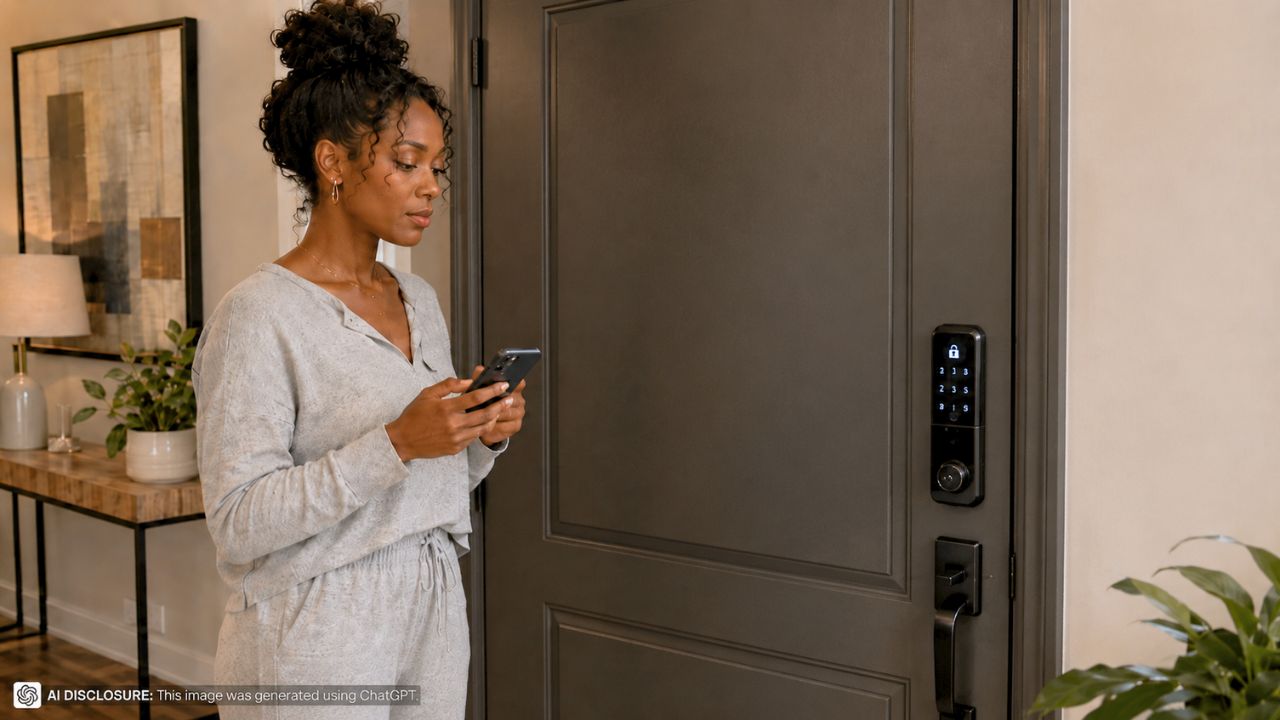
Photo credit: AI-generated image created using ChatGPT. Illustrative only.
With a December due date and a planned C-section, a 35-year-old expectant mom thought she’d gotten ahead of the chaos. She and her husband agreed on a simple postpartum plan: a short, quiet window to recover, bond with their newborn son, and avoid exposing him to extra germs before his early vaccines.
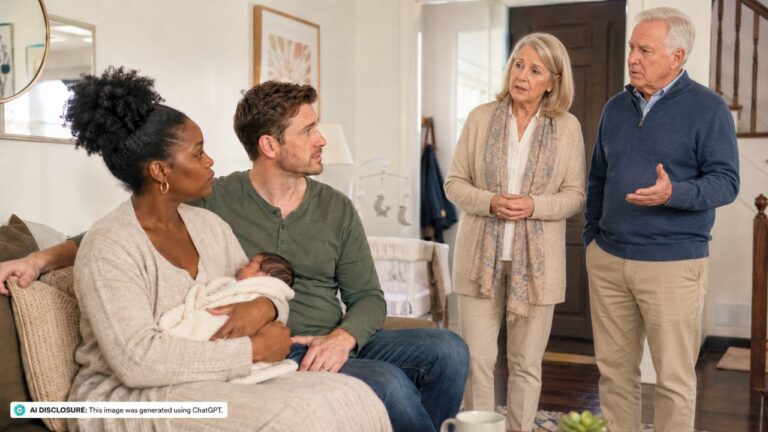
But when her husband delivered the message to his parents—yes, they could meet the baby at the hospital, but there would be no visitors for the next three to four weeks—the reaction was immediate and intense. His mother’s “jaw dropped,” and the couple quickly found themselves in a bigger fight than anyone expected.
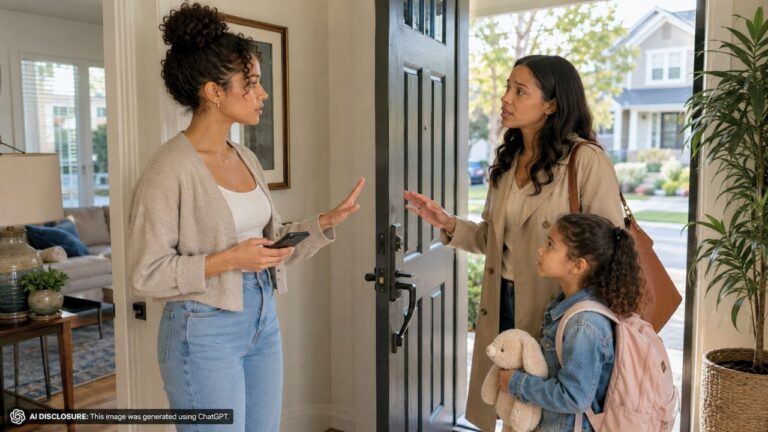
The standoff escalated from a disagreement about timing into a bigger question of access and control, one that eventually led the new mom to tighten boundaries even further by changing the home’s lock code and not sharing the updated one after relatives showed up anyway.
A recovery plan turned into a family showdown
The mom, who said she isn’t American, laid out her reasoning plainly. She expected to be handling nights on her own because her husband works nights, and three days a week he works until noon. Add a C-section recovery on top of that, plus newborn care and her part-time online teaching work—she’s self-employed and doesn’t get maternity leave—and she wanted the first few weeks to be as calm as possible.
To make that realistic, her mother planned to stay for two months to cook and clean while she focused on healing and caring for the baby. It wasn’t framed as a “grandma gets special access” arrangement so much as a practical support system: someone to keep the household running while the parents adjusted.
Then came the boundary: no visitors for three to four weeks after leaving the hospital, including her in-laws. The mom also worried about the baby’s immune system and wanted to wait until he’d had at least some vaccines before welcoming people into close contact.
“They just want to see the baby” wasn’t the whole story
Her in-laws didn’t take the news as a temporary health and recovery measure. They took it personally. Her husband, caught between both sides, started pressing her on why his parents couldn’t come over and whether she had “a problem” with them.
She admitted their relationship isn’t great, but she framed the rule as being about her recovery and the baby’s health, not payback. Still, she noticed a pattern in what her in-laws were asking for: they repeatedly said they wanted “to see the baby,” but they didn’t offer the kind of practical help her mom was coming to provide—cooking, cleaning, or running errands.
In her view, the comparison wasn’t “my mom versus your parents.” It was “helping hands versus houseguests.” And in the fragile first month after surgery, she didn’t want extra people to manage, entertain, or supervise.
Boundaries felt urgent because the rules had been ignored before
What made the request non-negotiable for her wasn’t just exhaustion—it was trust. In an edit to her post, she described earlier experiences that left her worried her in-laws would ignore newborn rules the same way they’d ignored her requests in the past.
When they babysat the couple’s dog, she said they went against instructions by letting the dog outside without a leash in a yard without a fence. She also said the dog was crated even though she’d asked them not to do that, noting she comes from a culture that doesn’t use crates. Those weren’t small misunderstandings to her; they were examples of relatives deciding they knew best and doing what they wanted anyway.
She also wrote that her in-laws complained about masks during COVID times, which made her skeptical they’d respect boundaries like masking around a newborn or not kissing the baby. And because her husband “struggles with saying ‘no’” to his parents, she worried any rules would only be enforced if she was physically present—hard to guarantee when she’d be recovering from surgery and sleeping in short, uneven stretches.
The drop-in problem—and why access became the fight
The conflict wasn’t just about whether they could visit. It was also about how they visited. Her mother-in-law suggested the couple could bring the baby to her house “whenever we wish,” but the parents immediately rejected that. They weren’t planning to drive a newborn 30 minutes each way, especially so soon after a C-section.
When her husband pointed that out, his mom responded that she was “reluctant to come by” because her son doesn’t like it when she drops by unannounced. That detail sharpened the real issue: the in-laws weren’t only asking for a scheduled, short visit. There was already tension around surprise drop-ins and respecting the couple’s space.
That’s where the door-code decision comes in. Once relatives ignored the no-visitors rule and showed up anyway, the new mom treated it less like a family disagreement and more like a home-access problem. She changed the lock code and didn’t share the new one—an unmistakable signal that “no” wasn’t going to be debated at the front door.
What people told her to do next: shorten visits, tighten rules, protect recovery
In the discussion on the original post, many responses focused on the reality of postpartum recovery and how much work a newborn adds—even without surgery. The mom noted she appreciated the suggestions and was open to revising the plan since there were still two months before the birth.
Some people floated compromises: letting in-laws visit while she naps and her husband “hosts,” or allowing short, scheduled visits instead of a full blackout period. But she pushed back on the idea that her husband could supervise effectively on his own, given his difficulty holding boundaries with his parents and her fear that rules like “wear a mask” and “no kissing” wouldn’t be followed unless she was the one enforcing them.
She also addressed a specific criticism: that her mother’s two-month stay could bring in germs “every day.” Her response was that her mom wouldn’t be running out for groceries and didn’t have an American driver’s license, so she wouldn’t be out and about the way some commenters imagined.
A compromise emerged—but it still came with strings attached
In an update, the mom acknowledged a hard truth: even if her reasoning felt fair, the optics could fuel resentment. Her mother would leave after two months and then might not see the baby again for a year because she lives in another country. Meanwhile, the in-laws live 30 minutes away and would be able to see the child throughout his life.
She’d hoped that long-term reality would balance out a short-term restriction. But she didn’t want the baby born into an already polarized family dynamic. So she leaned toward a middle ground: short visits once a week, rather than no visits at all.
Even then, she wasn’t planning to open the floodgates. She wrote she was considering extending limits to six to eight weeks of once-a-week visits, and keeping it to the in-laws only—not the “very big extended family.” Her reasoning stayed consistent: six weeks is commonly needed to heal from surgery, and two-month shots would offer the baby more protection.
For now, the tension is still there. The couple is juggling recovery, work, and a newborn schedule that will not care about anyone’s feelings. And if family members keep testing boundaries—whether by showing up unannounced or pushing past health rules—the lock code may be the least dramatic part of what happens next.