Mother-in-Law Kept Pushing for a Delivery Room Role — Then the Mom Gave That Spot to Her Doula Instead
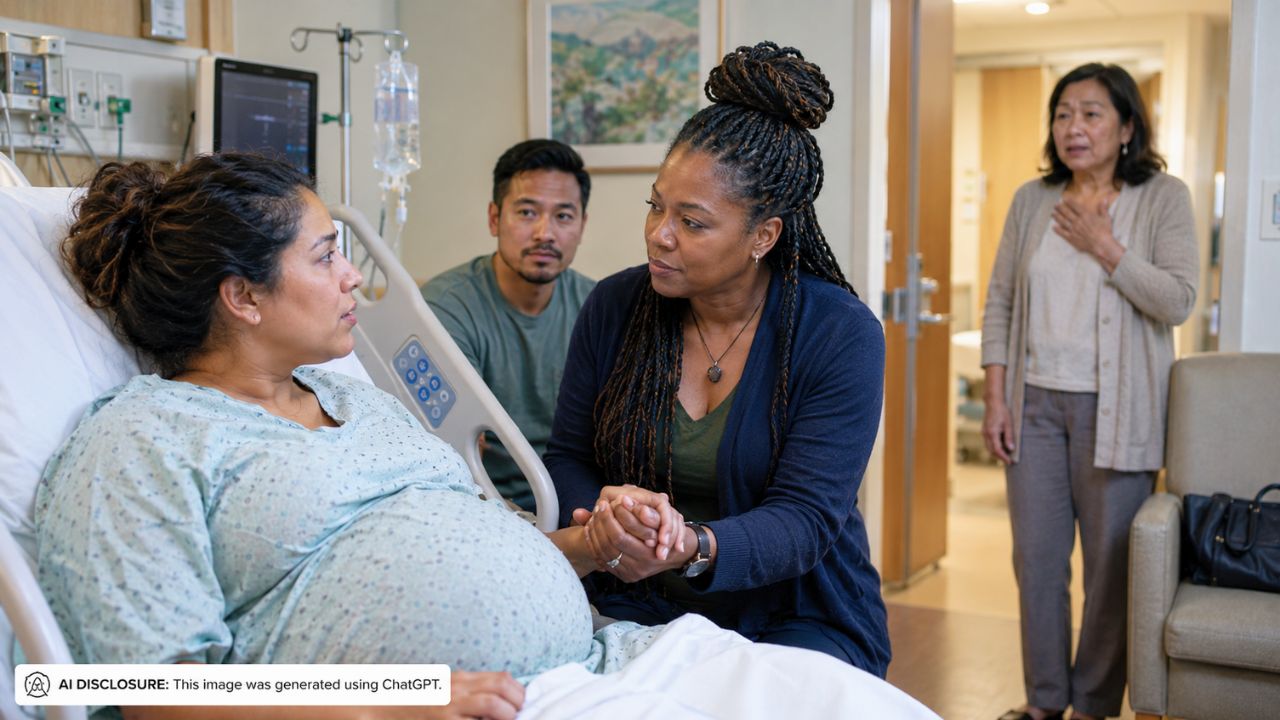
Photo credit: AI-generated image created using ChatGPT. Illustrative only.
Three months before her due date, a pregnant woman thought she was doing the responsible thing: getting her birth plan in order and making expectations clear. Instead, one simple boundary text turned into a cold silence that made the rest of the pregnancy feel tense.
She’s preparing for labor and delivery, but the fight isn’t about paint colors or baby names. It’s about who gets to be in the room during one of the most vulnerable medical moments of her life—and a mother-in-law who treated that access like a guarantee, not a request.
It started with an assumption, not an invitation
Early in the pregnancy, her mother-in-law didn’t ask whether she could be present for the birth. She announced that she would be in the delivery room.
The reason, according to the expectant mom, was family precedent: the mother-in-law had been present for the births of her other sons’ children, so she “automatically gets to be in mine,” as the mom described it in the original post.
But what might have been framed as excitement landed as entitlement. And as the pregnancy went on, the mom-to-be said the relationship became more strained. She didn’t spell out every issue, but she was clear about the effect: her mother-in-law had “really annoyed” her for various reasons, and the thought of managing that energy during labor felt like too much.
With the due date getting closer, she made her call
At around three months out, she decided she wanted a smaller, calmer delivery room. Her preference was her husband and her own mother—though she also floated the possibility that she might not even want her mom there, depending on how she felt in the moment.
That’s the part many people outside the delivery room miss: birth plans aren’t just logistics. They’re comfort plans. They’re about minimizing stress, keeping the laboring person focused, and making sure the support people present are actually supportive.
So she texted her mother-in-law directly: “I’m doing my birth plan and I’ve decided I only want jacob (fake name) and my mom in the delivery room.”
The response was short—and the silence said the rest
The mother-in-law initially replied with a flat “okay.” The mom-to-be, sensing tension, followed up with “sorry.”
That’s when the tone shifted. The response came back: “nothing I can do.”
Trying to smooth it over, the expectant mom explained again that she didn’t want too many people in the room and that she might not even have her own mom there. After that, she said her mother-in-law left her on read.
No shouting. No long argument. Just that abrupt shutdown—the kind that can linger for weeks and turn every family interaction into a guessing game.
Her husband worried about timing, not the boundary
The husband’s reaction added another layer. He didn’t argue that his mother should be allowed in. Instead, he focused on when his wife chose to tell her.
He told her he didn’t know why she shared the plan “so soon,” because now his mother would “make it a big deal” and he didn’t want drama.
But for the pregnant woman, waiting didn’t feel like a solution. She saw this as her medical event, her body, and her decision. She told him plainly that it “shouldn’t be a big deal,” because she’s the one giving birth and she gets to choose who is in the room.
It’s a familiar pressure point in many families: one partner tries to avoid conflict by delaying hard conversations, while the other wants clarity and control before the stakes get higher.
What people tend to zero in on in delivery-room disputes
Even without a full comment thread included, the pressure points in this kind of conflict are predictable—and they’re practical. The big one is that delivery-room access isn’t a family right. It’s tied to the patient’s consent and the hospital’s rules, and staff are used to enforcing it.
Another common theme is that emotional blackmail often looks like what happened here: a clipped acknowledgment, then guilt-laced resignation (“nothing I can do”), followed by silence meant to punish the boundary. People reading stories like this usually recognize that pattern quickly, because it’s less about the baby and more about control.
There’s also the matter of stress management. Labor can take hours, can turn medically complicated without warning, and can require focus and privacy. The person giving birth is often exposed, exhausted, in pain, and making rapid decisions with medical staff. A support person who has been “really annoyed” by the pregnant patient during the pregnancy isn’t a neutral presence in that environment.
And then there’s the relationship fallout: if the mother-in-law is already reacting with icy silence months ahead of time, many would argue it’s better to face that now than to gamble on a blow-up at the hospital entrance or in a waiting room.
The boundary is set, but the pressure may not be over
The immediate clash ended with silence, but the stakes don’t stop at read receipts. There’s still a whole runway before delivery day—doctor appointments, baby-related events, family gatherings, and the possibility that the mother-in-law will try to renegotiate through the husband or bring it up later as if nothing happened.
The husband also has a role to play. If his instinct is to avoid drama by delaying conversations, he may need to switch gears as the due date approaches. A clear plan only works if both parents enforce it, especially if a relative tests boundaries when emotions run high.
For the expectant mom, the core issue hasn’t changed since the first text: she wants her delivery room to feel safe and calm, not crowded and politically complicated. She already made her choice—and judging by the reaction, that choice may be exactly why she needed to make it.