
9 things to know about shepherd life in the Bible
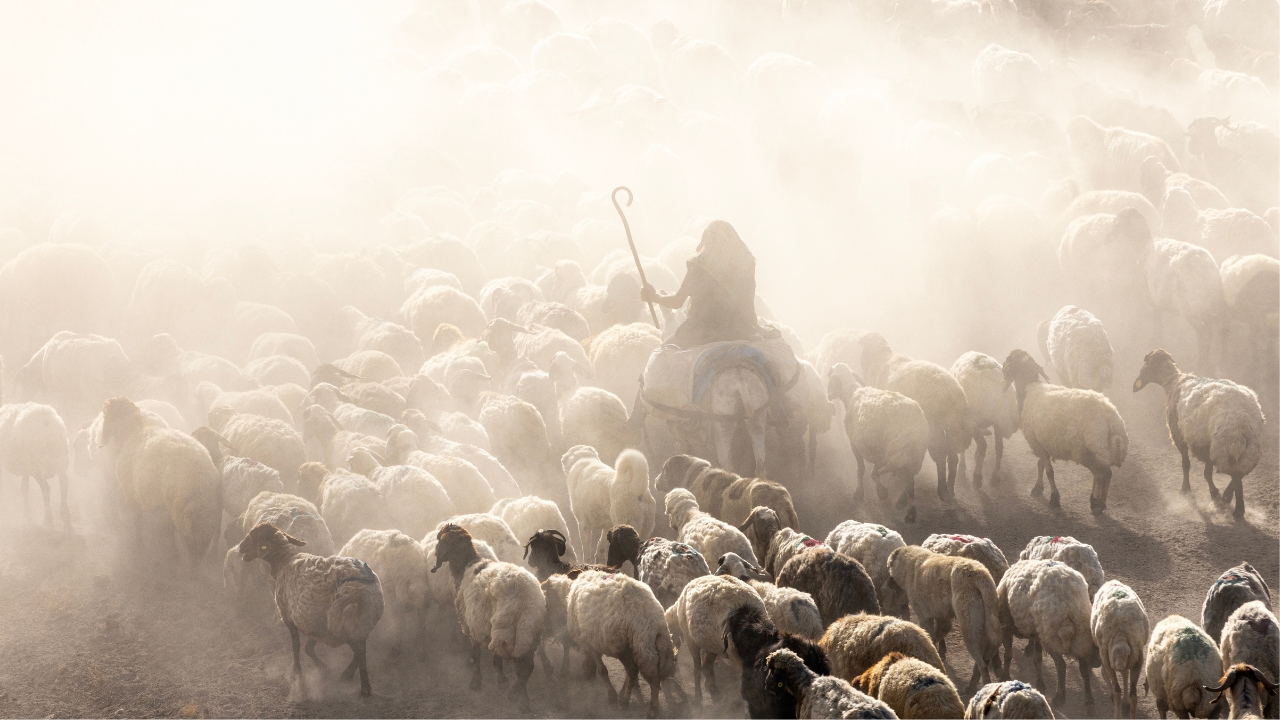
Photo credit: Mehmet Cetin/Shutterstock.com
Shepherd language is everywhere in the Bible, but it can feel softer and more sentimental than it really was if you do not know what shepherd life was actually like. Modern readers often hear “shepherd” and picture a peaceful man with a staff standing in a pretty field. Sometimes it looked like that. But shepherd life in the biblical world also meant long days outside, constant watchfulness, dependence on land and water, movement with flocks, and the pressure of keeping vulnerable animals alive in a hard landscape. That is one reason the shepherd image carries so much weight in Scripture. It was not decorative. It came out of real daily life.
That matters because once you understand shepherd life better, a lot of familiar Bible passages start landing differently. Psalm 23 gets deeper. David’s background feels more grounded. Jesus calling Himself the good shepherd sounds stronger. Even stories about kings, leaders, and wandering in the wilderness pick up more force, because “shepherd” in the Bible is not just a comforting image. It is a loaded one.
1. Shepherding was ordinary work, not romantic work
In the biblical world, shepherding was normal labor. It was part of the everyday economy of a land where animals mattered for food, wool, trade, sacrifice, and wealth. Sheep were not pets. They were valuable livestock, and caring for them meant real responsibility. Even simple facts about sheep help here: they live in flocks, graze over wide areas, and need someone to guide and protect them.
That changes the feel of a lot of Bible imagery. When Scripture calls God a shepherd or describes kings and leaders in shepherd terms, it is drawing on a job people understood well. Shepherding was not a cute background detail. It was work that involved judgment, patience, physical endurance, and constant attention. That is part of why it became such a powerful image for leadership in the Bible.
2. Shepherds had to move with the land and the seasons
One thing modern readers often miss is that shepherd life was shaped by geography and water. Sheep could not just stay in one easy fenced pasture year-round. Britannica’s discussion of Syria’s settlement patterns notes that sheep in steppe country grazed until early summer and then had to be led elsewhere when water became scarce. That kind of movement helps you picture the broader world of biblical pastoral life much better.
That makes passages about leading beside waters, finding pasture, wandering in wilderness areas, or passing through dry regions feel much more concrete. A shepherd was not only “watching sheep.” He was managing movement, season, terrain, and survival. That gives Psalm 23 more texture too. Green pastures and quiet waters are not generic peaceful scenery. In a dry land, they are signs of real provision and wise guidance.
3. Shepherds worked with animals that were vulnerable and needed guidance
Sheep are flock animals. Britannica Kids notes that sheep live in flocks, tend to follow a leader, and like to graze over wide areas. That sounds simple, but it helps explain a lot of biblical language. Sheep are not the kind of animals that do well when scattered, exposed, or left unguided.
That is why “shepherd” became such a fitting image in Scripture. It captured both care and authority. The shepherd had to lead the flock, keep it together, and make decisions the sheep could not make for themselves. That is part of what stands behind passages where Israel’s leaders are called shepherds, where God rebukes bad shepherds, and where Jesus presents Himself as the good shepherd. The metaphor works because shepherding involved real guidance, not just affection.
4. Shepherding was tied to danger, not just calm fields
Biblical shepherd imagery often feels peaceful, but peace was only part of the story. Sheep were vulnerable, and shepherding involved risk. The very need for guarding, guiding, and protecting a flock tells you the work was not passive. BibleProject’s Psalm 23 article pushes back against reading the shepherd image as merely soft or sentimental and says Psalm 23 portrays God not just as a comforting sheep herder but also as a kingly protector.
That matters because it changes how you hear familiar lines about rod and staff, comfort, enemies, and safety. The shepherd image in Scripture includes tenderness, but it also includes strength, watchfulness, and defense. David was not reaching for a random image when he described the Lord this way. He was drawing from a kind of life where care and protection had to go together.
5. Shepherding made David’s background more significant than it first seems
When readers first meet David as a shepherd, it can sound like a minor detail added to make him look humble. It is much more than that. BibleProject’s guide to Samuel says David is introduced as a humble shepherd boy and later connects shepherd imagery to later hopes for a faithful king. That means David’s shepherd background is not just biography trivia. It is shaping how readers are supposed to think about leadership, kingship, and trust in God.
That changes the story of David and even later messianic hope. David’s rise from shepherd to king is not just a dramatic underdog move. It ties kingship to shepherding in the biblical imagination. A good king is supposed to lead, protect, and care for God’s people the way a good shepherd does for a flock. Once you see that, a lot of Old Testament leadership language starts connecting more clearly.
6. “Shepherd” became one of the Bible’s main images for leaders
The Bible does not only use shepherd language for literal shepherds. It regularly uses it for kings, rulers, prophets, and ultimately for God Himself. BibleProject’s podcast on Jesus as the new shepherd in the wilderness ties this image back through Moses, Israel’s failures, and the need for a faithful shepherd who can guide the people well. That shows how central the image became in the Bible’s larger story.
This helps explain why bad leaders are condemned as bad shepherds and why hopes for a faithful future king are often described in shepherd terms. Shepherding was a natural leadership metaphor because the job involved direction, provision, vigilance, and responsibility for creatures that could not protect themselves well. The Bible keeps returning to this image because it fit the realities of both livestock care and human rule.
7. Psalm 23 is stronger when you picture a real shepherd, not a soft symbol
Psalm 23 may be the most famous shepherd passage in the Bible, and it is often read mainly as comfort. It absolutely is comforting, but BibleProject argues that it also presents the Lord as a royal, powerful protector. The shepherd in Psalm 23 leads, restores, guides, protects in danger, and prepares a table in the presence of enemies. That is bigger than a gentle nature image.
This is one of the best examples of how real-life context helps biblical interpretation. Once you picture a shepherd in a dry land, moving a flock, protecting vulnerable animals, guiding them to water, and keeping them through dangerous places, Psalm 23 feels less like a soft poem and more like a deeply sturdy confession of trust. The psalm becomes not less comforting, but more substantial.
8. Jesus calling Himself the good shepherd would have sounded loaded
When Jesus calls Himself the good shepherd, He is not choosing a random sweet image. He is stepping into one of the Bible’s deepest themes. BibleProject’s shepherd materials connect Jesus to the long biblical need for a faithful shepherd like Moses and to Israel’s repeated failure under bad leadership. That means Jesus’ shepherd language is not only personal. It is historical, theological, and royal.
This changes how that language sounds in the Gospels. Jesus is not merely saying He is caring. He is saying He is the true leader God’s people have needed all along — the one who actually guides, provides, protects, and lays down His life for the flock. That is a much bigger claim than many modern readers hear at first.
9. Shepherd imagery in the Bible is earthy because the Bible’s world was earthy
The Bible uses shepherd language so naturally because it came from a world where people actually knew flocks, pastures, dry land, and animal care. In a land where sheep grazed widely and had to be moved with changing conditions, shepherding was not abstract. It was built into the lived experience of the culture.
That is one reason this imagery keeps working across so much of Scripture. It is earthy, practical, and deeply human. It reminds readers that the Bible is not speaking from nowhere. It is speaking from a world where people understood what it meant to need guidance, protection, and provision because they could see it every day in the fields.