The Bride Said the $130 Bouquet Was Non-Negotiable — Then the Bridesmaid Said Neither Was Stepping Down
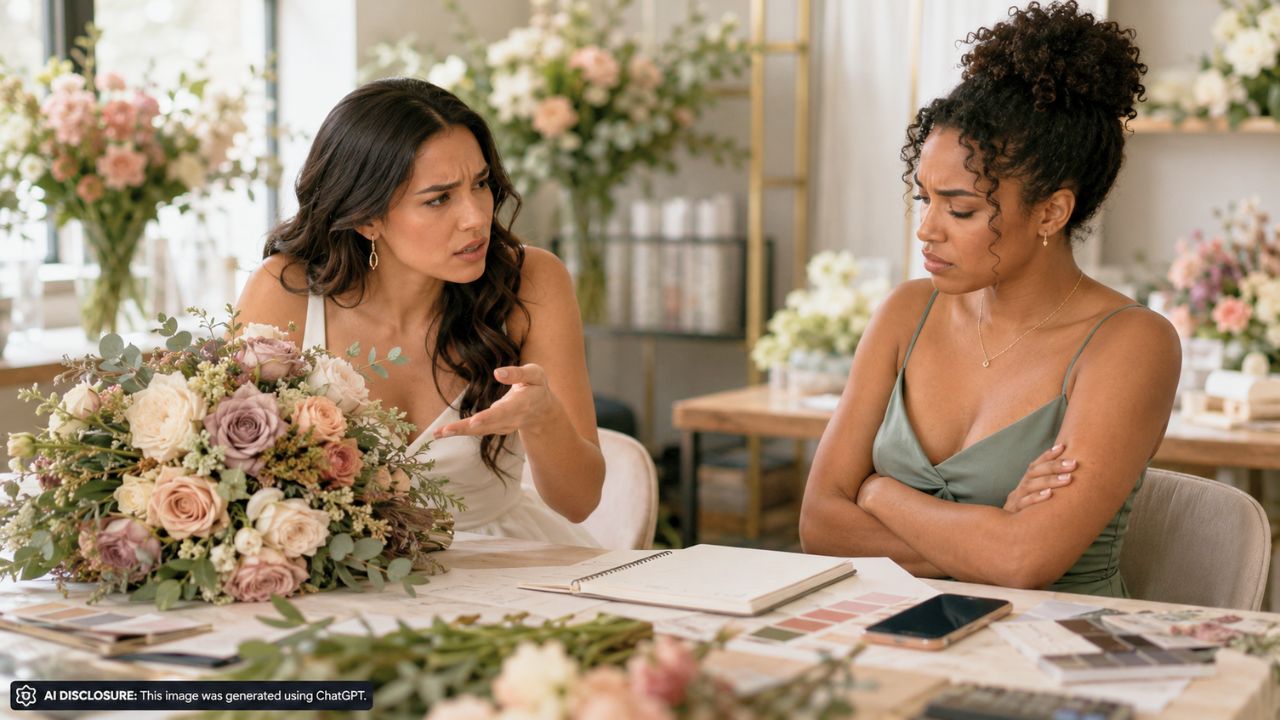
Photo credit: AI-generated image created using ChatGPT. Illustrative only.
It started with one of those wedding-party asks that feels pretty normal in the moment. A close friend was getting married, money was tight, and the bride-to-be leaned on her bridesmaids for a little extra help. The bridesmaid who shared the story said she understood it, agreed to it, and didn’t want to make things harder on someone she cared about.
Then she found out what “help” was going to cost her.
The problem started with small yeses
According to the original post, the bride has “always struggled financially a little bit,” so when wedding planning kicked into gear, the expectations came with a budget-conscious vibe.
First request: the bridesmaids should pay for their own dresses. The group agreed. It wasn’t ideal, but it’s also not unheard of, and everyone seemed willing to do their part to keep the wedding affordable.
Then came the next ask: could the bridesmaids pay for their own bouquets too?
The poster said yes again—because she thought it meant a small expense, and because she genuinely wanted to help her friend pull off the day she wanted without drowning in costs.
The bouquet price turned into the real bill
The shock came later, when the poster learned what those bouquets were actually going to cost. Not $20. Not $40. Not even “a little pricey but manageable.” The bridesmaid bouquets were $130 each.
Worse, the poster said the bouquets were going to be more expensive than the dresses. That’s the moment the whole thing stopped feeling like a simple favor and started feeling like a major purchase—one that wasn’t part of the original mental math when she agreed.
She also wasn’t the only one hesitating. She noticed some of the other bridesmaids “didn’t seem too eager” about the price either. But she was the youngest—only in her early 20s—and the only one who actually said something to the bride directly.
And she didn’t come in swinging. She described being polite and trying to explain it plainly: she had other financial commitments, and dropping $130 on flowers that would be carried for a few hours and likely tossed afterward felt steep.
She tried to compromise, and the bride shut it down
This wasn’t a situation where the bridesmaid just refused and walked away. She offered what sounds like a pretty reasonable middle ground: she would make all of the bouquets herself.
That offer matters, because it wasn’t just “I can’t afford it, so figure it out.” It was “I can’t justify that price, but I’m willing to contribute time and effort so you still have bouquets.” That’s a big gift in its own way—materials, labor, logistics, and stress included.
The bride refused. Not because it wouldn’t work. Not because it would be too difficult. The bride refused because these were “the ones she wants,” and she had chosen the most expensive bouquets.
In other words, the bride wasn’t looking for “a bouquet.” She was looking for a specific bouquet, at a specific price point, and she wanted her bridesmaids to cover it.
At that point, the bridesmaid was stuck. Either pay $130 for something she felt was wasteful, or say no and risk being labeled unsupportive. And once wedding emotions are involved, “I can’t” often gets heard as “I won’t.”
The moment she spoke up, she got cut
The poster didn’t get met with understanding or a revised plan. She got removed from the bridal party.
Just like that, she went from “close friend bridesmaid” to not being included in the wedding party at all. She was left reeling and unsure if she’d somehow crossed a line by bringing up the money side of a cost the bride had pushed onto the bridesmaids.
It’s the kind of reaction that makes a person second-guess themselves, because the punishment feels bigger than the supposed offense. She wasn’t demanding a different color scheme or refusing to wear the dress. She was saying she couldn’t swing a surprise $130 add-on, especially for an item that wouldn’t last past the day.
And she wasn’t even asking the bride to pay for it. She was asking for flexibility.
Still, the bride’s move was immediate and decisive: if you won’t buy the bouquet I picked, you won’t stand beside me.
Then the invitation got even colder
If being removed as a bridesmaid was the first cut, the update was the second.
After people weighed in and encouraged her to still attend as a guest, the bride offered what can only be described as a partial invite: she could attend the “after party” if she wanted to.
And that wasn’t the final version, either.
The poster added that she had been uninvited from the whole wedding. Not just stepping down from bridesmaid duties—fully not welcome for the ceremony and main event.
That’s what made the bouquet issue feel less like a single disagreement and more like a loyalty test. Pay what I say, no questions asked, or you’re out. No soft landing. No “we’ll miss you up there, but we understand.” Just a door shut.
It also changes the emotional stakes. It’s one thing to be trimmed from a wedding party over mismatched expectations. It’s another to realize the friendship itself may be more conditional than you thought—especially when the condition is spending money you don’t have on someone else’s aesthetic.
Where things were left
By the end of her update, the bridesmaid wasn’t asking how to repair it so she could get back into the lineup. She sounded blindsided by how quickly the bride escalated and how far she was willing to go over flowers.
And that’s the lingering, messy part: the poster tried to be supportive, said yes to the dress, said yes to paying for a bouquet, and even offered to make them herself. The one time she voiced a limit, she lost her role—and then her seat entirely.
Weddings can make people intense, and budgets can make people defensive. But it’s hard to forget the feeling of being punished for being honest about money. Sometimes the real cost isn’t the bouquet—it’s what you learn about someone when you can’t afford to keep saying yes.