She Asked His Family to Wait Before Visiting the Baby — Then His Mom Announced She’d Already Booked the Flight
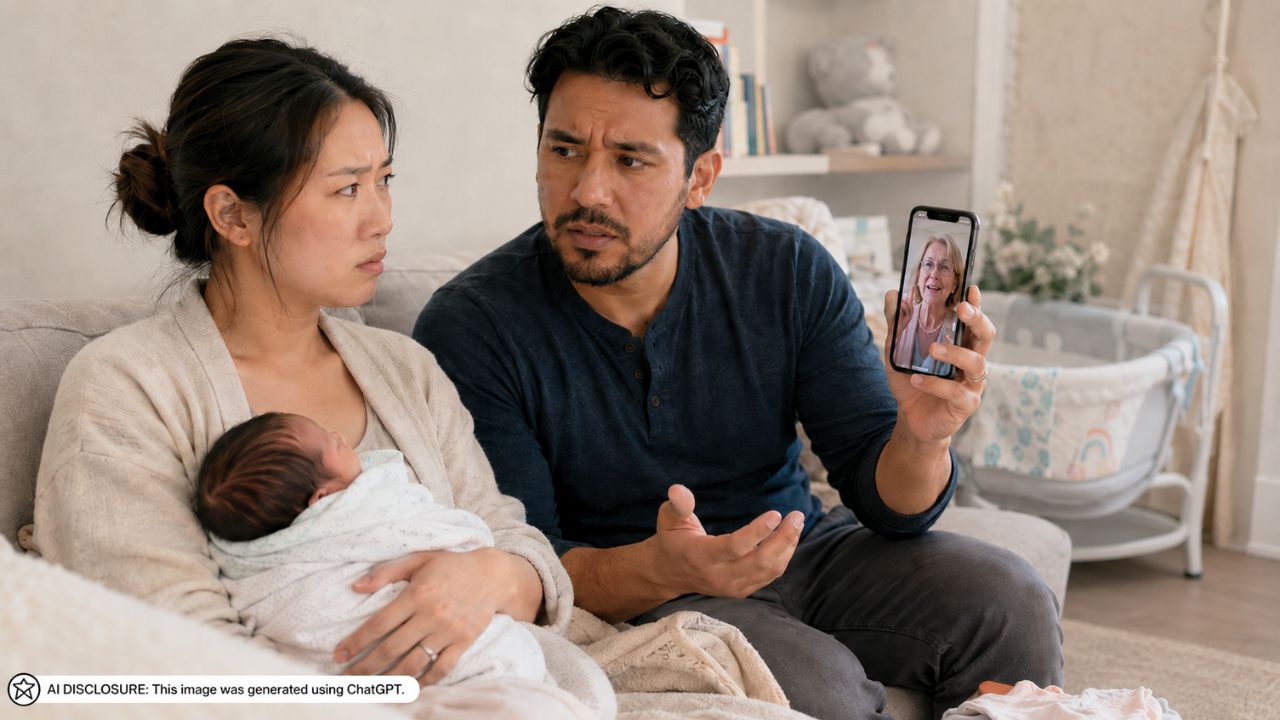
With her due date set for the 18th, a first-time mom thought she was making a simple request: give her a little breathing room after the birth before out-of-town relatives start showing up. She says she’s already overwhelmed, still bracing for the physical and emotional whiplash of delivery, and trying to picture what those first days at home will look like.
Then her mother-in-law called with a plan that felt less like a question and more like a decision. She intended to fly in from Michigan on the 25th—one week after the scheduled birth—to meet the baby. The expectant mom asked her husband to push the visit back, and it landed like an insult.
She wasn’t asking for “no visitors,” just time to settle
In her post, the woman explains she’s not trying to freeze out her husband’s family entirely. She wanted a delay so she could adjust to being a new mom and feel more comfortable hosting, rather than feeling pressured to “perform” while recovering.
Her reasoning was practical as much as emotional: she wanted to be present and calm when the baby met extended family, not stressed, exhausted, and still figuring out feeding, sleep, and postpartum recovery. But her husband took it hard and told her she was being unfair.
The tension is amplified by the fact that she doesn’t have an easy relationship with his relatives. She describes his family dynamic as complicated, with existing strain that makes even basic logistics feel loaded.
The in-law dynamics were already brittle before the baby
The update adds context that makes her request feel less like a sudden power move and more like an attempt to keep the peace. She says her relationship with her mother-in-law is strained and that her MIL is often jealous of how close-knit the expectant mom’s family is.
That difference matters here because the couple isn’t treating both families the same in practice. Her mother will be in the delivery room and plans to help her adjust afterward, and she’ll eventually provide full-time childcare when the new mom returns to work.
Meanwhile, the mother-in-law won’t be staying in the couple’s home—she believes her MIL will stay with the sister-in-law—but even that detail is fuzzy. She says she doesn’t know how long her MIL plans to be in town, and that lack of clarity has been part of the stress all along.
There’s also a history of emotional moments. She shares that she had surgery to treat a blocked fallopian tube to conceive, and when her MIL realized the procedure was fertility-related, she abruptly left the home in tears because she “didn’t think we were going to have children.” For the expectant mom, that’s part of why she wants control over when and how visits happen in the earliest days.
The visit wasn’t the only concern—illness and international travel were next
On the surface, the Michigan flight is the main flashpoint. But she also has worries about additional visitors. Her sister-in-law, niece, and nephew were returning from Europe soon, and she was uneasy about them visiting right away.
She specifically mentioned outbreaks like measles and other illnesses, and said she’d prefer they hold off for safety. The hard part: she hadn’t even raised that part with her husband yet, because he was already upset about her asking his mom to delay.
So now she feels boxed in. If she pushes for a waiting period for everyone, she fears it will look like she’s “attacking his whole family.” If she stays quiet, she risks spending her first postpartum week juggling guests, tension, and worries about a newborn’s exposure.
Her husband heard rejection, not recovery
Her husband’s reaction is a big part of why she wrote in. He’s close with her family, and she notes that her family understands boundaries—brief meet-the-baby visits as long as they’re healthy, then they leave. They also live within 15 minutes, so no one is trying to turn it into a multi-day stay.
With his mother, it’s different: she’s flying in and the trip carries a sense of occasion and entitlement. The husband seems to hear his wife’s request as a slight against his mom rather than a postpartum boundary, especially given the rocky relationship between the two women.
The expectant mom doesn’t pretend she’s been perfectly even-keeled. She admits she’s been “a hormonal asshole” in the final stretch of pregnancy and tries to be sensitive to his feelings. But she also makes it clear she needs space and time, and she doesn’t want the earliest days of motherhood to turn into a family standoff.
People zeroed in on boundaries, timing, and who gets prioritized
In the responses on the original post, the prevailing judgment was “Not the A-hole,” with many focusing on the idea that postpartum recovery is not a social event. A week after birth can still be physically rough, sleep-deprived, and emotionally unpredictable, and commenters emphasized that the person giving birth gets extra weight in decisions about visitors.
Others focused on the fairness argument and how it plays out in real life. The new mom’s support system—her mother helping immediately, her family doing quick visits—has a practical purpose tied to recovery and childcare. Her mother-in-law’s visit, by contrast, is primarily to meet the baby, which can be meaningful but also adds pressure if the relationship is tense.
Some also pointed to the health angle, especially with the mention of international travel and outbreaks. Even when extended family is healthy, newborn exposure is a common anxiety point, and commenters tended to treat caution as reasonable rather than rude.
And a number of people urged clarity: if the mother-in-law is coming, how long is she staying, where is she staying, and what are the expectations? The expectant mom’s frustration wasn’t just about the date—it was about uncertainty, mixed messages, and feeling like plans were being made around her instead of with her.
Now it’s a countdown, with a flight date hanging over it
The immediate problem is simple: the baby is due on the 18th, and the mother-in-law intends to arrive on the 25th. That means the couple has very little time to get on the same page, especially when even bringing up the topic triggers hurt feelings.
There are a lot of moving parts underneath—old jealousy, unclear plans, a husband caught between loyalty and logistics, and a new mom trying to protect her peace without escalating the family drama. But the clock is the loudest part.
For now, she’s left trying to balance two truths at once: her husband wants his family included quickly, and she wants her first week as a mother to be about healing and bonding, not hosting and managing tension. Whether they can turn that into an actual plan before the 25th is the part still unresolved.