Neighbor Wanted to Use Her Vintage Bathtub for “Therapy” — Then the Street Started Pressuring Her Too
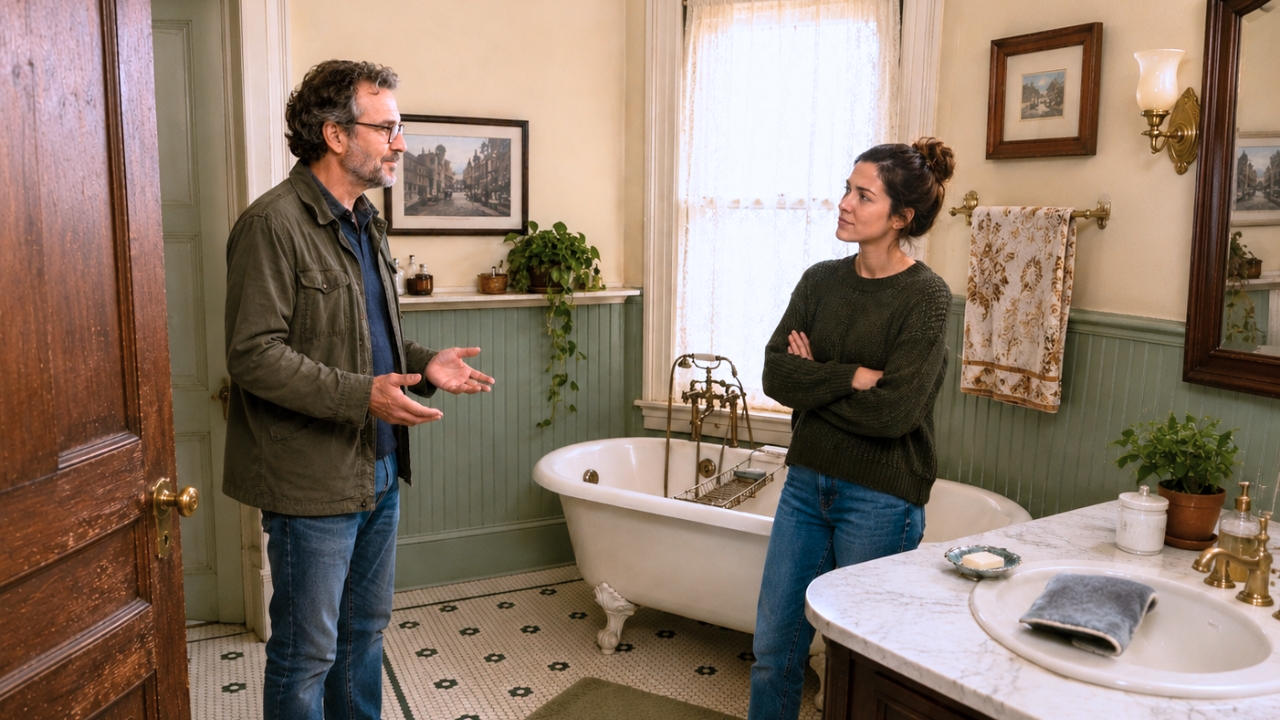
Photo credit: Thrivegirly
A 28-year-old woman living alone in an old Victorian house said she thought the request was so strange at first that it had to be a joke.
Her next-door neighbor, Dennis, wanted to use her bathtub.
Not borrow a tool. Not ask for help with a package. Not use the driveway for a few minutes. He wanted to come inside her house and soak in her upstairs clawfoot tub for what he called “hydrotherapy.”
The woman had inherited the house from her grandfather, and one of its original features was a 1920s clawfoot bathtub. She had once considered removing it, but over time she grew to love it. Dennis, who had lived in the neighborhood for years and had helped her grandfather with repairs long ago, knew the tub existed.
That history apparently made him feel entitled to it.
According to the Reddit post, Dennis showed up and explained that the tub was perfect for his “hydrotherapy sessions” because it was supposedly “pre-industrial revolution” and not tainted by modern manufacturing. He said he needed to soak in cold water for long periods to “reset his nervous system.” The woman said no.
That should have ended it.
Instead, Dennis began pressuring her every time he saw her. He accused her of hoarding a “community resource” and said that because she inherited the house instead of buying it, she had a duty to share. He also claimed his own shower had stopped working, which made his request sound less like a hobby and more like an attempt to guilt her into opening her home.
The woman still refused.
She did not want a strange man in her house. She did not want him getting undressed in her bathroom. She did not care about the “energy conduit” theory or his nervous system reset. It was her house and her bathtub.
But Dennis did not keep the conflict between the two of them.
Somehow, the issue made its way to the neighborhood Facebook group, and people started taking sides. The woman said half the street began acting as if she were cruel for not letting Dennis use the tub. One neighbor confronted her during a walk and ripped into her, calling her selfish and stupid for refusing to help an older man with his health.
Then the petty pressure got even stranger.
The woman found a giftwrapped bar of soap in her mailbox. There was no note, but she assumed it was a passive-aggressive message from someone who thought she should let Dennis bathe at her house.
At that point, she started to feel like she was losing her mind. What seemed obvious to her — that a woman living alone did not need to let a male neighbor into her home to get naked in her bathtub — was somehow being treated like a debate.
She began worrying she might come home one day and find Dennis already inside the house.
That fear was not dramatic. Dennis had known the layout from years earlier. He had repeatedly refused to accept no. Neighbors were validating his entitlement. And the whole thing had shifted from one weird request into a community pressure campaign.
Commenters urged her to stop trying to defend the bathtub itself and reframe the issue in plain language. Dennis was not asking to borrow a cup of sugar. He was asking a young woman who lived alone to let him enter her private home, undress, and use her bathroom. Once framed that way, several people said the neighbors’ support looked far more disturbing.
Others told her to document every interaction, save online comments, install cameras, and consider making a police report or at least creating a record in case Dennis escalated. They also suggested telling the neighbors that if they cared so much about his hydrotherapy, they could offer their own bathtubs.
The woman’s problem was not that she lacked compassion. It was that everyone around her was acting as if politeness required her to ignore every instinct telling her this was unsafe and inappropriate.
The “community resource” argument was especially ridiculous. A private bathtub inside a private home does not become public property because someone inherited the house. Dennis may have remembered the tub from years ago, but memory is not ownership. Helping her grandfather with repairs did not give him lifetime bathing privileges.
By the end, the woman was still refusing — and rightfully so. The pressure from the street had not made the request more reasonable. It had only made the situation more uncomfortable.
Dennis wanted access to her home. The neighbors wanted her to stop making the conflict awkward. But the woman wanted the most basic thing possible: to be left alone in the house she owned, with the bathtub that belonged to her.
Commenters were overwhelmingly on the woman’s side. Many said the neighbors were making the situation sound softer than it was by focusing on “health” and “hydrotherapy” instead of the obvious boundary issue: a man wanted to get naked in a young woman’s private home.
A lot of readers said the Facebook group pressure was alarming because it encouraged Dennis to believe his request was reasonable. Several warned that if he kept hearing support from neighbors, he might escalate.
Others focused on the inherited-house argument. Commenters said inheriting property does not make someone less entitled to privacy or ownership. The bathtub was not a community resource, and Dennis had no claim to it because he had seen it years earlier.
The strongest reaction was practical: cameras, documentation, and no more soft explanations. A clear “No, you may not enter my home or use my bathtub” was enough. Anything after that was harassment.